Win a UK Non Standard Construction Mortgage With the Right Reports
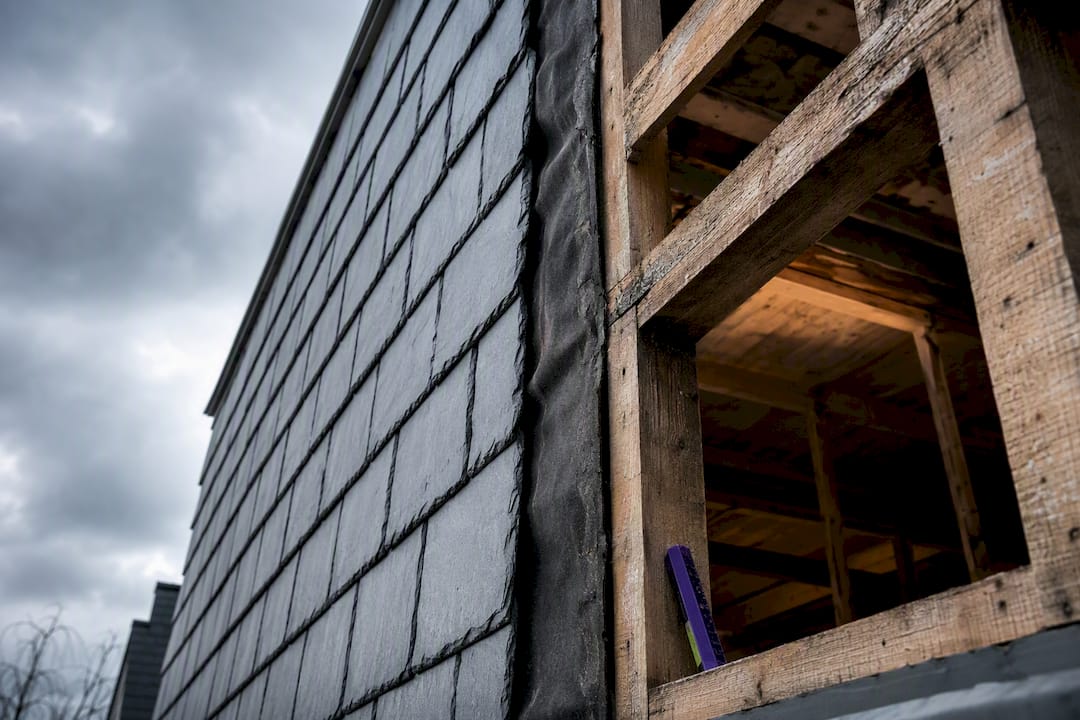
Yes, a non standard construction mortgage is achievable for most unusual builds, but it is always conditional. Approval hinges on three things: how your lender classifies the construction type, whether you can produce a structural report or repair certificate to back it up, and whether you have a deposit large enough (or a broker who knows which specialist lender to approach) to compensate for the added risk.
TL;DR:
- Non-standard construction mortgages are possible but require a larger deposit, a structural engineer’s report, and depend on how lenders classify the property type.
- High street banks are cautious and often reject PRC, thatched, or defect-listed properties, while building societies and specialist lenders offer more flexibility for older or unusual builds.
- A full structural engineer’s report is essential for unusual constructions, and commissioning it early can prevent application rejection and streamline the process.
- Expect to pay higher interest rates and deposits of 25% to 35%, especially for properties with known defect history or those needing remediation.
- Working with a whole-of-market broker and gathering comprehensive property documentation can significantly increase approval chances and reduce application delays.
Table of Contents
- What is non-standard construction and why do lenders care?
- Which lenders will consider a non-standard construction mortgage?
- What surveys and reports will lenders ask for?
- How can you improve your chances of approval?
- What will it cost, and how much deposit do you need?
- Designated defective properties and remediation certificates
- What should you prepare before you apply?
- Author perspective: weighing opportunity against risk
- How Prosperhomeloans can help with your application
- Sources
- FAQ
What is non-standard construction and why do lenders care?
A “standard” construction in the UK, as far as most lenders are concerned, means brick or stone walls under a pitched roof finished in slate or tile. Anything that departs from this gets flagged for extra scrutiny, and deviations such as timber frame, steel frame and precast concrete are generally classed as non-standard.
That covers a wide range of properties, some far riskier than others. The most commonly flagged types include:
- PRC systems (prefabricated reinforced concrete), such as Wimpey No-Fines, Reema and Airey houses.
- BISF steel-framed houses built after the Second World War.
- Timber frame properties, though not all timber frame is treated equally.
- Steel frame and modern methods of construction (MMC), including some volumetric modular homes.
- Thatched roofs, which carry fire and insurance considerations beyond the mortgage itself.
- Flat roofs, particularly on older properties where the covering has not been renewed.
- Listed building conversions, where planning restrictions limit repair options.
- High-rise flats with cladding concerns, a category that has tightened considerably since safety reviews began.
Not every timber frame is a red flag. Modern systems built to current building regulations are widely accepted by mainstream lenders, while older timber frames from before the 1980s are sometimes flagged and may need additional reports before a lender will proceed.
Lenders worry about two things above all else: repair costs if something goes wrong, and how easily the property will sell if they ever need to repossess it. A house with unusual cladding or an unconventional frame can be harder to value accurately and slower to shift on the open market, which is exactly the scenario a mortgage lender wants to avoid.
Which lenders will consider a non-standard construction mortgage?
Lender appetite varies enormously, and knowing where to start saves weeks of wasted applications.
High street banks tend to be the most conservative. They will often accept modern timber frame and some steel-framed new builds, but PRC houses, thatch and anything with a defect history usually get an automatic decline before a human underwriter even sees the file.
Building societies frequently show more flexibility, particularly regional societies with local knowledge of the housing stock in their area. Some have developed a genuine specialism in older concrete or timber systems because they see enough of them locally to price the risk properly.
Specialist lenders sit at the far end of the spectrum. These are typically accessed only through brokers and exist specifically to lend against harder cases: PRC houses with repair certificates, thatched cottages, listed buildings and ex-local-authority stock. Lender definitions of “non-standard” vary considerably, and buying this type of property usually means fewer lender options, possibly higher rates, and larger required deposits.
For the most challenging cases, a standard residential mortgage may not be available at all. Bridging finance or a commercial-style loan sometimes becomes the only route, particularly where a property needs remediation work before any mainstream lender will touch it.
Building societies and specialist lenders can be more flexible than high street banks, and brokers with whole-of-market access are often essential to match a non-standard property to the right one. Working with a whole-of-market broker rather than approaching a single bank directly is, in our experience, the difference between a quick “no” and a workable offer.
What surveys and reports will lenders ask for?
Three levels of inspection exist, and using the wrong one wastes money and time. A standard mortgage valuation confirms the property is worth what you are paying, but it is not a structural assessment and will not satisfy a lender concerned about a PRC or steel frame property. A RICS HomeBuyer Report goes further, covering general condition, but it still stops short of the detail a non-standard property usually needs.
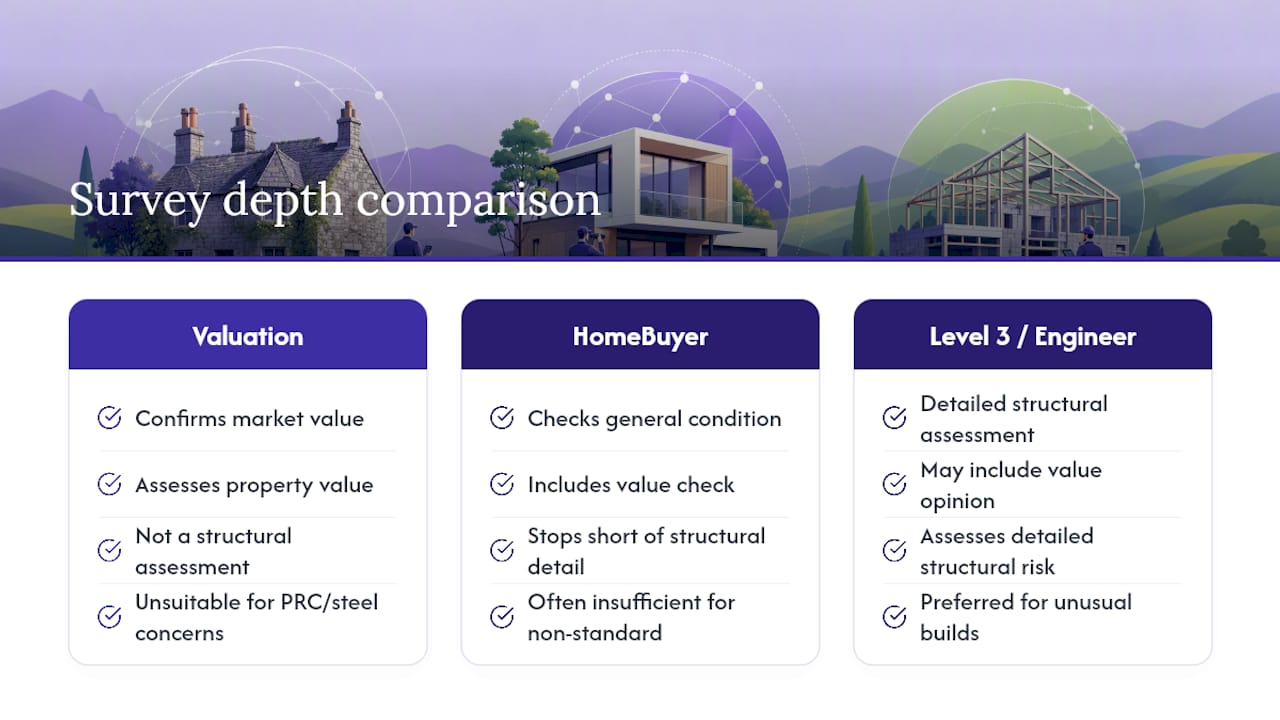
For genuinely unusual builds, a chartered structural engineer’s report or a full RICS Level 3 Building Survey is typically what lenders want to see, particularly where the construction system has a known history of defects. Look specifically for a qualified engineer holding CEng or MIStructE credentials; their sign-off carries far more weight with underwriters than a generalist surveyor’s opinion.
Timing matters here. Commission the structural report before you go too far into the conveyancing process, not after. A clear structural report from a chartered engineer often avoids an automatic decline, whereas submitting an application with no supporting evidence invites an instant rejection that then has to be appealed or reworked with a different lender.
Costs vary depending on property size and the type of testing needed. Concrete testing on a PRC house, for example, adds a specialist element beyond a general structural inspection. Budget for this as a necessary up-front cost rather than an optional extra, and present the finished report to your broker before it goes anywhere near a lender, so any concerns can be addressed in the covering application rather than discovered by an underwriter.
How can you improve your chances of approval?
Getting from “unlikely” to “yes, with conditions” usually comes down to preparation, not luck.
- Identify the construction type early. Your EPC record or a Property Passport check can flag construction age and wall type, helping you spot the likely system before paying for a full survey.
- Gather any repair history. If the property has been through a recognised remediation scheme, get copies of every certificate now, not once you are mid-application.
- Bring a larger deposit. For genuinely unusual builds, expect to need somewhere in the region of 25% to 35% rather than the 10% typical of a standard property.
- Use a specialist broker from the outset. They already know which lenders have appetite for your specific construction type, saving you multiple failed applications.
- Coordinate report timing with conveyancing. Order the structural survey early enough that findings can be discussed with the lender before exchange, not after.
Pro Tip: Ask the seller’s estate agent for the EPC certificate before you even book a viewing. The construction notes and wall description often hint at whether you are dealing with a standard build or something that will need a specialist report further down the line.
What will it cost, and how much deposit do you need?
Specialist lending on non-standard properties costs more, and the reasons are straightforward: fewer lenders compete for this business, and each one prices in the extra risk of a smaller resale market. Buying a non-standard property usually means fewer lender options, possibly higher rates, and larger deposit requirements compared with a conventional brick-and-tile home.
Deposit expectations shift with the severity of the construction risk. An uncertified PRC property, thatched cottage, or listed building with known issues could require 35% or more, and even then only through a specialist lender.
Beyond the deposit itself, budget for structural engineer fees, any concrete or timber testing, higher buildings insurance premiums (thatch and flat roofs are notably more expensive to insure), and potentially remediation costs if repairs are needed before a lender will proceed. None of these are optional if the property genuinely falls into a higher risk category, so factor them into your budget from the outset rather than treating them as surprises at survey stage. Understanding how loan-to-value affects your options helps set realistic expectations before you start viewing properties.
Designated defective properties and remediation certificates
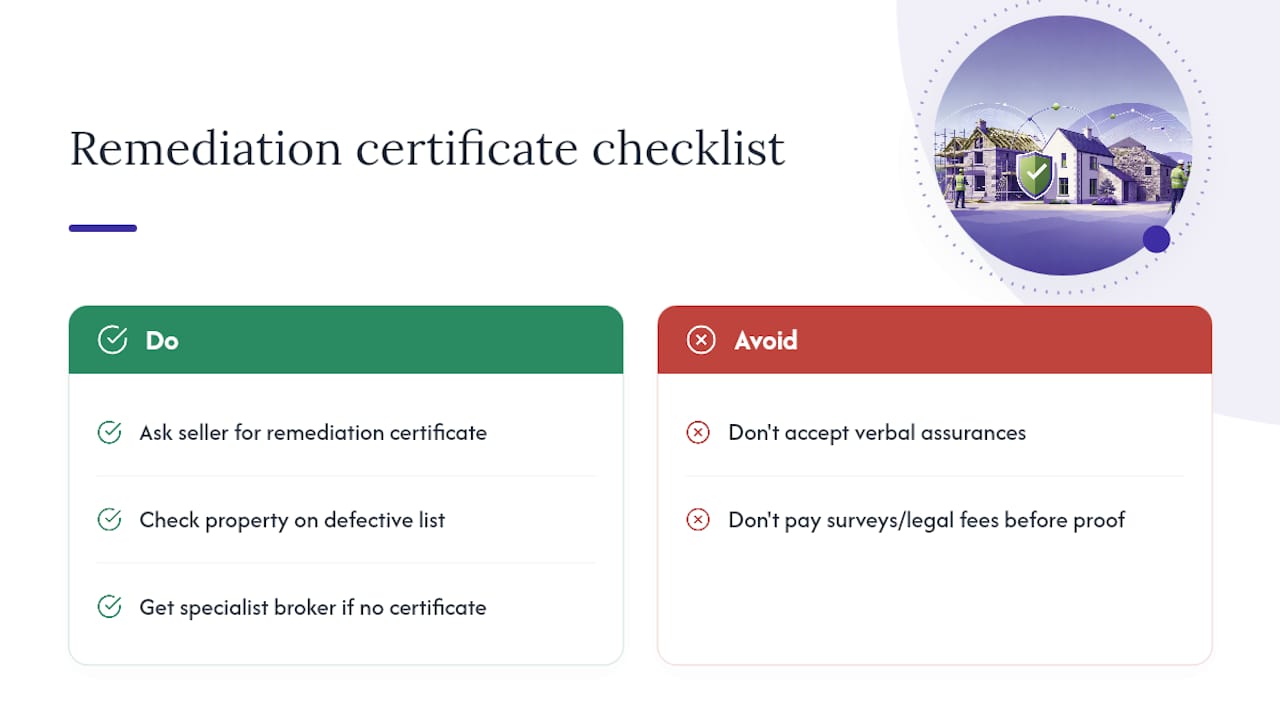
Some PRC house types were formally designated defective decades ago, and lenders generally refuse to lend on these unless the property has been repaired under a recognised scheme and carries a certificate of structural adequacy. This is not a minor administrative point. Without that certificate, many mainstream and specialist lenders alike will decline outright, regardless of how attractive the price looks.
The good news is that certified remediation genuinely resolves the problem. Formal repair schemes exist for the most common defective house types, and once a property carries the relevant completion certificate, it becomes mortgageable again through a meaningfully wider pool of lenders. The certificate is the thing that matters, not a verbal assurance from the seller that “it was all sorted years ago.”
If you discover during your search that a property sits on a historically defective list, your first move should be asking the seller for documentary proof of remediation before you spend anything on surveys or legal fees. No certificate on file usually means the property either was never repaired to the recognised standard or the paperwork has been lost, in which case a specialist broker needs to assess whether any lender will consider it at all, and on what terms.
What should you prepare before you apply?
A well-organised evidence pack speeds everything up and reduces the risk of a lender declining on a technicality.
- Get the EPC and any Property Passport record to confirm construction age and wall type before committing to further costs.
- Request title deeds and planning or building control records, particularly for any extensions or alterations.
- Ask the seller for repair or remediation certificates if the property has any history of defect designation.
- Commission the right survey for the property type, a full structural survey or engineer’s report for anything genuinely unusual, rather than a basic valuation.
- Book a call with a specialist broker early, ideally before you make an offer, so lender appetite is assessed before you are financially committed.
- Ask your surveyor directly whether the construction type has a known defect history and what remediation evidence, if any, exists.
- Ask your broker which lenders have previously accepted this exact construction type, and what deposit and rate range to expect.
Applicants juggling other complex circumstances, such as foreign nationals gathering the right paperwork, often find that combining a strong document pack with early broker involvement removes most of the delay from the process.
Author perspective: weighing opportunity against risk
Non-standard homes are frequently underpriced relative to their location, and that gap exists precisely because fewer buyers can secure finance. Buying one can be a genuinely smart move if you negotiate a price that reflects the lending risk and get remediation written into the contract as a completion condition. Where it turns unattractive is when a buyer assumes finance will simply follow, without checking lender appetite first. Price, contingent repairs, and completion conditions are your real negotiating levers, not the asking price alone. We have supported buyers across East Sussex through exactly these negotiations, and the pattern rarely varies: the ones who order the structural report early keep control of the deal.
— Paul
How Prosperhomeloans can help with your application
A local alternative to guessing which lender might say yes is working with independent, whole-of-market advisors familiar with building societies and specialist lenders who have appetite for PRC, timber frame, thatch and listed-building cases, so borrowers are not the ones cold-calling a dozen lenders to find out.

Before your first consultation, bring whatever you already have: the EPC, any survey booked or completed, and repair certificates if the property has one. We will coordinate the structural report and remediation evidence with your solicitor, match the file to a lender with genuine appetite for that construction type, and keep the whole process moving rather than leaving you waiting on a single bank’s decision. If you are considering a non-standard property anywhere in East Sussex, get in touch with Prosperhomeloans for a straightforward conversation about what your options actually look like.
Sources
For further reading, Property Passport’s construction guide covers accepted and refused concrete systems in detail, while Moneyfacts explains lender-by-lender variation in appetite.
This article is general information, not a substitute for advice from a qualified financial advisor. Consult a qualified financial professional about your own circumstances before acting on anything here.
- Non‑Standard construction mortgage — Property Passport UK
- Mortgages for a property of unusual construction — Moneyfacts
- Non‑Standard construction explained — Property Solvers
FAQ
Can I get a mortgage on a non-standard construction property?
Usually, yes, though the range of lenders shrinks and you will typically need a larger deposit and a structural report to support the application.
Is it worth buying a non-standard construction house?
It can be, particularly if the price reflects the reduced buyer pool, but weigh the extra costs of insurance, reports and any remediation before committing.
Can I get a mainstream high street mortgage for a non-standard construction home?
Some high street lenders accept modern timber frame and certain steel-framed new builds, but PRC houses, thatch and defect-listed properties are usually declined without a specialist lender.
What is non-standard construction in the UK?
It refers to any property built with walls or a roof that deviate from the brick-or-stone-with-pitched-tile-roof baseline, including PRC concrete systems, steel frames, older timber frames, thatch and flat roofs.
Do I need a structural engineer’s report for a non-standard property?
For most genuinely unusual construction types, yes. A report from a chartered engineer (CEng or MIStructE) or a full RICS Level 3 survey is often what stands between a decline and a conditional offer.
Recommended
