What is a bank draft and when should you actually use one?
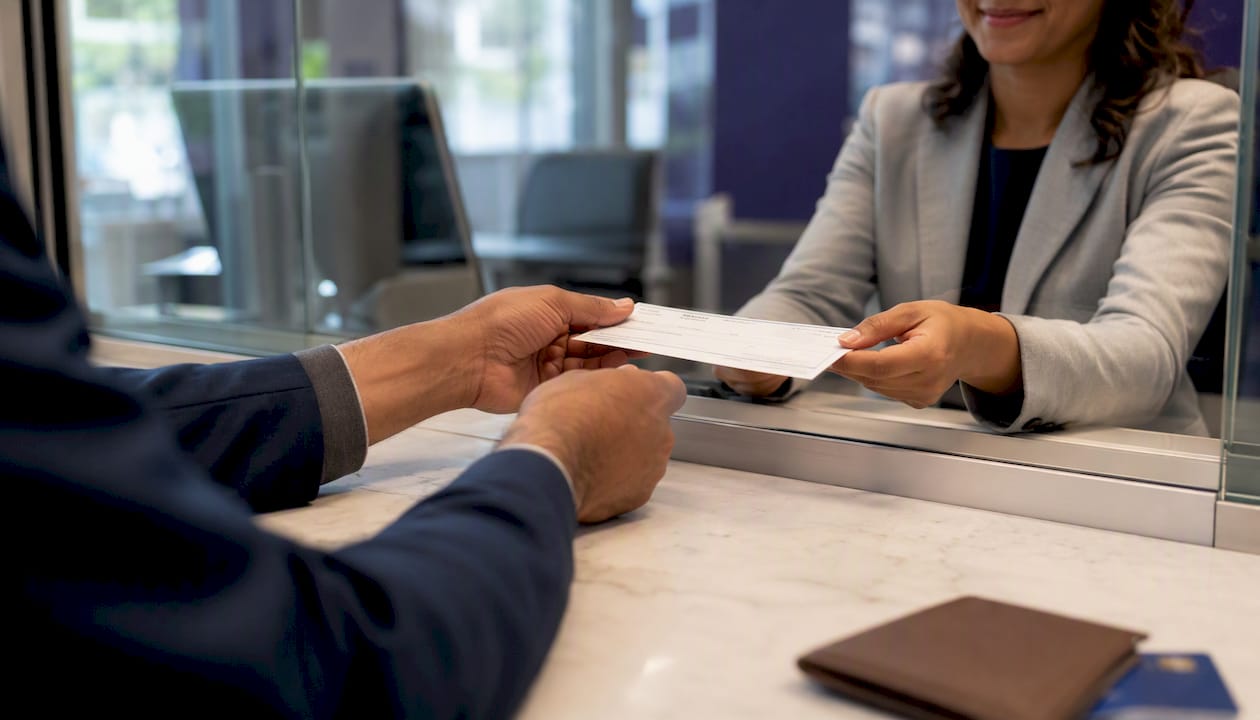
A bank draft is a prepaid, bank-issued payment instrument that the bank guarantees to a named payee. The money leaves your account the moment the draft is issued, so unlike a personal cheque, it cannot bounce for insufficient funds later on.
That guarantee is the whole point. You’d choose a bank draft when:
- The recipient specifically insists on one, often for a large or one-off transaction such as a car purchase or private property deal, as explained in how to secure a great deal when buying real estate
- An electronic transfer isn’t possible or isn’t accepted by the other party
- You need a physical, bank-backed instrument rather than a promise that funds will arrive
For most everyday payments, though, faster and cheaper electronic options usually win.
Key Takeaways
A bank draft guarantees payment because the bank debits funds upfront, but it’s slower and costlier than CHAPS or Faster Payments for nearly every modern transaction.
| Point | Details |
|---|---|
| Prepaid guarantee | Funds are debited when the draft is issued, so it cannot bounce like a personal cheque. |
| Expect delays | Domestic clearing takes one to three working days; international drafts take longer. |
| Notice and fees apply | Most banks require advance notice and charge a fee; same-day issuance is generally not available. |
| Verify before you act | Confirm authenticity with the issuing bank before releasing goods or property. |
| Electronic transfers usually win | CHAPS and Faster Payments are faster and better suited to property completions. |
Table of Contents
- How a bank draft works, step by step
- How to get a bank draft: a practical checklist
- What does a bank draft cost, and how long does it take?
- Bank draft vs money order vs electronic transfer: what’s the real difference?
- Bank draft risks: loss, theft and counterfeit checks
- What to do if a bank draft goes missing or the bank won’t help
- How bank drafts show up in property and mortgage transactions
- Frequently asked questions
- Sources
How a bank draft works, step by step
Once you request a draft, your bank debits your account immediately and issues the draft made payable to a named recipient. From that point, the draft becomes the bank’s own obligation, not yours. Legally, this is what separates it from an ordinary cheque: the drawer and the drawee are the same bank, which technically places it outside the statutory definition of a bill of exchange.
The typical journey looks like this:
- You request the draft in branch or by phone, naming the exact payee.
- The bank verifies your identity and debits the funds straight away.
- You collect or receive the draft and pass it to the recipient.
- The recipient deposits it with their own bank.
- Funds usually clear within one to three working days domestically, longer if it crosses borders.
Pro Tip: International drafts can take considerably longer if currency conversion is involved, so always ask the issuing bank for a realistic clearing estimate before you promise a completion date to anyone.
Clearing speed also depends on the recipient’s bank policy and which day of the week the draft gets deposited. A draft handed in on a Friday afternoon rarely clears before the following Wednesday.
How to get a bank draft: a practical checklist
Getting a bank draft is simple, but it isn’t instant. Most banks don’t offer same-day, online-issued drafts, largely because of the identity checks and fraud controls involved.
Before you visit a branch or call telephone banking, make sure you have:
- Valid photo ID (passport or driving licence) and proof of address if requested
- The payee’s full legal name, spelled exactly as it should appear
- Confirmation of the account you want debited
- Awareness that most UK banks charge a fee and require notice rather than issuing on the spot
Pro Tip: Call ahead and ask your bank’s exact notice period. Some branches can turn a draft around within hours; others need up to 48 hours, and turning up unannounced often means a wasted trip.
Funds are debited from your account the moment the draft is issued, not when the recipient banks it, so you lose access to that money immediately. Fees are usually flat, though some banks display them as a tiered scale depending on the draft’s value.
What does a bank draft cost, and how long does it take?
Bank draft fees explained simply: you’re paying for a guarantee, and banks price that guarantee as a flat charge rather than a percentage of the amount sent. Expect the fee to be disclosed upfront at the point of request, deducted alongside the draft amount itself.
- Domestic clearing typically takes one to three working days once deposited
- International drafts take noticeably longer, especially where currency conversion applies
- Notice periods before issue commonly range from a few hours to 48 hours
- Same-day issuance is rare because of identity verification and internal fraud checks
Despite the wait, a draft still earns its place when a seller won’t accept anything else, or when the payer wants a tangible, bank-backed instrument rather than a digital transaction trail.
Bank draft vs money order vs electronic transfer: what’s the real difference?
The difference between a bank draft and a cheque comes down to when the money leaves your account. A personal cheque only debits funds once it clears, which is why it can bounce. A bank draft debits you upfront, so the bank is on the hook, not you.
Compared with electronic transfers, the trade-off flips:
- CHAPS settles same-day and is built for high-value, time-critical payments like property completions
- Faster Payments typically clears within hours and suits most everyday large transfers
- A bank draft takes days to clear and requires physical handling, posting, or branch collection
- Drafts still work where the recipient specifically refuses electronic payment or where a physical certified instrument is contractually required
For speed and traceability, CHAPS and Faster Payments have largely superseded drafts for most modern transactions. Reach for a draft only when those options are off the table.
Bank draft risks: loss, theft and counterfeit checks
A lost or stolen draft is a real problem because, unlike a card payment, whoever holds the paper can potentially present it. Verification and careful handling matter more than most people expect.
- Contact the issuing bank directly to confirm the draft’s authenticity before releasing goods, keys, or property.
- Check the payee name, amount, and bank branding match what you were told to expect, and be wary of drafts offered as overpayment refunds, a classic scam pattern.
- Hand-deliver or use tracked, signed-for post rather than standard mail.
- Store an uncashed draft somewhere secure, exactly as you would a cheque.
Pro Tip: Never release a high-value item or complete a sale until the issuing bank confirms the draft is genuine, not just the recipient’s bank. The Financial Ombudsman Service notes that fraud disputes involving drafts are often more complex than electronic payment disputes, precisely because of that physical handoff.
The bank’s guarantee protects against insufficient funds, not against a forged or stolen instrument, so verification is your responsibility, not automatic.
What to do if a bank draft goes missing or the bank won’t help
If a draft is lost, stolen, or disputed, contact the issuing bank immediately and ask them to flag or stop it. They’ll tell you what evidence they need, usually a written statement and sometimes a police reference number.
- Ask specifically about the bank draft cancellation process and whether the original draft can be stopped before it’s cashed
- Expect to sign an indemnity bond before a replacement draft is issued, since the bank must protect itself if the original later gets presented fraudulently
- Replacement drafts commonly involve a holding period of several weeks, not days
- If your bank won’t resolve things fairly, escalate through its formal complaints process, then to the Financial Ombudsman Service if unresolved
How bank drafts show up in property and mortgage transactions
In our experience advising buyers, solicitors and lenders almost always prefer CHAPS or solicitor client-account transfers at completion, since same-day settlement removes the risk of a chain collapsing over a delayed clearance.
- You may still encounter a draft when a private seller insists on one, or in certain cross-border transactions
- Foreign national buyers sometimes face requests for drafts alongside other supporting documentation
- If you’re preparing paperwork for a mortgage application, our guide on documents subcontractors need covers the wider picture
A one-line rule of thumb
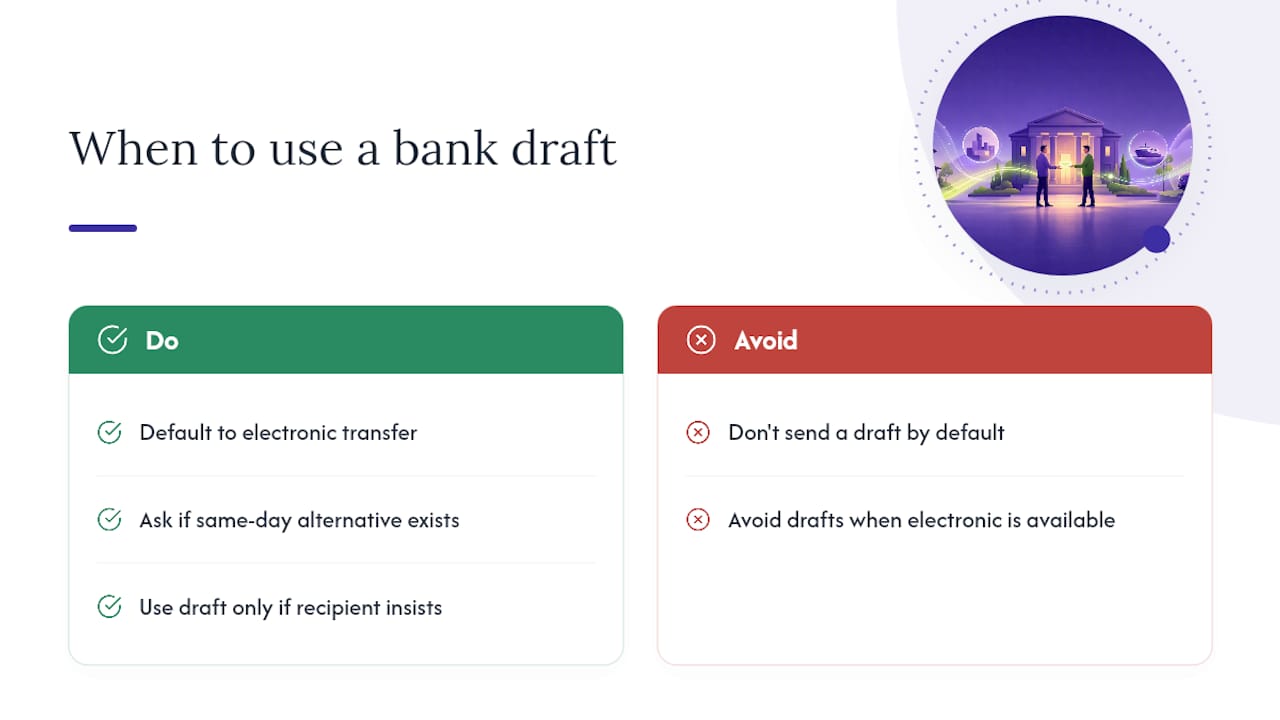
Default to electronic transfer for speed and safety. Reach for a bank draft only when the recipient insists or no electronic route exists. If in doubt, ask: could this payment clear same-day another way?
Frequently asked questions
What is a bank draft? A bank draft, sometimes called a banker’s draft, is a payment instrument issued by a bank once it has debited the funds from your account, making the bank itself liable to the named payee.
How do I get a bank draft? Visit a branch or call telephone banking with valid ID and the payee’s exact name. Expect to give notice, sometimes up to 48 hours, and pay a fee.
What’s the difference between a bank draft and a cheque? A cheque only debits your account once it clears, so it can bounce. A bank draft debits you immediately, so the bank guarantees the payment.
How long does a bank draft take to clear? Domestic drafts typically clear within one to three working days once deposited. International drafts, particularly those needing currency conversion, take longer.
What happens if my bank draft is lost or stolen? Contact the issuing bank straight away to request a stop. A replacement usually requires an indemnity bond and can take several weeks to issue.
Can I cancel a bank draft? Yes, but only through the issuing bank, and only before it’s been cashed by the recipient. You’ll need to provide identification and details of the original request.
This article is general information, not a substitute for advice from a qualified financial advisor. Consult a qualified financial professional about your own circumstances before acting on anything here.
Sources
- Cheques and bankers’ drafts – Financial Ombudsman Service
- Bankers drafts in 2026: How they work and what’s replaced them
Recommended
