Remortgage to Raise a Deposit: 3 Adviser Checks UK Homeowners Must Do

Yes, you can remortgage to raise a deposit in the UK, but only if your lender will approve extra borrowing once valuation and affordability checks are complete. Before you go further, check three things: how much your home is realistically worth now, whether your income supports the extra borrowing, and what fees or Stamp Duty surcharges will eat into the cash you release. A quick affordability calculation with a broker will tell you where you stand.
TL;DR:
- Most homeowners can only remortgage to raise a deposit if their lender approves additional borrowing after valuation and affordability checks.
- The available equity depends on the property’s current valuation, your remaining mortgage balance, and the loan-to-value cap set by the lender.
- Fees such as valuation, solicitor, Early Repayment Charges, and Stamp Duty must be deducted from gross equity to determine the net funds accessible for a deposit.
- Affordability assessments are critical; even with considerable equity, a drop in income or high current debt can prevent remortgage approval.
- The process typically takes several weeks, and only those with stable income and significant equity are likely to succeed in raising a deposit this way.
Table of Contents
- How remortgaging to release equity actually works
- Who this suits and when to consider it
- Costs, taxes and timeline you must budget for
- Lender checks, affordability and regulatory points to expect
- Step-by-step: how to remortgage to raise a deposit
- Risks, tax traps and safer alternatives
- Practical tips from a mortgage adviser: what advisers really check
- What the conventional advice gets wrong
- How Prosper Home Loans can help
- Sources
- FAQ
How remortgaging to release equity actually works
Equity is the gap between what your home is worth and what you still owe on your mortgage. When you remortgage, your lender bases the new loan on a fresh valuation, and the amount you can borrow is capped by your loan-to-value (LTV) ratio, the proportion of the property’s value the mortgage represents.
There are two routes here. You can top up your existing mortgage with your current lender, which is often quicker, or you can remortgage to a new lender and borrow more against the same property, which sometimes unlocks a better rate alongside the extra funds. Either way, the released cash becomes your deposit for the next purchase.
- Equity equals market value minus your outstanding mortgage balance.
- Your LTV limit determines the maximum you can borrow, and most lenders typically limit the loan-to-value ratio to a high proportion, often around the mid to high 80s percent range for standard remortgages.
- A lower valuation than expected, or a recent drop in income, can shrink or block the extra borrowing you were counting on.
You can read more detail on how remortgaging to release equity works in practice, including how lenders calculate net equity after costs.
Who this suits and when to consider it
Remortgaging to raise a deposit tends to suit homeowners with genuine equity and income that will hold up under scrutiny. It suits fewer people than the headlines suggest.
- Homeowners with substantial equity, several years into their mortgage term and stable, provable income, are the strongest candidates.
- Contractors and CIS workers with verifiable earnings history can also make a strong case, provided their documentation is in order.
- If your repayments are already stretched, your income has recently dropped, or your current deal carries steep Early Repayment Charges, this route may cost more than it delivers.
If remortgaging does not fit, downsizing, a gifted deposit, or a second charge or bridging loan are worth weighing instead. Readers managing an existing debt-management plan should also see our notes on remortgaging with a DMP before assuming this route is open to them.
Costs, taxes and timeline you must budget for
Releasing equity is rarely free, and the costs need to come off the top before you count on a figure for your deposit.
- Valuation fees, lender arrangement fees, and solicitor costs are the standard charges on any remortgage.
- Early Repayment Charges (ERCs) on your current deal can be substantial, and they reduce your net equity pound for pound.
- Broker or advice fees may also apply, alongside any administration fee your lender charges.
The bigger cost to plan for is Stamp Duty. Buying an additional residential property in England or Northern Ireland attracts higher rates of Stamp Duty Land Tax: higher rates starting from 5% on the lower portion of the price, increasing in steps for more expensive properties. If you sell your previous main home within three years, you can apply for a refund of the higher SDLT rate, though the claim must be filed within strict deadlines.
A typical remortgage takes several weeks from application to completion, which means you need to start the process well ahead of any exchange date on the property you intend to buy.
Lender checks, affordability and regulatory points to expect
Lenders do not simply hand over your equity because it exists on paper. Under the FCA’s MCOB rules on responsible lending, any material increase in borrowing triggers a full affordability assessment, checking that you can service the new loan alongside your other commitments. A Modified Affordability Assessment exists for some remortgage cases, but applying it is at the lender’s discretion, not a right you can insist on.
Expect to provide the same kind of evidence you gave for your original mortgage, updated:
- Recent payslips or, for the self-employed, SA302s and tax year overviews.
- Bank statements covering the last three to six months.
- CIS vouchers for contractors, which some lenders accept readily and others scrutinise more closely.
- A credit check, since missed payments or new debt since your last mortgage can affect the outcome.
Lenders also stress-test your ability to cope with higher interest rates, which is why some applications get declined even when the equity is clearly there on paper.
Step-by-step: how to remortgage to raise a deposit
Working through this in order avoids the most common delays.
- Estimate your market value and outstanding balance. This gives you a rough LTV and a first sense of how much equity might be available.
- Check for Early Repayment Charges and other fees. Subtract these from your gross equity figure to get closer to what you will actually have in hand.
- Gather your income evidence. Contractors should have CIS vouchers ready, and everyone benefits from an agreement in principle before house-hunting seriously.
- Instruct solicitors and plan your timing. Align the date your remortgage funds are released with the completion date on the property you are buying, so you are not left short at exchange.
Pro Tip: Ask your broker for a written affordability note early. It speeds up lender decisions later and flags problems while there is still time to fix them.
Risks, tax traps and safer alternatives
Remortgaging adds secured debt to your home, and if repayments become unmanageable, the property itself is at risk. MoneyHelper’s guidance is blunt about this: releasing equity is a significant financial commitment, and it recommends getting advice before treating your home as a source of short-term cash.
- Early Repayment Charges, a falling valuation, or a mismatch between your funds release date and your purchase completion date are the most common traps.
- Partial equity release, a bridging loan, or simply delaying the purchase are all worth considering if the numbers are tight.
- If you plan to use the funds for a buy-to-let, speak to a tax adviser first, since interest relief on the additional borrowing depends on how the funds are used within the letting business.
Homeowners weighing this against consolidating other debt should also see how consolidating card debt into a mortgage can cost far more over the mortgage term than it saves in the short run.
Practical tips from a mortgage adviser: what advisers really check
We look past the headline equity figure to what a client will actually walk away with. That means checking ERCs on the current deal, recent valuation trends in the local area, and whether a lender will accept CIS vouchers or other contractor evidence before an application goes anywhere near a decision-in-principle.
We also model net equity properly: gross release minus ERCs, solicitor estimates and anticipated Stamp Duty, because that net figure, not the gross one, is what you can realistically put towards a deposit. A written affordability note from an adviser tends to speed up lender decisions and catches problems before they cost you a delay or a declined application.

What the conventional advice gets wrong
Most guidance on this topic focuses on the equity you have built up and treats the release itself as the hard part. In practice, the harder part is usually the affordability check, not the valuation. Homeowners with plenty of equity still get turned down because their income, once stress-tested against higher rates, does not stretch far enough.
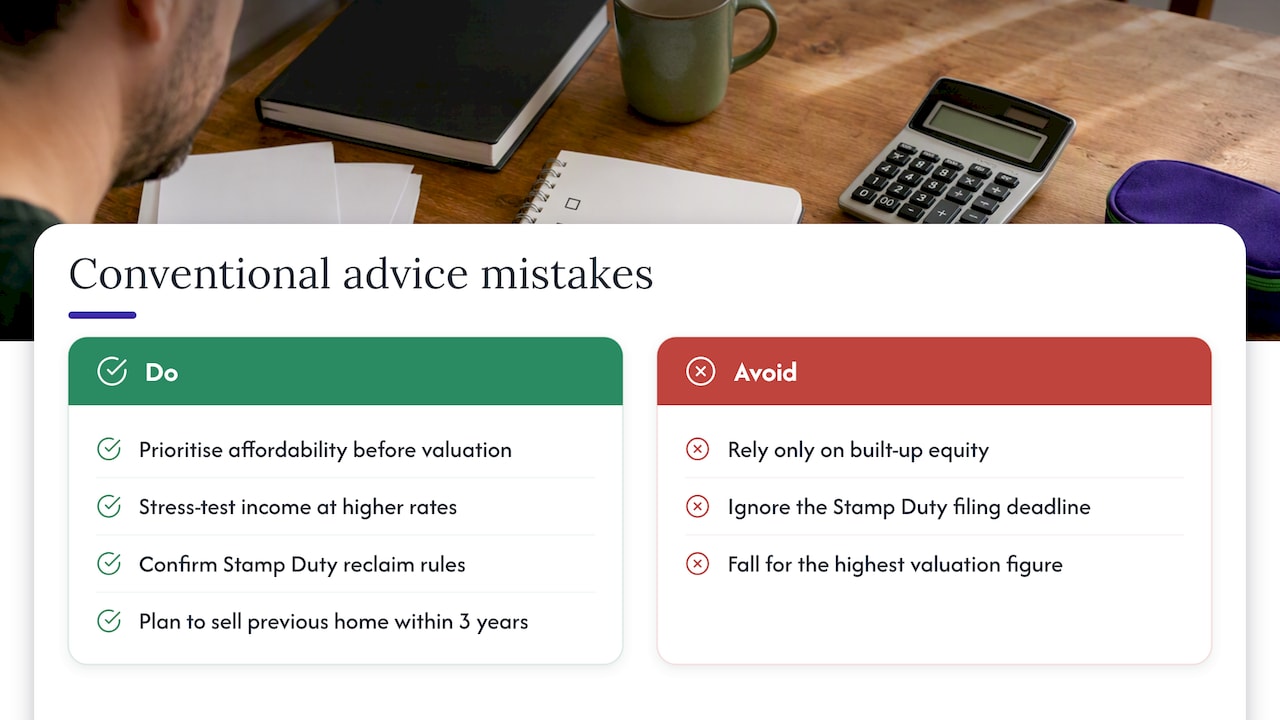
The other place conventional advice falls short is Stamp Duty. Too many guides mention the surcharge in passing and skip the fact that reclaiming it depends on selling your previous main home within three years, with a real filing deadline attached. That single detail changes whether this route makes financial sense at all for some buyers.
If you take one thing from this, prioritise the affordability conversation before you fall in love with a figure your valuation might support. Equity on paper and money you can actually borrow are two different numbers, and only one of them buys a house.
— Paul
How Prosper Home Loans can help
Working out your real net equity, rather than a rough guess, is where a broker earns their keep. We offer independent, whole-of-market remortgaging advice, including support for contractors on CIS vouchers, self-employed applicants, and clients exploring debt consolidation mortgages or secured and second charge loans.

A first call with us typically covers:
- A check on your current deal’s Early Repayment Charges.
- An estimate of your available equity after fees and likely Stamp Duty.
- Written guidance and a clear recommended next step.
The broker is local to East Sussex and serves clients across Hastings, Eastbourne, Hailsham, Bexhill-on-Sea, and nearby areas. If you are weighing up whether remortgaging to raise a deposit makes sense for you, get in touch and we will talk it through properly before you commit to anything.
Sources
For further reading, GOV.UK sets out the SDLT refund process in detail, the FCA publishes its remortgage assessment policy, and MoneyHelper offers independent consumer guidance on remortgaging risk.
FAQ
Can I increase my deposit when I remortgage?
Yes, provided your lender’s valuation and affordability checks support the extra borrowing. The amount you can add depends on your loan-to-value limit and on fees, Early Repayment Charges, and Stamp Duty reducing the net figure you actually receive.
Can I get a 0% deposit mortgage in the UK?
Fully no-deposit mortgages are rare in the mainstream market and typically come with specific eligibility conditions, such as a guarantor or family-backed scheme. Speak to a broker about what is currently available, since product availability changes frequently.
Are 5% deposit mortgages still available?
Low-deposit mortgages around 5% do exist from various lenders, though availability and terms shift with market conditions. An adviser can check which lenders currently offer them and whether your income and credit profile would qualify.
How do I raise money for a mortgage deposit?
Remortgaging to release equity is one option, alongside savings, a gifted deposit from family, or a second charge loan. Each route carries different costs and risks, so comparing them against your circumstances, ideally with a broker, is the safest starting point.
Recommended
