Claim First Homes 30% discount, East Sussex NHS mortgage schemes

There is no single NHS mortgage product. Instead, NHS staff can draw on a mix of discounted new-build allocations, shared ownership, the mortgage guarantee scheme and occasional lender recognition of your service, with eligibility and benefits varying by scheme and postcode. The immediate next step is checking First Homes and shared ownership listings for your area, then speaking to a broker who tracks local allocations before assuming you don’t qualify.
TL;DR:
- Most NHS staff can qualify for a mix of schemes, but eligibility depends on local availability, income caps, and specific definitions of key workers, not just NHS employment.
- Shared ownership allows buying a partial share with a smaller deposit and offers the option to increase ownership over time, but requires careful consideration of valuation and legal costs.
- Lenders typically assess NHS income based on stable, provable earnings, with an average borrowing capacity of around 4.3 to 4.5 times annual gross income, depending on role and deposit.
- Scheme availability varies by region, so early registration and local broker advice improve chances of securing allocations through councils or housing associations.
- NHS locum and bank staff must provide a consistent income track record, usually 12 months, to maximize affordability assessments and mortgage approval chances.
Table of Contents
- What NHS mortgage schemes actually cover
- Who qualifies: eligibility rules and common gotchas
- How lenders assess your NHS income
- How much can NHS staff actually borrow?
- The main schemes and routes worth checking
- How a local broker helps NHS staff in East Sussex
- Applying: the practical checklist and timeline
- A practical note for NHS staff in East Sussex
- Get an affordability review with Prosper Home Loans
- Sources
- FAQ
What NHS mortgage schemes actually cover
Ask five different people what “NHS mortgage schemes” means and you’ll get five different answers, because the phrase covers several unrelated routes rather than one branded product. Understanding which one applies to you saves weeks of chasing the wrong lead.
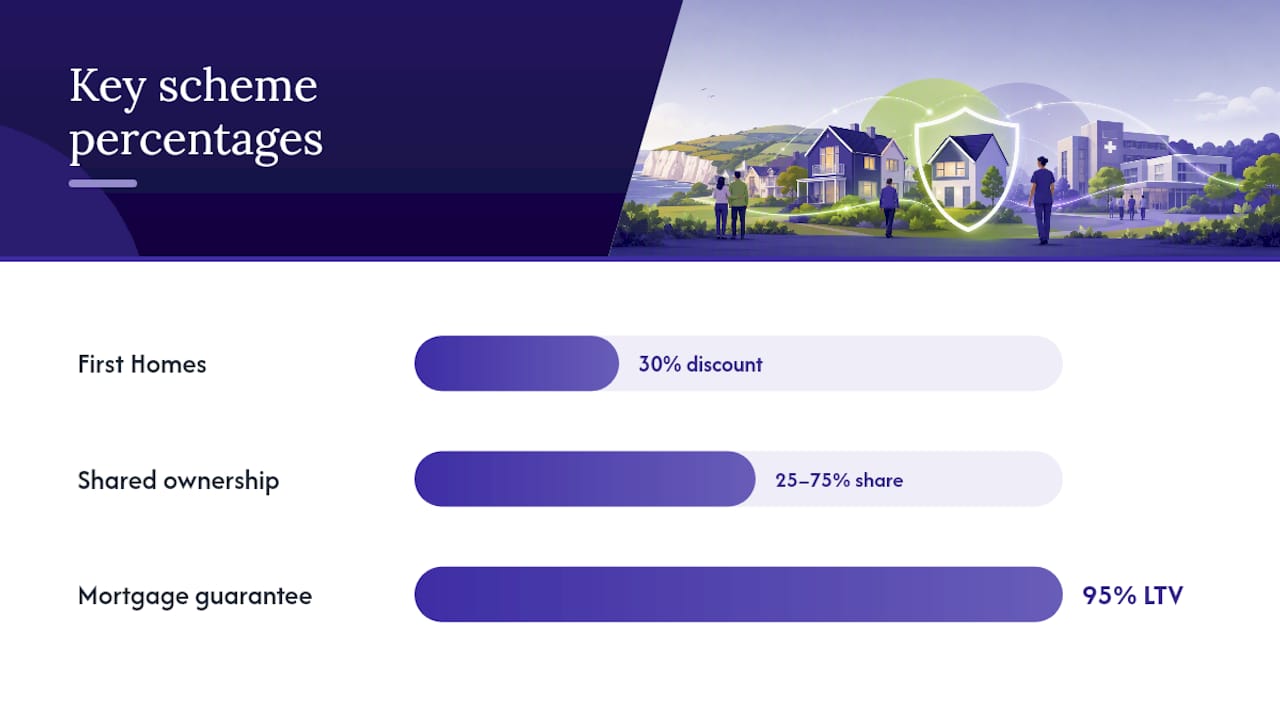
- Shared ownership — you buy a share of a property (commonly 25% to 75%) and pay subsidised rent on the remainder, which lowers both the deposit and the mortgage you need against Gov.
- Mortgage guarantee scheme — a government backed route that helps lenders offer 95% loan to value mortgages to buyers with small deposits. It isn’t restricted to key workers, but plenty of NHS staff use it because it stacks well with a modest deposit.
- Lender discounts — some lenders run informal NHS or key worker pricing on selected products, usually a rate shave or fee waiver rather than a headline scheme.
- Help to Buy — now closed to new applicants in England, though legacy equity loan cases are still being managed through to repayment, so it’s worth mentioning only if you already hold one.
Shared ownership mechanics deserve a closer look because they trip people up. You take out a mortgage on your share only, not the full property value, which is why the deposit required is often a fraction of what a standard purchase demands. Staircasing lets you buy further shares later as your income grows, though each staircasing step usually needs its own valuation and legal work.
Scotland, Wales and Northern Ireland run their own variants (Low-cost Initiative for First Time Buyers in Scotland, Help to Buy Wales historically, and separate shared ownership rules in Northern Ireland), so if you work for NHS Scotland or NHS Wales, don’t assume the English scheme rules apply to you directly.
Who qualifies: eligibility rules and common gotchas
Eligibility isn’t as simple as “work for the NHS and you’re in.” Each scheme sets its own definition of who counts as a key worker, and some exclude roles you’d expect to be covered.
- Roles typically included: nurses, paramedics, healthcare assistants, doctors, and increasingly wider NHS and public sector staff, though some local schemes still use narrower lists dating back to older key worker programmes. Always check the scheme’s own definition rather than assuming NHS employment alone qualifies you.
- First-time buyer status: First Homes requires you to be a first-time buyer, and most shared ownership routes do too, with limited exceptions for those who’ve previously owned but now can’t afford to buy without support.
- Household income caps: First Homes typically caps household income at £80,000 outside London and £90,000 in London. A senior nurse and a doctor buying together can breach that cap surprisingly easily once both salaries are combined.
- Employment status: PAYE staff generally have an easier path through underwriting than those relying heavily on locum or bank work, because lenders want to see income they can verify as stable.
- Local connection tests: many council-run and Section 106 allocations prioritise applicants who already live or work in the area, so a Trust employment contract in Eastbourne or Hastings can genuinely improve your position on a local list.
Pro Tip: Register your interest with the local housing association or council before a First Homes or shared ownership development goes to full marketing. Early registration and a written letter from your Trust confirming your role can move you up the priority queue when allocations are decided locally.
The household income cap catches out more dual-NHS-income households than any other rule in this list. If you’re a couple both working for the NHS, run the sums on combined gross income before you fall in love with a property, because a breach of the cap by even a few thousand pounds rules the scheme out entirely.
How lenders assess your NHS income
Lenders build affordability assessments around income they can prove is sustainable, and FCA guidance requires firms to run proportionate checks on exactly that. For NHS staff, this plays out in a fairly predictable way once you know what underwriters are looking for.
- Basic pay comes first. Your Agenda for Change banding or doctor pay scale gives lenders a clean, published reference point, and NHS pay resources are often used to cross-check what you’ve declared against what your role should pay.
- Overtime and unsocial hours pay get included, but cautiously. Most lenders want 6 to 12 months of consistent history before they’ll count enhanced pay reliably in the affordability sum, rather than a single unusually good month.
- Shift pay follows the same logic. If your payslips show fluctuating shift enhancements, lenders average them over a longer period rather than taking the most recent, highest figure.
- Locum and bank income needs a longer track record. A short recent spike in locum earnings is treated with real caution; a steady 12-month pattern of contracts or invoices is far more persuasive, and some lenders specifically distinguish agency-paid locum work from directly contracted work when weighing sustainability.
- Documentation is checked in a fairly standard order, typically the last three months’ payslips, your most recent P60, your employment contract or a letter confirming your role and banding, 12 months of bank statements for anyone with variable income, and photo ID plus proof of address.
The consistent theme across every lender’s approach is that provable, stable income wins over headline income. A nurse on band 6 with a steady overtime pattern often gets assessed more generously than someone with a higher gross figure built on a single quarter of unusually heavy locum shifts.
How much can NHS staff actually borrow?
Most lenders apply an income multiple of around 4 to 4.5 times your annual gross income, though some lenders stretch to 5 or 5.5 times for professionals in stable employment, and NHS staff sometimes qualify for these enhanced multiples depending on role, deposit size and the lender’s own criteria.
A band 6 nurse earning £36,000 a year at the standard 4.5x multiple could borrow around £162,000. Add a partner earning £30,000 and a combined multiple of 4.3x, and the household could realistically reach £284,000, before accounting for existing debt or dependants.
A doctor on a basic salary of £58,000, assessed at an enhanced 5x multiple by a lender that recognises medical professionals as lower risk, could see borrowing capacity closer to £290,000, though this varies significantly by lender and by how much of their income comes from reliable basic pay versus variable locum shifts.
Deposit size changes the maths as much as income does. Shared ownership sidesteps this problem almost entirely, because you’re only raising a deposit against your share of the property rather than its full value, which is precisely why it remains such a popular route into ownership for NHS staff on modest salaries.
The main schemes and routes worth checking
Several genuinely useful routes exist in the market right now, and most NHS staff only ever hear about one or two of them.
- Shared ownership lets you buy a share of a property, commonly starting between 25% and 75%, and pay reduced rent on the rest. Housing associations often run priority allocations for key workers during the initial marketing period, and registering early with written employer confirmation genuinely improves your chances.
- The mortgage guarantee scheme supports 95% loan to value lending through participating high street lenders. It isn’t restricted to NHS staff, but for anyone with a 5% deposit and steady PAYE income, it’s often the fastest route to a mortgage on offer today.
- Employer and Trust housing initiatives exist in some parts of the country, where local Trusts or Integrated Care Boards have partnered with developers to reserve homes or offer priority access for staff, though these are very locally run and inconsistent between regions.
- Section 106 local allocations allow councils to reserve a proportion of new developments for priority groups, key workers among them, as part of the planning obligations attached to the site. These rules and quotas change from council to council and from development to development, which is exactly why local monitoring matters more than a national search.
None of these schemes announce themselves loudly. Checking your council’s housing pages, your local housing association’s current developments, and your Trust’s staff benefits page regularly is the realistic way most NHS staff actually find out what’s available, rather than stumbling across a single definitive national list.
How a local broker helps NHS staff in East Sussex
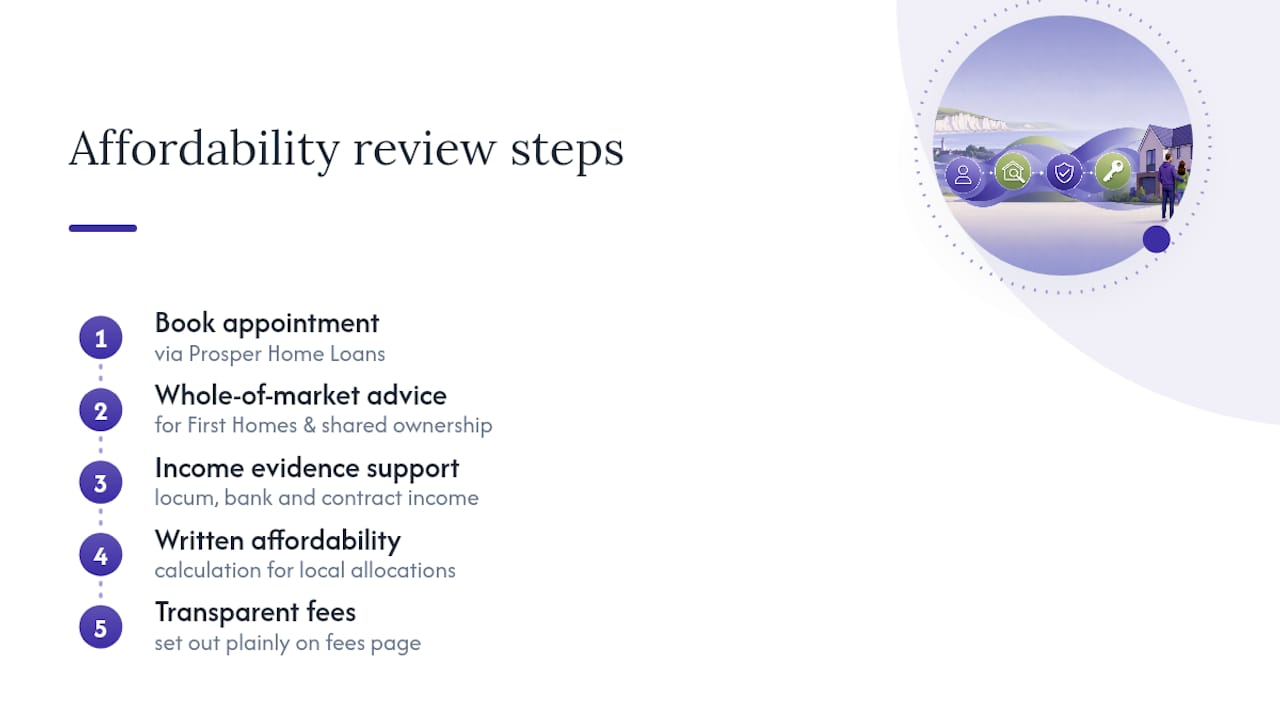
A broker’s real value here isn’t finding a scheme you could have found yourself with a search engine. It’s knowing which Hastings, Eastbourne, Hailsham and Bexhill-on-Sea developments currently have Section 106 key worker allocations, which housing associations are prioritising registrations this quarter, and which lenders on the panel will actually accept your locum or bank income evidence without a fight.
Regional knowledge changes outcomes here. A Section 106 quota that’s full in Eastbourne might still be open in Bexhill-on-Sea a few miles down the coast, and that kind of detail rarely makes it onto a national scheme page.
Brokers can package the evidence lenders want to see, such as twelve months of locum contracts, letters confirming Agenda for Change banding, or bank statements showing consistent shift patterns, and produce written affordability calculations to support mortgage offers. A broker fee can be worthwhile when incomes are not straightforward salaried PAYE or when speed and correct paperwork are critical for local allocations.
Applying: the practical checklist and timeline
Getting from “interested” to “mortgage offer” usually follows a predictable sequence, and knowing it in advance stops you scrambling for documents at the wrong moment.
- Get a mortgage in principle based on your income and deposit, which tells you roughly what you can borrow before you start viewing.
- Gather your documents: last three months’ payslips, most recent P60, employment contract or banding confirmation letter, 12 months of bank statements if you have variable income, locum contracts or invoices where relevant, and photo ID plus proof of address.
- Submit your full application once you’ve found a property or secured a scheme allocation, with your broker packaging locum or overtime evidence to meet lender sustainability checks.
- Valuation and underwriting, typically the slowest stage, especially for shared ownership or Section 106 properties that need additional legal checks.
- Formal offer and completion, usually four to eight weeks after a full application, though shared ownership and new-build purchases often run longer due to legal complexity.
The most common bottleneck is incomplete income evidence for locum or bank staff, so gather twelve months of records before you apply rather than after a lender asks for them.
A practical note for NHS staff in East Sussex
If you’re serious about buying in the next twelve months, start now: check First Homes and shared ownership listings for Hastings, Eastbourne, Hailsham and Bexhill-on-Sea, gather six to twelve months of pay records, and request a broker affordability review. Schemes genuinely help, but they’re inconsistent from one council to the next, and local knowledge closes that gap. Contact a local mortgage broker if you want that groundwork done properly rather than guessed at.
— Paul
Get an affordability review with Prosper Home Loans
A local mortgage broker offers independent, whole-of-market advice from advisors who track First Homes, shared ownership and Section 106 allocations across Hastings, Eastbourne, Hailsham and Bexhill-on-Sea, so you are not relying on a single lender’s view of your NHS income.

We support first-time buyers working through their first scheme application, package locum and bank income evidence for underwriting, and produce a written affordability calculation you can rely on when you’re up against a tight local allocation window. If your income sits outside standard PAYE, our guidance on what documents foreign nationals need for a mortgage covers verification principles that carry across to locum and contract-based NHS income too. Fees for advice and administration are set out plainly on our mortgage advice fees page, with no surprises once you’re in the process.
Book an appointment through Prosper Home Loans and we’ll talk you through what a written affordability calculation covers, what documents to gather first, and which local schemes are worth checking this month.
This article is general information, not a substitute for advice from a qualified financial advisor. Consult a qualified financial professional about your own circumstances before acting on anything here.
Sources
FAQ
Do NHS staff get better mortgage rates?
Not automatically. Some lenders offer informal discounts or fee waivers to NHS and key worker applicants, but there’s no universal preferential rate, so the real advantage usually comes from scheme access such as First Homes or shared ownership rather than the interest rate itself.
What benefits do NHS staff get on a mortgage?
The main benefits are priority access to certain First Homes and shared ownership allocations, occasional lender flexibility around banding and overtime income, and in some areas Section 106 quotas reserved specifically for key workers. None of these are guaranteed everywhere; availability depends heavily on your local council and Trust.
What salary do I need for a £400,000 mortgage in the UK?
At a typical multiple of 4 to 4.5 times income, you’d need a household income roughly calculated from your target purchase price, though some lenders stretch to 5 or 5.5 times for stable professionals, which lowers the required income accordingly. A broker can run the exact figure against current lender criteria for your circumstances.
Is the NHS 5% deposit scheme still available?
There’s no scheme specifically branded for NHS staff at a 5% deposit, but the mortgage guarantee scheme supports 95% loan to value mortgages generally, and plenty of NHS staff use it alongside their standard PAYE income. It isn’t key worker exclusive, so eligibility comes down to lender criteria and your deposit, not your employer.
Recommended
