Second Charge Bridging Loans: How They Work and Their Risks

A second charge bridging loan is short-term borrowing secured on a property that already has a mortgage. The new lender sits behind your existing lender, and you repay it in a lump sum when you sell, refinance or receive other funds. It can be a useful tool for a specific, time-limited need. It also puts your home at risk, so it needs a clear plan for repayment before you sign anything.
We are a local mortgage and protection advice firm in Hastings, working with homeowners, landlords, self-employed people and CIS subcontractors across East Sussex and the UK. Below, we explain how these loans work, what they cost, and when another route may suit you better.
TL;DR
- A second charge bridging loan is secured on your property behind your existing mortgage, and is designed to be repaid within a short term, not over decades.
- Interest can be paid monthly, retained from the advance or rolled up and repaid at the end. Each changes how much you receive and how much you repay.
- The lender must be satisfied you have a realistic way to repay. “I will remortgage later” is not enough on its own.
- If the property is or will be your home, the loan is usually regulated and your home can be repossessed if you cannot keep up.
- Check a further advance, a longer-term second charge or a remortgage first. They are sometimes cheaper.
Table of Contents
- What a second charge bridging loan is
- When people use one
- How interest works: monthly, retained and rolled up
- A worked example
- Is it regulated?
- The exit: how you repay is the whole question
- Alternatives to compare first
- If the loan is to clear debts
- Our view
- Talking to a local adviser
- FAQ
- Sources
What a second charge bridging loan is
A “charge” is a lender’s legal claim over your property. Your main mortgage is the first charge. A second charge is another loan secured on the same property, from a lender other than your original one. If the property ever has to be sold, the first lender is paid first and the second lender takes what is left, up to the amount owed.
What makes it a bridging loan is the term. A standard second charge mortgage is repaid over many years. A bridge is meant to cover a gap: the weeks or months until a sale completes, a refinance goes through, or money arrives from another source.
Because you keep your existing mortgage in place, this can appeal if your current deal has a good rate or early repayment charges that would make a full remortgage expensive. It is worth knowing the trade-off: the second lender carries more risk than the first, which is why the cost is usually higher than a mortgage.
When people use one
Common reasons include:
- Raising a deposit or completing a purchase quickly while another property is still for sale.
- Funding works on a property before refinancing onto a longer-term product.
- Clearing a tax bill or other debt while waiting for funds from a sale.
- Buying land or a development plot where a mainstream mortgage is not available. Land purchases are assessed very differently from house purchases, and lender criteria vary widely, so this is a case to take advice on early.
For property investors, bridging is also used for refurbishment projects. If that is your plan, see our guides to light refurbishment bridging and heavy refurbishment bridging for the budgeting side.
How interest works: monthly, retained and rolled up
Bridging loans usually quote interest per month rather than per year. How it is collected matters more than the headline rate.
| Method | How it works | What to watch |
|---|---|---|
| Serviced | You pay the interest each month | Needs spare monthly income |
| Retained | Interest for the term is deducted from the loan upfront | You receive less than the loan amount |
| Rolled up | Interest is added to the balance and paid at the end | The balance grows; the final repayment is larger |
Retained interest is a common feature of development-style bridging. One RICS property journal case describes interest deducted upfront, which simplifies cash flow during works but reduces the net capital received. That same article mentions a bridging rate of 0.85% a month on a 12-month term in 2024. Treat that as one example, not a current price: rates depend on the property, the combined loan-to-value and your circumstances.
If you retain or roll up interest, ask for the total amount you will repay at the end, plus every fee, and compare that with the net amount you actually receive. Arrangement fees and other set-up costs should be factored in when you work out what a secured loan will cost.
A worked example
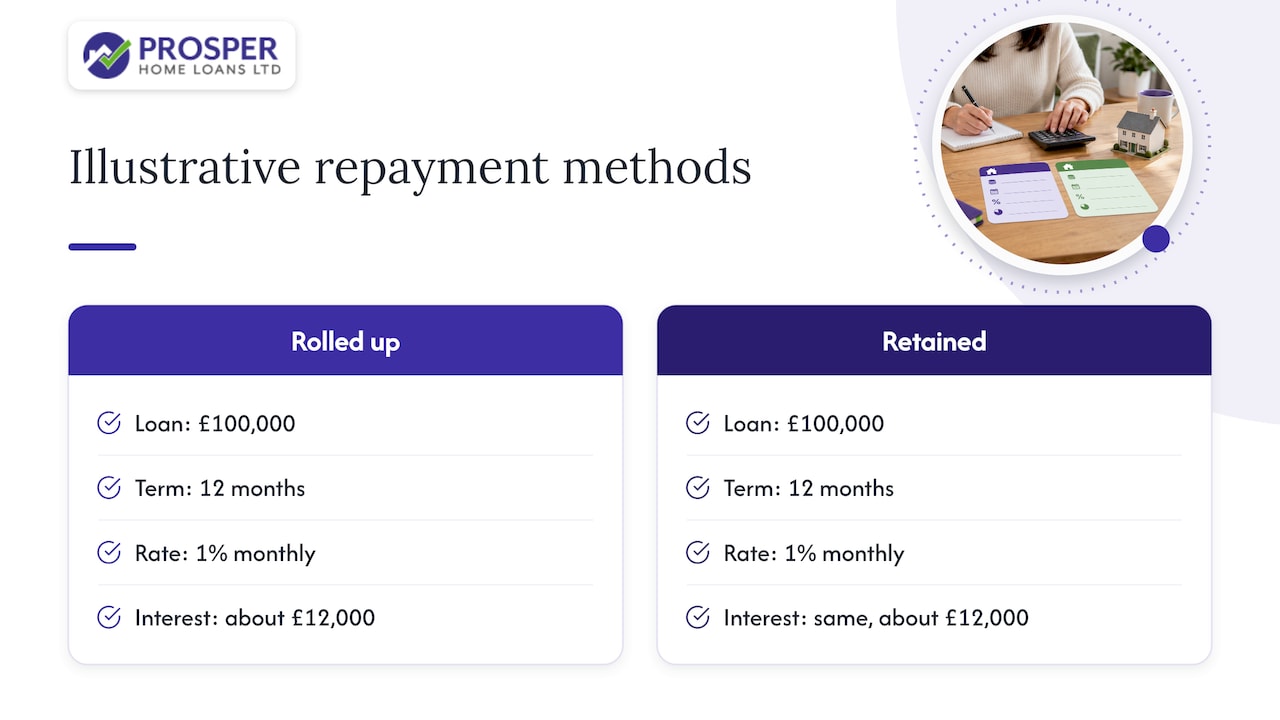
This is illustrative only and uses round numbers, not a quote. Suppose a loan of £100,000 is taken for 12 months at an imaginary 1% a month with interest rolled up. Ignoring fees, interest of about £12,000 builds up over the year, so you would repay roughly £112,000 at the end. If the same interest were retained, you would receive about £88,000 on day one but still owe £100,000. Either way, the cost depends on how long the loan runs, which is why delays to a sale or refinance are the main danger.
Is it regulated?
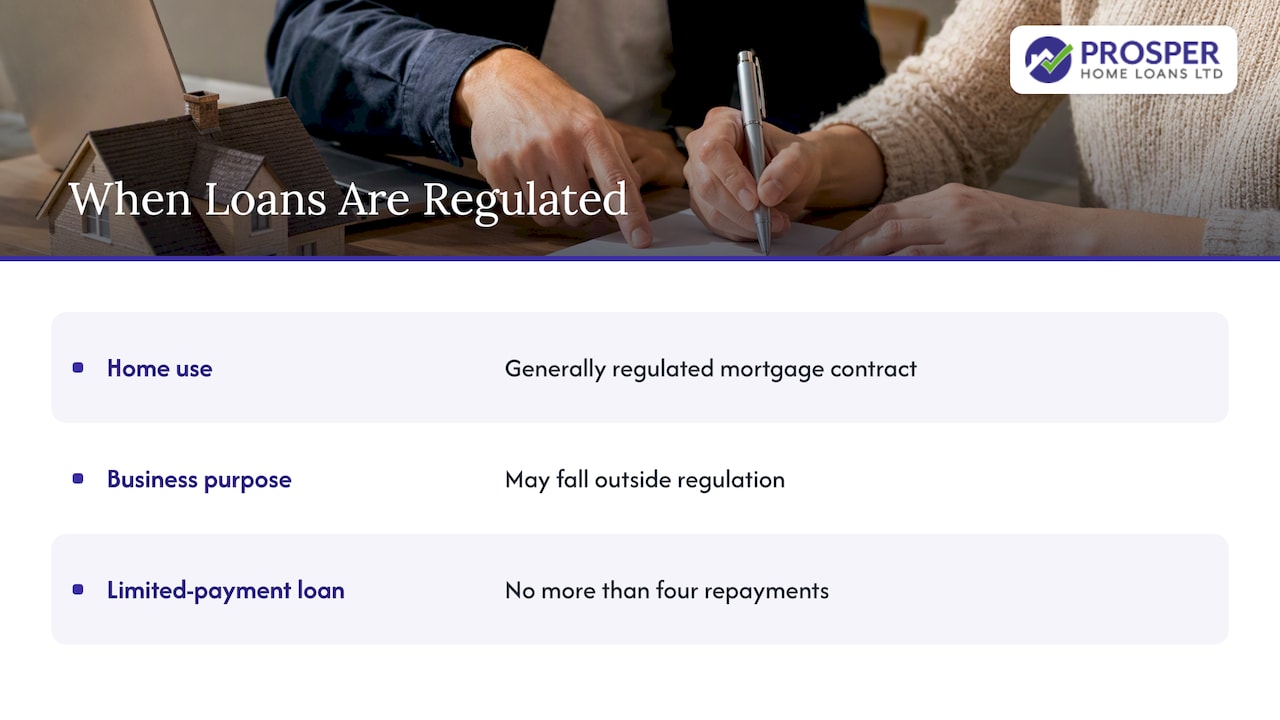
It depends on what the property is used for. Under FCA rules, a contract secured on a home you live in, or intend to live in, is generally a regulated mortgage contract, which brings consumer protections. The FCA’s guidance sets out the exclusions, including a narrow category of “limited payment” second charge bridging loans that meet specific conditions, such as no more than four repayments. A loan to a commercial borrower or for business purposes may fall outside regulation.
Do not guess which side you are on. Ask your adviser to confirm in writing whether the loan is regulated. Our page on regulated bridging loans goes into the process.
The exit: how you repay is the whole question
A bridge is only as safe as its exit. The FCA’s responsible lending rules (MCOB 11) say that a lender should not accept a plan to refinance onto a longer-term mortgage unless it is reasonably satisfied that a mainstream lender would actually lend to you. Lenders may ask for evidence, such as an agreement in principle.
Before you borrow, ask yourself:
- If the sale takes three months longer, can I afford the extra interest?
- If the property values lower than expected, will the sale still clear both charges?
- If I plan to refinance, would a mainstream lender accept me today, given my income and credit history?
- What happens at the end of the term if neither route works?
If you are self-employed or a CIS subcontractor, point 3 deserves particular attention. Some mortgage lenders may consider gross CIS earnings when assessing affordability, subject to their own criteria. That does not raise your actual income and does not guarantee a particular amount of borrowing, so it should be checked before you rely on a refinance.
Alternatives to compare first
A second charge bridge is rarely the only option, and it is not always the cheapest.
- Further advance from your current lender. MoneyHelper notes this can make sense if your lender’s rate is competitive. Second charge loans are often more expensive than a further advance, so ask your own lender first.
- Remortgage. Replacing the whole mortgage can suit you if your deal is ending anyway. Our comparison of a secured loan versus a remortgage sets out the differences.
- A longer-term second charge mortgage. Lower monthly payments, but a longer term. Spreading a debt out can lead to a much higher total cost over the life of the loan.
- Selling first. If the gap is only caused by a sale, waiting may avoid secured borrowing altogether.
If the loan is to clear debts
Using a second charge to pay off cards or loans can lower the monthly bill, but it turns unsecured debt into debt secured on your home. MoneyHelper describes these loans as priority debts, meaning your home could be repossessed if you stop paying, and experts there say they should be seen as a last resort for consolidation. A bridge is a poor fit for this unless there is a definite sale or refinance about to repay it. For longer-term consolidation, read about what lenders check on a homeowner loan to clear debt and what consolidating card debt into a mortgage can cost.
Our view
We see second charge bridging as a precise tool, not a general solution. It works best when the end date is certain, the property has enough equity, and there is a documented route to repay. It works worst when it is used to buy time on a problem that has no other answer.
Before we discuss any secured loan, we look at what you are trying to achieve, what the total cost will be, and what happens if plans slip. Sometimes the right advice is a further advance or a remortgage. Sometimes it is not to borrow against the home at all. We explain the costs and risks plainly so that you can decide with the facts in front of you.
— Paul McMath CeMAP CeRER
Talking to a local adviser
We are based on Sedlescombe Road North in St Leonards-on-Sea and help clients in Hastings, Bexhill-on-Sea, Eastbourne, Hailsham and across East Sussex, as well as nationwide. Our second charge, bridging and secured loan advice covers the options side by side, and we are happy to look at self-employed, CIS and company director income. Whether a loan is available, and on what terms, depends on your circumstances and each lender’s criteria.
FAQ
Can a bridging loan be a second charge?
Yes. A bridging loan can be secured behind an existing mortgage if there is enough equity and the first lender allows it. Some buy-to-let mortgage terms restrict additional charges, so the first lender’s consent can matter.
Is a second charge bridging loan regulated?
It depends on use. A loan secured on a home you live in, or plan to live in, will usually be regulated under FCA rules, while some business or commercial borrowing is not. Ask for confirmation in writing before you proceed.
What does retained interest mean on a bridging loan?
The lender deducts the interest for the whole term from the loan at the start. You receive less cash, but you make no monthly payments. Rolled-up interest is different: it is added to the balance and repaid at the end.
What happens if I cannot repay on time?
Interest keeps building and extension fees may apply, and the lender can ultimately seek to sell the property. FCA rules expect lenders to treat borrowers fairly in arrears, but if you are struggling, Citizens Advice recommends getting help from an experienced debt adviser. Speak to your lender and an adviser early.
Do I need a broker for a second charge bridge?
You do not have to, but these products are complex and your home is at risk. Citizens Advice suggests checking that any credit broker is FCA-authorised so that you can complain if advice proves unsuitable.
Sources
- Second charge or second mortgages, MoneyHelper
- Increasing your mortgage: getting a further advance, MoneyHelper
- Secured and unsecured borrowing explained, MoneyHelper
- MCOB 11 Responsible lending, FCA Handbook
- PERG 4.4 What is a regulated mortgage contract?, FCA Handbook
- Shop-to-flat conversion, RICS Property Journal
- Mortgages and secured loans, Citizens Advice
- What to do if you can’t pay your mortgage, Citizens Advice
Recommended
- Act Fast: UK Chain Break Bridging With an FCA Checked Broker Plan
- Light Refurbishment Bridging for UK Investors: AVM or Survey?
- Heavy Refurb Bridging for UK Investors: Budget a 10–15% Works Buffer
- Secured Loan vs Remortgage: A UK Homeowner Guide
This article provides general information and is not a personal mortgage recommendation. Mortgage availability and eligibility depend on your circumstances and lender criteria. Rates and criteria can change. We will explain any applicable fees before you commit. Think carefully before securing other debts against your home. Consolidating debts over a longer term may reduce your monthly payments but increase the total amount you repay. Your home may be repossessed if you do not keep up repayments
