Get a Zero Hours Mortgage in the UK: 12–24 Months' Proof and a Broker

Yes, you can get a mortgage on a zero-hours contract in the UK, provided you can show lenders a sustainable income pattern, usually over 12 to 24 months. Most lenders treat this income like other variable earnings and want documentary proof before they will lend. Your first move should be to run an affordability check and speak with an independent broker, which helps you avoid multiple hard credit searches while you find the right lender.
TL;DR:
- Most lenders require 12 to 24 months of consistent zero-hours income proof, including pay slips, bank statements, and employer confirmation, to consider a mortgage application.
- A larger deposit reduces lender risk and can improve mortgage rates, especially when your income pattern is variable or uncertain.
- Maintaining a clean credit record, demonstrating work stability, and having savings can significantly strengthen your application on a zero-hours contract.
- Using a whole-market broker helps identify lenders willing to accept variable earnings and prevents multiple hard credit searches that could damage your credit score.
- Waiting to build a longer income history or saving a larger deposit can increase your chances of mortgage approval and better terms.
Table of Contents
- Who lenders will consider and how they assess zero-hours income
- What lenders look for beyond income: deposit, credit and stability
- Steps to strengthen your application before you apply
- Mortgage types and alternatives worth weighing up
- How Prosper Home Loans supports zero-hours applicants
- Where zero-hours applications commonly go wrong
- Get your zero-hours mortgage application moving
- Official resources and tools to check next
- Sources
- FAQ
Who lenders will consider and how they assess zero-hours income
Lenders generally classify zero-hours work as variable income, closer to self-employment than a salaried role, and that shapes every affordability decision that follows. Rather than taking a single payslip at face value, underwriters want to see a pattern of earnings that holds up over time, because that pattern tells them whether your income is likely to continue.
Most lenders look for 12 to 24 months of consistent earnings before they will model your income into an affordability calculation, and some will average your earnings across that period to smooth out quieter months. A handful of specialist lenders accept a shorter record when other evidence, such as repeat work with one employer or CIS vouchers, points to income that is likely to hold up.
To build that picture, lenders commonly ask for:
- P60s covering each relevant tax year
- Payslips for any weeks or months you were paid, however irregular
- Bank statements going back 12 to 24 months
- A letter from your employer confirming how long you have worked there and the pattern of hours offered
- CIS vouchers and self-assessment tax returns if you also work as a subcontractor
What lenders look for beyond income: deposit, credit and stability
Income evidence is only part of the underwriting picture. Your deposit size and the resulting loan-to-value ratio still determine which products you can access and the rate you are offered, and a larger deposit tends to open up better pricing because it lowers the lender’s risk.
A clean credit record carries real weight too. Missed payments or a string of credit applications in a short space of time can count against you, which is one reason to limit formal applications until you know which lender suits your circumstances.
Lenders also respond well to signs of stability that sit alongside your zero-hours income:
- Continuous work with the same employer over several years, even if hours vary week to week
- A regular pattern of shifts rather than sporadic, unpredictable work
- A second income stream, whether from a partner’s earnings or another part-time role
- Savings history showing you can manage money reliably month to month
Where your income profile does not fit a mainstream lender’s standard criteria, some providers offer specialist or more flexible products built for applicants without a fixed salary.
Pro Tip: Keep every payslip and bank statement in one folder from the day you start job hunting for a mortgage. Lenders move faster when the evidence is ready to hand rather than assembled under pressure.
Steps to strengthen your application before you apply
A little preparation now saves weeks of delay later, and it improves the odds that your first application succeeds rather than stalls.
- Gather 12 to 24 months of bank statements, P60s, tax returns and any contract or roster records, alongside a letter from your employer confirming your work pattern.
- Build your deposit as far as you reasonably can, and if any part of it is a gift, get a signed gifted deposit letter from whoever provided it.
- Check your credit report for errors, settle any outstanding issues, and register on the electoral roll if you have not already.
- Consider a joint application or a guarantor if your income alone will not stretch far enough, but understand that a guarantor takes on real legal exposure.
- Speak to a broker early and get an agreement in principle before you submit a full application, so you are not left running multiple hard credit searches across different lenders.
Mortgage types and alternatives worth weighing up
Once your paperwork is in order, several routes become realistic, each with a different balance of cost, flexibility and risk.
- Standard repayment mortgages remain available once you can demonstrate steady income over time, and they usually offer the widest choice of rates.
- Specialist lender products accept variable income more readily but often come with stricter documentation requirements and less competitive pricing.
- Guarantor or joint mortgages can unlock affordability you would not reach alone, though the guarantor shares legal and credit responsibility if repayments are missed.
- Remortgaging or secured debt consolidation can bring several debts under one manageable payment, which suits some zero-hours workers carrying higher-interest borrowing, but it should be weighed carefully against the affordability checks lenders apply to second charge loans before committing.
- Saving a larger deposit or delaying your purchase is a lower-risk option when your income history is still thin, giving you time to build the 12 to 24 month record most lenders want to see.
How Prosper Home Loans supports zero-hours applicants
We work across the whole market, which means we can match your income profile to lenders who genuinely accept variable earnings rather than rejecting applications outright. Our independent, whole of market mortgage advice includes:
- Reviewing your documents before submission so your application goes in clean the first time
- Running affordability calculations to show you realistically what you can borrow
- Advising on protection products, guarantor risks and the correct paperwork for gifted deposits
- Meeting you locally across Hastings, Eastbourne, Hailsham and Bexhill-on-Sea, or by phone if that suits you better
Book an initial review with us to see where you stand before you apply anywhere else.
Where zero-hours applications commonly go wrong
The mistake we see most often is patchy evidence: a few months of good statements followed by gaps that raise questions rather than answer them. Relying on a verbal promise from an employer about future hours carries little weight with an underwriter who wants it in writing.
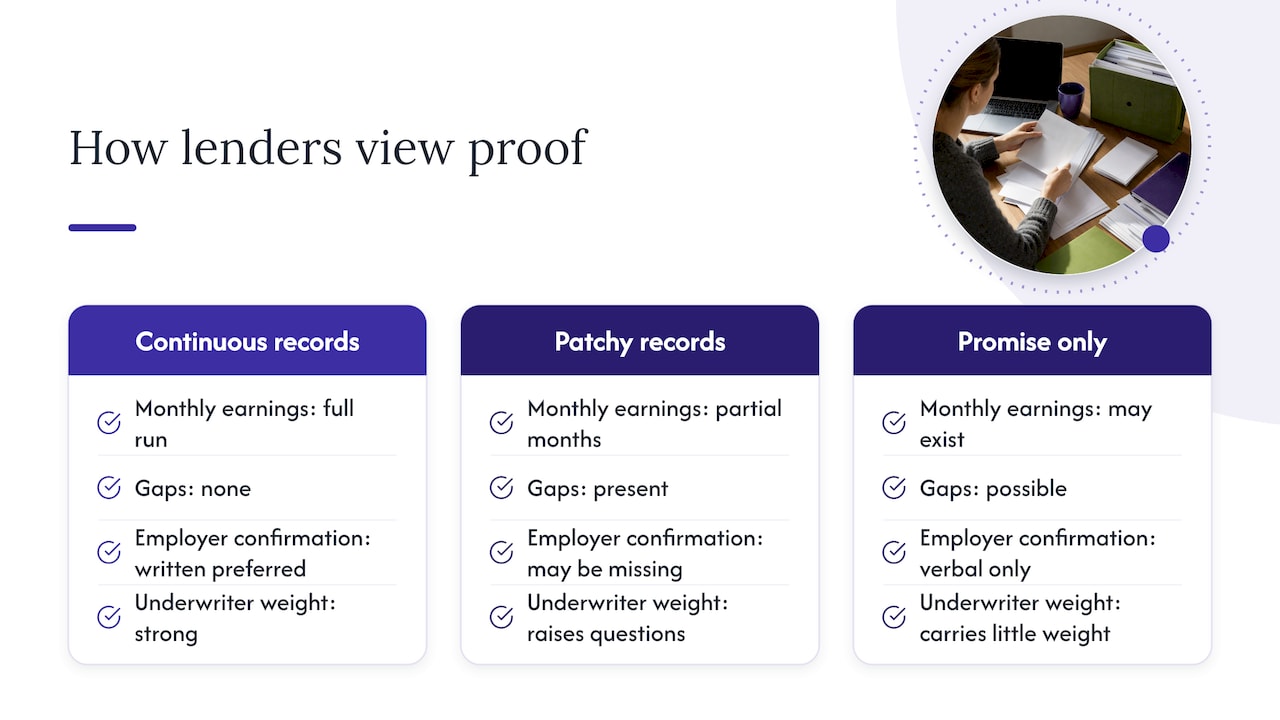
Applying to several lenders at once out of hope rather than strategy is another common error, and it leaves a trail of hard credit searches that can lower your score just when you need it strongest. A broker’s real value is narrowing the field first, so you apply once, to the lender most likely to say yes.
Sometimes the honest advice is to wait. If a stress test at a higher interest rate leaves your budget too tight, pushing ahead risks a refusal or a mortgage you will struggle to sustain. Saving a little longer, or waiting for your income record to lengthen, is often the safer path.
— Paul
Get your zero-hours mortgage application moving
Getting a mortgage approved on a zero-hours contract usually comes down to preparation, not luck, and that is exactly where we add the most value. Our advisors work across the whole market, so instead of guessing which lender might accept your income pattern, we match you to the ones that actually do.

We support:
- Whole of market advice, document checks, affordability calculations and written confirmation once we have your case ready
- Zero-hours workers, contractors claiming through CIS vouchers, and self-employed applicants who need specialist handling
- A straightforward first step: bring your documents to an initial chat, and we will talk you through our fee-transparent process from there
If your income also needs restructuring through a debt consolidation mortgage or you are working under CIS as a subcontractor looking for enhanced income recognition, we handle those cases regularly and locally across Hastings, Eastbourne, Hailsham, Bexhill-on-Sea and the wider East Sussex area. Get in touch through Prosper Home Loans to arrange your review.
Official resources and tools to check next
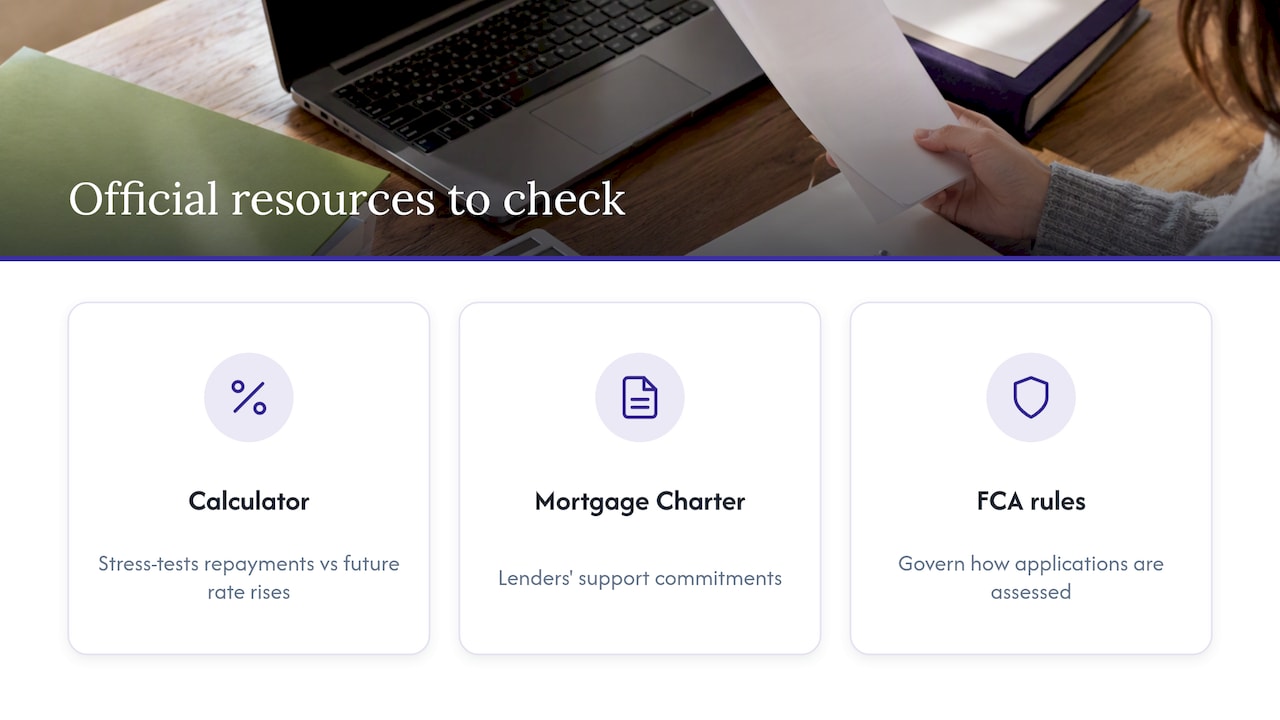
Before you apply anywhere, run your numbers through the MoneyHelper mortgage affordability calculator, which stress-tests your repayments against future rate rises. It is also worth reading the government’s Mortgage Charter for the support commitments lenders have signed up to, and the FCA’s responsible lending rules that govern how your application is assessed.
This article is general information, not a substitute for advice from a qualified financial advisor. Consult a qualified financial professional about your own circumstances before acting on anything here.
Sources
FAQ
Is it possible to get a zero deposit mortgage in the UK?
Zero deposit mortgages are rare and generally reserved for specific guarantor-backed schemes rather than open to most applicants. For zero-hours workers, a deposit, even a modest one, significantly widens your choice of lenders and improves the rate you are offered.
Can I buy a house on a zero-hours contract?
Yes, buying a house on a zero-hours contract is achievable once you can show a consistent income pattern, usually over 12 to 24 months. Lenders will want P60s, bank statements and, where relevant, tax returns to support the application.
Can I get a mortgage with a specific bank if I have a zero-hour contract?
Acceptance varies significantly by lender, and criteria change regularly, so no single bank can be named as a guaranteed option for zero-hours applicants. Speaking with a whole of market broker is the most reliable way to find out which lenders currently accept your income profile.
How do I protect my mortgage payments if my zero-hours income drops?
Income protection or life insurance can help cover mortgage payments if your income stops or falls sharply, and insurers commonly recommend these products for people with variable earnings. Adding protection cover can also make lenders more comfortable with borderline affordability cases.
Recommended
