Why visa type affects your UK mortgage approval in 2026

Your visa type is one of the first things a UK mortgage lender looks at, and it shapes almost every condition attached to your application. Lenders are not assessing your character; they are assessing risk. If your visa could expire before the mortgage term ends, or if your right to remain in the UK is uncertain, a lender’s exposure increases considerably. That is why visa status and home loans are so closely linked in the UK market.
Here is what that means in practice:
- Visa duration signals stability. Most lenders require at least 12 months remaining on your visa at the point of application, and some ask for 18 months or more.
- Deposit requirements are higher. Visa holders typically need a deposit of at least 25%, compared with 5–10% for British citizens.
- Your UK credit and employment history matters. Lenders assess your UK financial record heavily, so a thin or absent credit file weakens your application regardless of visa type.
- Indefinite Leave to Remain (ILR) changes everything. ILR holders are treated similarly to British citizens by most lenders, with access to standard products and deposit thresholds.
- Specialist lenders and brokers open doors. Mainstream automated systems often reject visa holders; manual underwriting through specialist lenders is frequently the route to approval.
- Visa expiry can affect your mortgage term. Some lenders require your visa to remain valid beyond the mortgage term, or want evidence that a renewal is already in progress.
How different UK visa types affect your mortgage approval chances
Not all visas carry the same weight with lenders. The type you hold tells a lender how long you are likely to remain in the UK, whether your income is stable, and whether there is a clear path to settlement. Those three factors drive the impact of visa type on loans more than almost anything else.
Skilled Worker and Health and Care Worker visas are the most lender-friendly options for non-settled residents. Both visas come with employer sponsorship, a defined income, and a recognised route to ILR after five years. Lenders view that combination as relatively low risk, and several high street lenders will consider applications from holders of these visas, subject to their individual criteria.
Family and spouse visas present a more mixed picture. As a sole applicant, a spouse visa holder faces tighter restrictions, and some lenders will not accept them in that position at all. A joint application with a British citizen or ILR holder is usually the stronger route, because the settled partner’s income and residency status reduce the lender’s overall risk.
Student visas are the hardest category. Most mainstream lenders will not consider student visa applicants because the visa is temporary by design, and income during study is typically limited or restricted. If you are currently on a student visa, the realistic options are to wait until you move onto a work visa, or to explore whether a guarantor arrangement could support an application with a specialist lender.

Tier 5 and other temporary worker visas sit in a similarly difficult position. The short-term nature of these visas, combined with the absence of a clear settlement pathway, means most lenders treat them as unacceptable for mortgage purposes. Visa renewal certainty plays a direct role here: a lender who cannot be confident your visa will be extended has little basis for approving a 25-year loan.
What lenders actually look for when you hold a UK visa
Lender criteria for visa holders go well beyond simply checking which visa you hold. The full picture includes deposit size, residency length, credit history, income verification, and how your visa interacts with the proposed mortgage term.
- Deposit. The 25% minimum deposit is the most commonly cited threshold for visa holders, though some lenders set it lower for certain visa types. Suffolk Building Society, for example, accepts a 10% minimum deposit for eligible visa holders who meet their full criteria, including a minimum period of UK residency and employment.
- Minimum visa time remaining. Most lenders require at least 12 months remaining on your visa. Some, including certain building societies, require 18 months minimum and at least three years of UK residency.
- UK residency period. Lenders typically require you to have lived in the UK for at least six to twelve months before they will consider your application. This is separate from your visa duration; it is about establishing a financial footprint in the UK.
- UK credit history. A UK credit file is not optional. Without one, lenders have no way to assess your repayment behaviour. Opening a UK bank account, registering on the electoral roll, and using a credit card responsibly all help build that record over time.
- Income verification. Sponsored employment under a Skilled Worker or Health and Care Worker visa makes income verification relatively straightforward. Restrictions on working hours or employer changes under certain visa conditions can complicate affordability assessments, so lenders will scrutinise your contract and right-to-work documentation carefully.
- Loan-to-value limits. Visa holders generally face tighter LTV caps than British citizens, which restricts access to the most competitive rates. The product range available to you narrows further if your visa has less than two years remaining.
- Joint applications. Where one applicant holds a visa and the other holds ILR or British citizenship, lenders often apply more favourable criteria to the application overall. The settled applicant’s income and residency status carry significant weight.
- Guarantors. A UK citizen or permanent resident acting as guarantor can improve approval chances when your visa status alone would not satisfy a lender’s criteria. Not all lenders accept guarantor arrangements, so this route works best through a specialist broker.
Pro Tip: If your visa has less than two years remaining, consider waiting until after your renewal or ILR application before approaching lenders. Applying with a freshly extended visa significantly improves the terms available to you.
How ILR changes your mortgage eligibility
Indefinite Leave to Remain is the single biggest step change in mortgage eligibility for non-British residents. Once you hold ILR, most lenders treat you the same as a British citizen, which means standard deposit requirements, access to the full product range, and no visa expiry conditions attached to your mortgage term.
The practical difference is substantial. A visa holder might need a significantly larger deposit on a property compared to someone with ILR, reflecting the different deposit thresholds required. That gap alone makes ILR a significant financial milestone, not just an immigration one.
ILR also removes the documentation burden around visa validity. You will still need to evidence your income and credit history, but lenders no longer need to assess whether your right to remain will outlast the mortgage term. Affordability assessments become cleaner, and the pool of lenders willing to consider your application expands considerably.
If you are approaching the five-year mark on a Skilled Worker or Health and Care Worker visa, timing your mortgage application around your ILR application is worth discussing with a specialist adviser. The gov.uk guidance on ILR sets out eligibility requirements clearly, and understanding where you sit in that process can shape your mortgage timeline meaningfully.
Expert guidance on getting a mortgage approved with a UK visa
The most common reason visa holders are declined is not their visa itself. It is applying to the wrong lender. Mainstream lenders often use automated decision systems that flag non-standard visa types and decline without review. Manual underwriting through a specialist lender or broker is frequently the difference between a rejection and an approval.

At Prosperhomeloans, we work with clients across a range of visa types and understand which lenders are genuinely open to your circumstances in 2026. The criteria change regularly, and a lender who accepted a particular visa last year may have tightened their policy since. Staying current on that is part of what a specialist broker does.
A few practical points that consistently improve outcomes:
- Time your application carefully. Applying immediately after a visa extension, rather than when you have only a few months remaining, puts you in a much stronger position.
- Build your UK credit file early. Register on the electoral roll, open a UK current account, and use a credit card with a small balance that you clear monthly. Even six months of clean credit history helps.
- Prepare your documentation thoroughly. Lenders will want your visa, Biometric Residence Permit (BRP) or digital immigration status, passport, payslips, employer contract, and proof of UK address. Having these ready before you apply avoids delays.
- Consider a joint application. If your partner holds ILR or British citizenship, a joint application almost always improves the terms available to you.
- Ask about manual underwriting. If a lender’s online system declines you, that is not necessarily the end. A broker can often refer your case to a human underwriter who has discretion to assess your full circumstances.
The mortgage eligibility picture for visa holders is genuinely more complex than for British citizens, but it is far from impossible. Matching your visa type to the right lender, with the right documentation and timing, is what turns a difficult application into a successful one.
Ready to explore your mortgage options?

At Prosperhomeloans, we specialise in helping people in exactly your situation. Whether you hold a Skilled Worker visa, a family visa, or are approaching ILR, we can match you with lenders whose criteria fit your circumstances and guide you through every step of the process.
Get in touch with us today to speak with an adviser who understands visa-holder mortgages in 2026.
Key takeaways
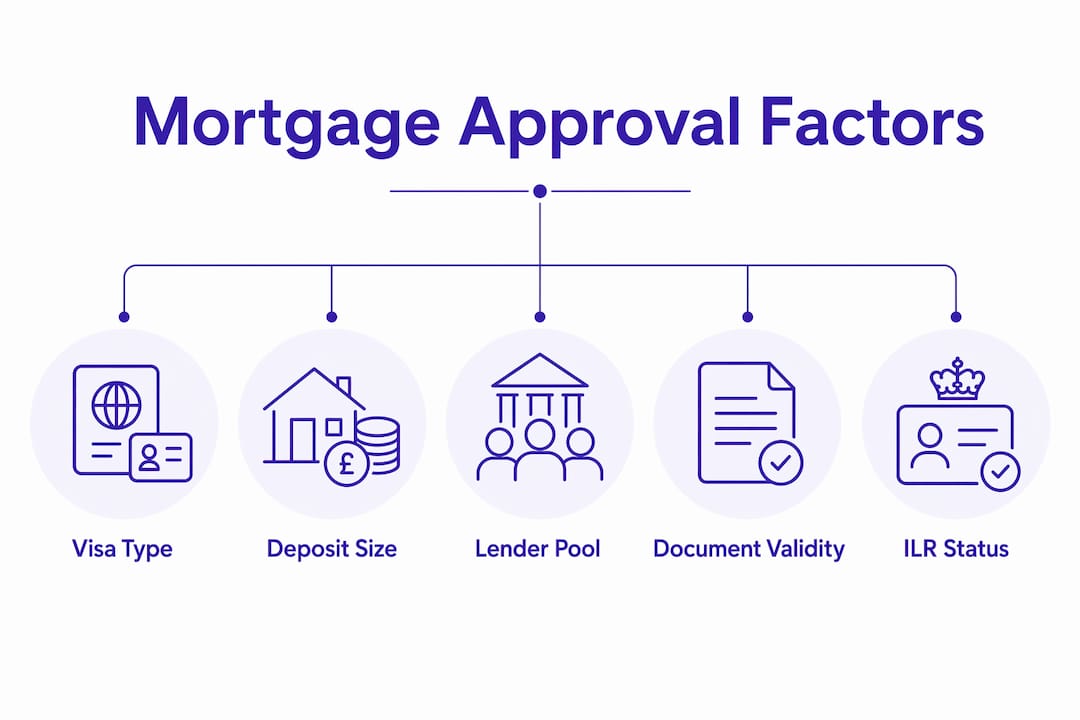
Your visa type directly shapes the deposit, lender pool, and conditions attached to any UK mortgage application, with ILR holders accessing the same terms as British citizens while temporary visa holders face the tightest restrictions.
| Point | Details |
|---|---|
| Deposit requirements | Visa holders typically need at least 25% deposit; ILR holders can access standard 5–10% thresholds. |
| Visa time remaining | Most lenders require at least 12 months remaining on your visa at the point of application. |
| UK residency period | Lenders generally require at least six to twelve months of UK residency before considering an application. |
| ILR advantage | ILR holders are treated similarly to British citizens, removing visa expiry conditions from mortgage terms. |
| Specialist brokers | Manual underwriting through a specialist lender is often the route to approval when automated systems decline. |
