Subcontractor gaps in employment mortgage: your 2026 guide

A subcontractor gaps in employment mortgage is defined as a home loan application where a UK subcontractor’s non-continuous work history creates additional scrutiny from lenders assessing income stability and risk. Gaps between contracts are common in construction and trade work, but most lenders treat them as a red flag unless you provide the right evidence. The good news is that mortgages are absolutely attainable for subcontractors with gaps. Success depends on knowing which lenders are flexible, what documentation they require, and how to present your income clearly. Lenders such as Nationwide and NatWest have published specific criteria for contract workers, and understanding those rules gives you a real advantage.
What gap criteria do lenders apply to subcontractor mortgage applications?
Lender tolerance for employment gaps varies significantly, and knowing the specific thresholds is the single most useful piece of information you can have before applying. Nationwide’s lending criteria specify that applicants must not have more than 12 total weeks of gaps between contracts in the prior 12 months. That is a hard cutoff. If your gaps exceed that figure, Nationwide will decline the application regardless of how strong your income looks on paper.
Halifax takes a stricter position. Halifax is wary of gaps longer than six weeks, though some leniency up to 12 weeks has been observed in practice. That inconsistency matters because it means the outcome can depend on the individual underwriter reviewing your file. Applying without a broker who knows these nuances is a genuine risk.

Umbrella company workers face their own set of requirements. Umbrella company workers must provide contracts between themselves and the umbrella company, along with letters confirming earnings and work periods. A gap in umbrella company assignments is treated similarly to a gap in direct contracting, so the same 12-week rule applies at Nationwide.
Fixed-term contractors and those operating through limited companies also need to be aware that lenders treat income differently depending on structure. Limited company contractors can use income from their latest single contract, but cannot combine income from jointly owned companies across multiple applications. This is a detail many subcontractors miss entirely.
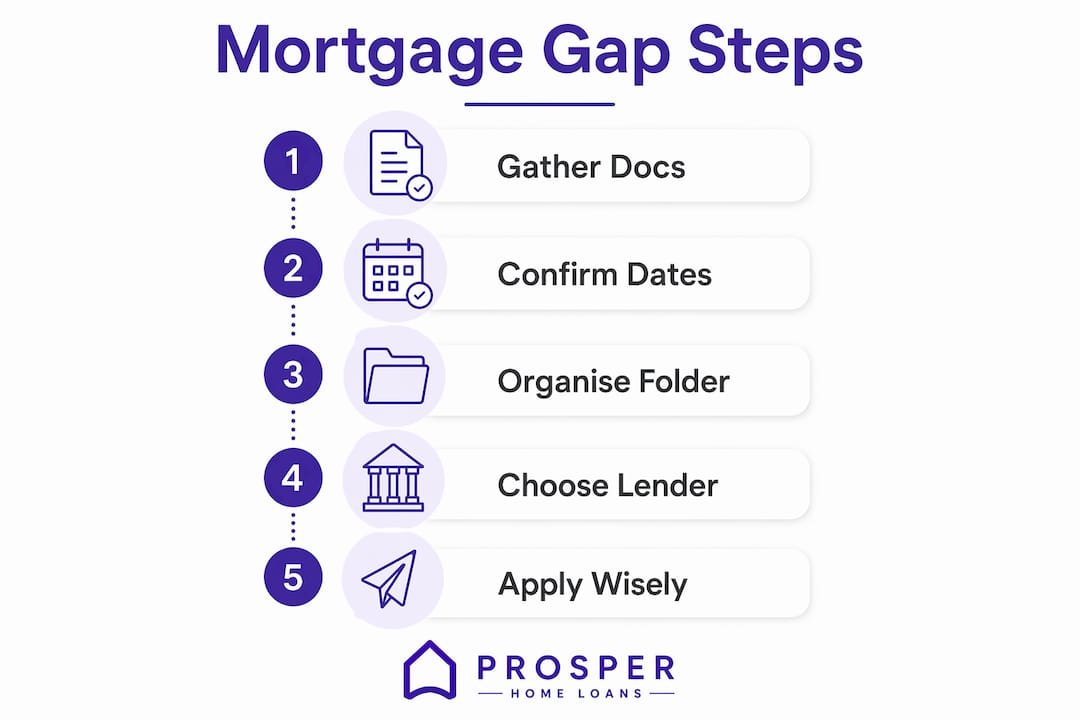
- Keep a running log of contract start and end dates going back at least 18 months.
- Note any gaps and prepare a brief written explanation for each one.
- If a gap was due to illness, family circumstances, or a deliberate break, document it with supporting evidence such as a GP letter or a signed statement.
- Target lenders with 12-week tolerance rather than six-week tolerance if your gap history is borderline.
Pro Tip: Request a written confirmation of your employment dates from every umbrella company or contractor you have worked with. Lenders count gaps to the day, not the week, so precise dates matter.
What documentation do subcontractors need to address employment gaps?
Thorough documentation is the single most effective tool a subcontractor has when applying for a mortgage with gaps in their work history. Lenders cannot assess what they cannot see, so your job is to make your income story as clear and complete as possible.
NatWest requires two years of income evidence for self-employed individuals and contractors. That evidence can include SA302 tax returns, certified accounts, and contract documentation. Two years of consistent records significantly reduces the perceived risk of any gaps within that period.
The specific documents most lenders will request include:
- Current contract. The contract must show your day rate, the contracting company’s details, and the contract end date. Lenders use this to project forward income.
- SA302 forms and tax year overviews. These come directly from HMRC and confirm your declared income for each tax year. You can download them from your HMRC online account.
- Certified accounts. If you trade through a limited company, a qualified accountant must certify your accounts. Most lenders require at least one year, and many prefer two.
- Payslips or CIS vouchers. These verify actual payments received. Income is calculated as your day rate multiplied by the number of days worked, excluding separately listed expenses. Lenders do not count expenses as income, so make sure your payslips separate them clearly.
- Gap explanation letters. For any gap longer than a few weeks, write a clear, factual letter explaining the reason. If you were between contracts by choice, say so. If a project was delayed, get a letter from the contractor confirming that.
- Bank statements. Three to six months of personal and business bank statements show that income was actually received and that you managed your finances responsibly during any gap.
Pro Tip: Organise all documents into a single folder before approaching any lender or broker. Incomplete applications cause delays and can trigger additional scrutiny. A complete file submitted on day one signals professionalism and reduces the chance of a decline.
How can subcontractors improve mortgage approval chances despite gaps?
The most effective strategy is to reframe how your income history looks on paper before you apply. Case examples show that first-time buyer contractors with gaps of up to 12 months have secured mortgages with high loan-to-value ratios and quick approvals. The key in each case was thorough documentation and a clear explanation of the gap.
Practical steps that make a measurable difference include:
- Use a specialist broker. Brokers who work specifically with subcontractors and contract workers know which lenders are currently flexible and which are not. Prosperhomeloans works with clients in exactly this position and can match your profile to the right lender from the outset.
- Obtain Gross Payment Status under CIS. If you work within the Construction Industry Scheme, holding Gross Payment Status (GPS) demonstrates tax compliance and financial stability to lenders. It signals that HMRC trusts you to manage your own tax affairs, which carries weight.
- Bridge gaps with freelance or short-term work. Even a short contract during a gap period reduces the visible break in your income record. A two-week assignment documented with a contract and payslip can close a gap that would otherwise concern an underwriter.
- Write a covering letter for your application. A brief, factual letter summarising your work history, explaining any gaps, and confirming your current contract situation gives the underwriter context they would otherwise have to guess at.
- Check your credit file before applying. Gaps in employment sometimes coincide with periods of financial pressure. Any missed payments or defaults during a gap period will compound the risk in a lender’s eyes. Resolve these before applying where possible.
The timing of your application also matters. Applying while you are actively on a contract, rather than between contracts, gives lenders a current income figure to work with. If you know a gap is coming, consider applying before it begins.
What CIS reforms affect subcontractor mortgage applications in 2026?
Regulatory changes under the Construction Industry Scheme directly affect how lenders view subcontractor compliance, and by extension, mortgage risk. The 2024–2026 CIS reforms require subcontractors to demonstrate timely and accurate VAT and tax return submissions to maintain Gross Payment Status. Lenders increasingly treat GPS as a positive indicator of financial reliability.
From april 2026, contractors must file monthly CIS returns even when no subcontractor payments were made in that period. Failing to file a nil return, unless HMRC has been notified in advance, results in penalties. Those penalties create a compliance record that lenders can see and will factor into their risk assessment.
Good record-keeping and supply chain checks protect against penalties and GPS loss. The table below summarises the key compliance requirements and their mortgage relevance.
| CIS requirement | What it means for your mortgage |
|---|---|
| Monthly CIS returns (including nil returns) | Missed returns create penalties that signal non-compliance to lenders |
| Timely VAT submissions | Late VAT returns can trigger GPS suspension, reducing lender confidence |
| Accurate tax return filings | SA302 forms must match declared income; discrepancies cause underwriter queries |
| Supply chain due diligence | Demonstrates professional conduct and reduces fraud risk flags on your file |
| GPS maintenance | Active GPS status is a positive indicator lenders use to assess financial stability |
Staying compliant is not just a tax obligation. It is a direct input into your mortgage application. A clean compliance record under the reformed CIS rules strengthens your position with any lender reviewing your file.
Key takeaways
Subcontractors with employment gaps can secure mortgages by targeting lenders with appropriate gap tolerances, preparing complete documentation, and maintaining CIS compliance throughout the application process.
| Point | Details |
|---|---|
| Know lender gap thresholds | Nationwide allows up to 12 weeks of gaps; Halifax is stricter at around six weeks. |
| Prepare two years of income evidence | SA302 forms, certified accounts, and contracts are the core documents most lenders require. |
| Explain every gap in writing | A factual letter for each gap gives underwriters context and reduces the chance of a decline. |
| Maintain CIS compliance | Clean VAT and tax return records under the 2026 reforms strengthen your mortgage risk profile. |
| Apply while on an active contract | Applying mid-contract gives lenders a current income figure and reduces perceived instability. |
What I have learned from working with subcontractors on mortgage applications
The most common mistake I see is subcontractors assuming their gaps will automatically disqualify them. They delay applying for months, sometimes years, waiting for a “clean” employment record that may never arrive. That delay costs them in rising property prices and missed opportunities.
The second most common mistake is applying to the wrong lender. Sending a subcontractor application with a six-week gap to Halifax without preparation is a near-certain decline. Sending the same application to a lender with a 12-week tolerance, with a clear gap explanation letter and complete documentation, is a very different conversation.
What actually works is preparation and honesty. Lenders are not trying to catch you out. They are trying to understand your income and assess risk. If you give them a clear, complete picture, most specialist lenders will work with you. The subcontractors who struggle are the ones who submit incomplete files or hope the underwriter will not notice a gap. They always notice.
My honest view is that the CIS reforms are a net positive for subcontractors seeking mortgages. A clean compliance record under the new rules is a credible signal of financial responsibility. Subcontractors who stay on top of their monthly returns and VAT submissions are building a paper trail that lenders will respond to positively. Treat your compliance record as part of your mortgage preparation, not a separate obligation.
— Paul
How Prosperhomeloans supports subcontractors with employment gaps
Securing a mortgage as a subcontractor with gaps in your work history is genuinely achievable with the right guidance. Prosperhomeloans specialises in working with self-employed individuals, contractors, and subcontractors across the UK, matching each client to lenders whose criteria fit their actual circumstances.

We understand the specific documentation lenders require, the gap tolerances that differ between providers, and how CIS compliance feeds into underwriting decisions. Whether you are a first-time buyer or remortgaging, we take the time to review your full income picture before recommending a lender. Visit Prosperhomeloans to speak with an adviser who understands your situation and can help you move forward with confidence.
FAQ
Can subcontractors get a mortgage with gaps in employment?
Yes. First-time buyer contractors with gaps up to 12 months have secured mortgages by providing thorough documentation and clear explanations. The key is targeting lenders whose gap tolerance matches your employment history.
How long a gap will lenders accept for a subcontractor mortgage?
Tolerance varies by lender. Nationwide accepts up to 12 weeks of total gaps in the prior 12 months, while Halifax is generally stricter at around six weeks. A specialist broker can identify which lender suits your specific gap history.
What income proof do subcontractors need for a mortgage application?
Most lenders require two years of income evidence, including SA302 tax returns, certified accounts, current contracts, and CIS vouchers or payslips. NatWest and Nationwide both publish detailed criteria for contractor income verification.
Does CIS Gross Payment Status help with a mortgage application?
Yes. Holding GPS demonstrates to lenders that HMRC trusts you to manage your own tax affairs. Under the 2024–2026 CIS reforms, maintaining GPS through timely VAT and tax return submissions strengthens your compliance record and your mortgage risk profile.
Should I use a broker for a subcontractor mortgage with employment gaps?
A specialist broker is the most direct route to approval. Brokers with experience in subcontractor mortgage options know current lender criteria and can match your profile to the right provider, reducing the risk of a decline that damages your credit file.
