Self-Employed Remortgage: What Lenders Need to See

Yes, you can remortgage when you are self-employed. The process works the same as any remortgage: you just need to show more evidence of your income. This guide covers the paperwork, the timing, how CIS income may be treated and what to check before you switch.
TL;DR
- You can remortgage as a sole trader, partner, contractor, CIS subcontractor or limited company director. Lenders simply want more proof of income.
- Expect to provide two to three years of tax records, and some lenders will consider one year. Criteria differ by lender.
- Start looking up to six months before your deal ends, and check early repayment charges first.
- Some lenders may use gross CIS earnings for affordability, subject to their criteria. This does not raise your actual income or guarantee higher borrowing.
- Consolidating debts into a mortgage can lower monthly payments but may increase the total cost, and your home is at risk.
Table of Contents
- How a self-employed remortgage works
- What lenders look at for self-employed income
- How many years of accounts do you need?
- Documents to gather before you apply
- CIS subcontractors and gross earnings
- When to start, and what to check on costs
- Improving your position before you apply
- Remortgaging to consolidate debts: a balanced view
- Our perspective
- Talk to a local East Sussex adviser
- FAQ
- Sources
How a self-employed remortgage works
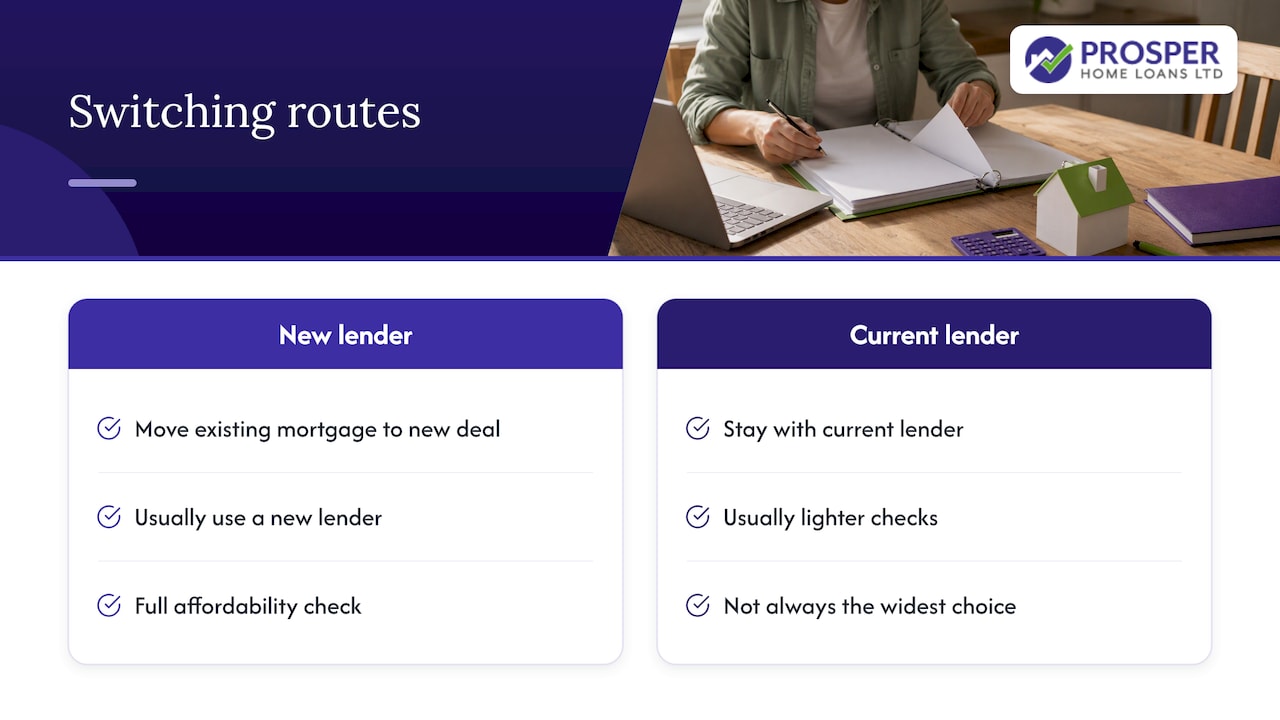
A remortgage means moving your existing mortgage to a new deal, usually with a new lender, when your current fixed or discounted rate is close to ending. Your new lender runs a full affordability check, just as for a purchase.
The FCA’s guidance says your lender must check you can afford the repayments now and in the future. That includes how a rise in interest rates might affect your monthly payments.
If you stay with your current lender, that is usually a product transfer. It can involve lighter checks, but it does not always give you the widest choice. We compare both routes for clients through our remortgage service and our product transfer service.
One practical point: if your home is a flat in a converted or high-rise block, the lender’s valuation can raise extra questions. It is worth reading about non-standard construction flats before you apply.
What lenders look at for self-employed income
What they ask for depends on how you trade.
- Sole traders and partners: lenders will usually want an overview of your net profit for the past two tax years.
- Limited company directors: lenders need to see what you pay yourself, including salary and dividends. Our guide to how lenders assess company directors goes into more detail.
- Contractors and CIS subcontractors: lenders look at your tax records and, depending on the lender, may also consider contract evidence or CIS statements.
The consistency of your profit matters. Rising or steady profit helps. If your income swings sharply from year to year, you may need to show evidence of future work, such as new clients or contracts, or significant savings.
How many years of accounts do you need?
There is no single rule. One lender typically asks for two to three years of trading history, though it also says it will consider one year with the latest SA302 or an accountant’s certificate and recent business bank statements. Another reports that lenders generally want at least two years of accounts signed off by a certified or chartered accountant.
A high street lender sets out its own requirement for sole traders: two years of Tax Year Overviews and Tax Calculations. For people trading less than two years, it asks for at least one year of finalised figures plus the latest three months’ business bank statements.
If you have been trading for under two years, do not assume you are ruled out. Lenders differ, and an adviser can tell you which ones may consider your circumstances.
Documents to gather before you apply
A typical list, as set out by a specialist lender, includes:
- SA302 tax calculations and tax year overviews for the last two or three years.
- Full business accounts if you run a limited company, ideally signed off by a chartered or certified accountant.
- Three to six months of business and personal bank statements.
- ID, such as a passport or driving licence, and proof of address, such as a recent utility bill.
If you are a sole trader, our blog explains whether to use business accounts for a mortgage. Our guide to common mistakes self-employed buyers make is also worth a look.
CIS subcontractors and gross earnings
If you are paid under the Construction Industry Scheme, tax is deducted at source, so your net payments are lower than what you earned. Some lenders may consider your gross CIS earnings, evidenced by CIS vouchers or statements, when assessing affordability. That is subject to each lender’s criteria.
To be clear, this does not increase your actual income, and it does not guarantee a higher loan. It only affects how some lenders read your figures. Your tax return still needs to line up with your CIS records. See our CIS subcontractor mortgage page and our comparison of self-employed and subcontractor mortgages.
When to start, and what to check on costs
You do not have to wait until your deal ends. The self-employed body IPSE says that securing a new mortgage up to six months in advance protects you against the risk of higher rates and lets your adviser switch you if rates fall before completion.
Before you move, check these:
- Early repayment charges. If you leave your current deal early, MoneyHelper advises checking the charge with your existing lender.
- Fees. There may be administration or other costs to switch.
- Timing. Our article on remortgaging before your fix ends explains the six-month check.
Improving your position before you apply
- File your tax returns on time and keep your SA302s and tax year overviews to hand.
- Keep business and personal bank statements tidy and avoid unexplained transactions.
- Reduce or clear credit commitments where you sensibly can.
- Keep evidence of upcoming contracts if your income varies.
- Take a look at our guide to affordability for the self-employed in East Sussex.
If you want to know where you stand first, we offer a mortgage affordability assessment and capacity report for £199 one-off.
Remortgaging to consolidate debts: a balanced view
Some homeowners remortgage to pay off credit cards or loans, or use a second charge mortgage or secured loan alongside their existing mortgage. Whether either is suitable depends on your circumstances and lender criteria.
The trade-offs are real:
- Lower monthly payments often mean a longer term. Spreading debt over many years can leave you paying more in total, even if the monthly figure falls.
- Your home is at risk. Debts that were unsecured become secured against your property. If you cannot keep up repayments, you could lose your home.
- A second charge can be an alternative if your current mortgage rate is good and you want to leave it alone, but it adds a second set of payments and costs.
Other options include a budgeting review, talking to your creditors, or free debt advice. We look at these alongside borrowing, and we explain the costs and risks before you decide. Nothing here is a promise of savings or approval.
Our perspective
Self-employed clients often come to us worried that their income will count against them. In our experience, the real issue is usually preparation: tax records that match, clear bank statements and a lender chosen for how it treats your kind of income.
That is why we start with your circumstances and not a rate table. We look at how you are paid, which lenders may suit that, and what the costs and risks are, including early repayment charges and any debt you want to consolidate.
We would rather you understood the options and chose with confidence than rushed at the end of a fixed rate.
Paul McMath CeMAP CeRER
Talk to a local East Sussex adviser
We are a local mortgage broker based in St. Leonards-on-Sea, helping self-employed people, CIS subcontractors, contractors and company directors in Hastings, Eastbourne, Hailsham, Bexhill-on-Sea and across the UK. We are available to talk through your remortgage, from first enquiry to completion and future reviews.

See our self-employed and company director mortgages, or visit Prosper Home Loans to get in touch. Options depend on your circumstances and lender criteria, and your home may be repossessed if you do not keep up repayments on your mortgage.
FAQ
Can I remortgage if I have been self-employed for less than two years?
Possibly. Some lenders will consider one year of finalised accounts or tax calculations, with recent business bank statements. Others want two or three years, so the choice of lender matters.
How do lenders assess affordability if my income varies?
They usually look at your net profit over recent tax years, and some average it. If it varies a lot, they may ask for evidence of future income, such as new contracts, or savings.
When should I start my remortgage?
You can start up to six months before your current deal ends. Check any early repayment charge first if you plan to leave before the end date.
Can I remortgage to consolidate debts if I am self-employed?
It may be possible, subject to lender criteria and affordability. It can lower monthly payments but extend the term and raise the total cost, and the debt becomes secured on your home.
Sources
- Self-Employed Mortgages, Lloyds
- Getting a mortgage: rules that affect you, FCA
- Mortgages for self-employed buyers, Which?
- Self-Employed Mortgages Guide, Together
- Apply for a mortgage, first direct
- How to remortgage if you’re self-employed, Pepper Money
- Navigating remortgaging when you’re self-employed, IPSE
- Remortgaging to get the best deal, MoneyHelper
- Non-standard construction flats
Recommended
- Self-employed vs subcontractor mortgage: 2026 guide
- Proving Your Deposit as Self-Employed Mortgage Applicants
- Avoid Mortgage Pitfalls For Self-Employed Buyers
- Remortgage to Raise a Deposit: 3 Adviser Checks UK Homeowners Must Do
This article provides general information and is not a personal mortgage recommendation. Mortgage availability and eligibility depend on your circumstances and lender criteria. Rates and criteria can change. We will explain any applicable fees before you commit. Think carefully before securing other debts against your home. Consolidating debts over a longer term may reduce your monthly payments but increase the total amount you repay. Your home may be repossessed if you do not keep up repayments
