Salary Sacrifice Mortgage: What It Means for Your Borrowing

A “salary sacrifice mortgage” can mean two things. One is paying your mortgage out of pre-tax pay, which is not currently allowed in the UK. The other, and the one that matters more when you apply, is how existing salary sacrifice, such as pension or car schemes, changes the income a lender sees. We are a local mortgage broker in Hastings and we help East Sussex clients with exactly this kind of file.
TL;DR
- You cannot pay your mortgage through salary sacrifice under current rules. The Government said in 2023 it had no plans to change that.
- If you already sacrifice salary for a pension or another benefit, your payslip gross may be lower than your pre-sacrifice pay.
- HMRC leaves it to each lender to decide whether to use pre- or post-sacrifice pay, so outcomes differ between lenders.
- Don’t change or pause a scheme before applying without advice. What suits one lender may not suit another.
- Nothing here guarantees approval or a particular amount. It depends on your circumstances and lender criteria.
Table of Contents
- Can you pay a mortgage through salary sacrifice?
- What salary sacrifice actually is
- Why it can matter to a lender
- What lenders must check
- Preparing your application
- Our view
- Talk to a local broker
- FAQ
- Sources
Can you pay a mortgage through salary sacrifice?
No. A petition to the UK Parliament asked for mortgage payments on a main home to come out of pay before tax and National Insurance, as pension contributions do. It ran from 28 February to 28 August 2023 and reached 26,802 of the 100,000 signatures needed for a debate. In its response on 7 June 2023, the Government said it had no plans to allow tax-advantaged salary sacrifice for mortgage costs.
So the phrase usually leads somewhere else: how the sacrifice you already make affects your application.
What salary sacrifice actually is
HMRC describes salary sacrifice as an agreement to reduce your entitlement to cash pay, usually in return for a non-cash benefit. Your contract is changed, and the sacrifice cannot take cash earnings below National Minimum Wage. Common examples are employer pension contributions, cycle-to-work schemes and electric cars.
Since 6 April 2017, the tax and National Insurance advantages for most benefits in kind have been largely withdrawn, with some exceptions. Pensions remain the most widely used. From April 2029, the National Insurance-exempt amount of pension contributions made this way will be capped at £2,000 a year.
Why it can matter to a lender
Lenders assess affordability from your income. If you sacrifice £4,000 of a £50,000 salary, your contract and payslip may show £46,000. A lender using that figure may offer a lower amount than one that adds the sacrifice back. That is an illustration only, not a quote.
HMRC’s manual says that for mortgage applications, whether pay includes benefits or is restricted to cash is a matter for the lender. It also lists giving earnings information to a mortgage lender as a legitimate use of the pre-sacrifice salary, which does not invalidate the sacrifice.
Policies genuinely differ. One specialist lender’s published criteria, for example, say salary sacrifice deductions are ignored for affordability. Others take a different approach, which is why lender choice matters.

Why two colleagues’ payslips can look different
HMRC notes that some payslips still show the full pre-sacrifice gross with the sacrifice listed as a deduction, while others show only the reduced figure. Two people on identical packages can therefore present different gross incomes on paper.
What lenders must check
Under the FCA’s responsible lending rules, a lender must assess whether you can afford the payments, taking account of your income net of tax and National Insurance and your committed and essential spending. It must also hold independent evidence of your income, such as payslips or bank statements, and cannot accept self-certification.
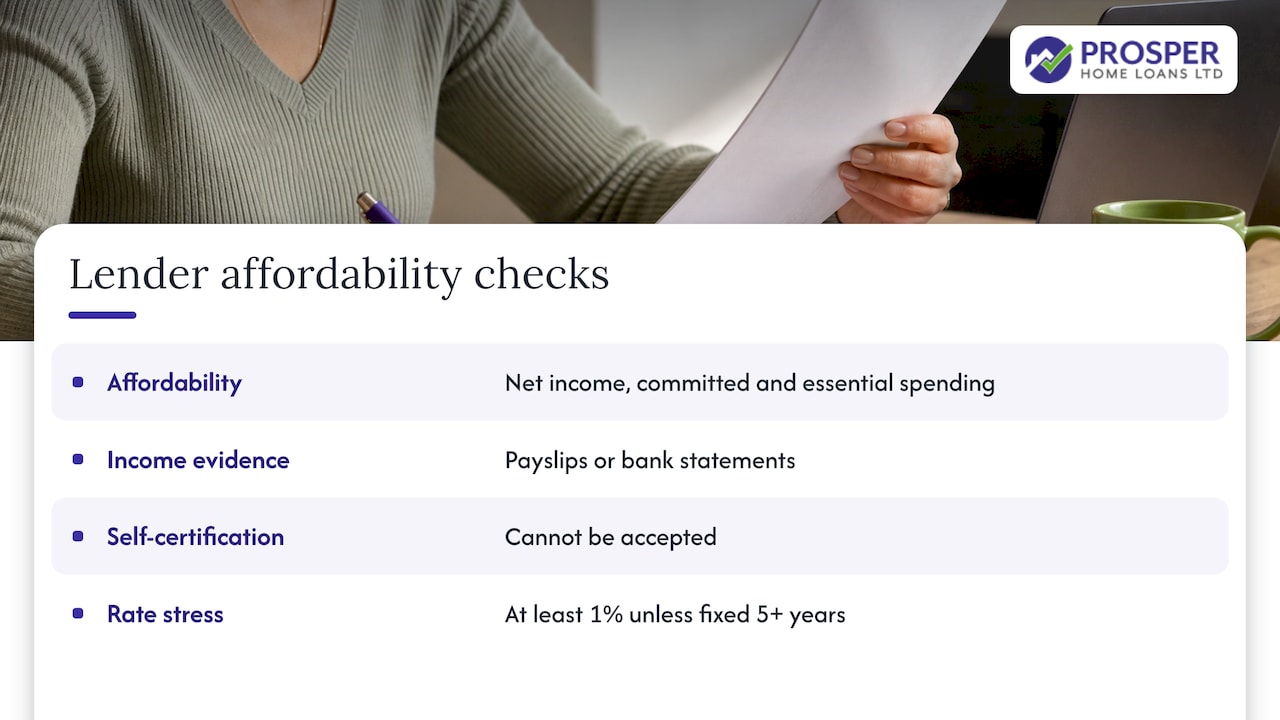
Lenders also test whether you could cope if rates rose. The FCA’s mortgage rule review says firms must assume a rise of at least 1% unless the rate is fixed for five years or more. Many stress test more strictly, so two lenders can reach different results from the same payslips.

Preparing your application
- Gather your payslips and P60. Keep the recent payslips and a copy of your contract or the letter confirming the sacrifice.
- Tell your broker about every scheme. Pension, car, cycle and other deductions all matter.
- Check which gross figure your payslips show. Pre-sacrifice or post-sacrifice, so it can be explained.
- Don’t alter your arrangement on a guess. Stopping or reducing a scheme changes your pay and may have pension or tax consequences. Talk to us first, and to your employer or pension provider about the scheme itself.
- Keep other commitments in view. Loans, car finance and credit cards also count against affordability.
If you are a contractor, CIS subcontractor or director, your income is assessed differently, but the principle is the same: the figure on paper has to be explained. Our guides on umbrella company payslips and self-employed vs subcontractor mortgages cover those routes. Some lenders may use gross CIS earnings when assessing affordability, subject to their criteria. That does not raise your actual income or guarantee higher borrowing.
Our view
Most people who ask us about salary sacrifice are worried that being tax-efficient has cost them borrowing. Sometimes it has, with some lenders. With others it makes no difference at all.
We are a whole-of-market broker, so we can look at how different lenders treat your payslips before you apply, rather than you finding out after a decline. We explain the options, costs and risks plainly, and we stay with you from first enquiry to completion and future reviews.
We never promise approval or a set amount. What we can do is make sure your income is presented clearly and that you understand the choices.
Paul McMath CeMAP CeRER
Talk to a local broker
If you sacrifice part of your pay and are planning to buy, move or remortgage, we can review your payslips against lender criteria first. We are based in St. Leonards-on-Sea and work with clients in Hastings, Eastbourne, Hailsham, Bexhill-on-Sea and across East Sussex, and we are available to speak to you wherever you are in the UK.

See our whole-of-market mortgage advice or, if you are a CIS worker, our CIS subcontractor mortgages page.
FAQ
Does salary sacrifice reduce how much I can borrow?
It can, because some lenders use the lower post-sacrifice salary. Others add the sacrifice back or ignore it. It depends on the lender and your circumstances, so it is worth checking before you apply.
Should I stop my pension salary sacrifice before applying?
Don’t decide this alone. Changing your pay affects your pension and tax position, and not every lender needs it. Speak to us about the lender options first, and to your employer about the scheme.
Will my lender see my pre-sacrifice salary?
Only if your payslips or employer’s evidence show it. Some payslips list the full gross with the sacrifice as a deduction, others show only the reduced pay. We can help you present it clearly.
Could salary sacrifice for mortgage payments be introduced?
It was proposed in a 2023 petition, and the Government said it had no plans to allow it. It is not available now.
Sources
- Allow people to pay their mortgage through salary sacrifice, UK Parliament petition
- Salary sacrifice for employers, GOV.UK
- EIM42770, HMRC Employment Income Manual
- EIM42771, HMRC Employment Income Manual
- Changes to salary sacrifice for pensions from April 2029, GOV.UK
- FCA Handbook, MCOB 11.6
- FCA DP25/2, Mortgage Rule Review
- Residential lending criteria, Precise Mortgages
Recommended
- UK JBSP Mortgages: Who Owns the Home, Who Owes the Debt?
- Remortgage With Additional Borrowing: How It Works
This article provides general information and is not a personal mortgage recommendation. Mortgage availability and eligibility depend on your circumstances and lender criteria. Rates and criteria can change. We will explain any applicable fees before you commit. Think carefully before securing other debts against your home. Consolidating debts over a longer term may reduce your monthly payments but increase the total amount you repay. Your home may be repossessed if you do not keep up repayments
