Role of accountant in mortgage: 2026 guide

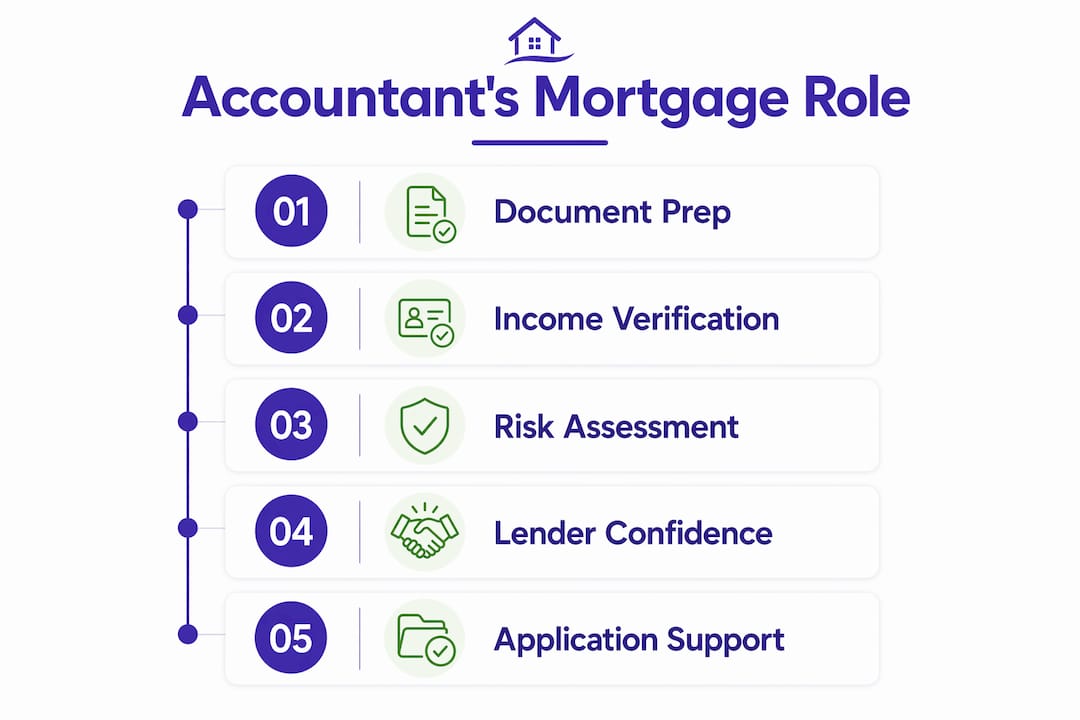
The role of an accountant in mortgage applications is to prepare, organise, and clarify the financial documentation that lenders need to make informed lending decisions. For self-employed borrowers and business owners in particular, this support is not optional. It is the difference between a smooth application and weeks of delays. Accountants prepare documents such as SA302 Tax Calculations, HMRC Tax Year Overviews, and CPA explanatory letters that verify income, confirm the source of funds, and demonstrate financial stability. In 2026, with FCA MCOB rules requiring firms to document their affordability methodology in full, the importance of accountants in loans has never been greater.
What is the role of accountant in mortgage applications?
The accountant’s primary function in a mortgage application is to produce verified, reconciled financial evidence that lenders can trust. This is not about making the lending decision. Accountants do not approve or decline mortgages. They build the evidence base that allows lenders to do so with confidence.
For employed borrowers, income verification is relatively straightforward. For self-employed individuals, company directors, and contractors, the picture is far more complex. Lenders cannot simply look at a bank statement and draw conclusions. They need structured, professional documentation that explains where money comes from, how it is earned, and whether it is sustainable.

Self-employed borrowers commonly provide HMRC SA302 Tax Calculations and Tax Year Overviews from the most recent two years to validate income. These two documents must align precisely. Any discrepancy between them triggers manual lender review, which adds time and uncertainty to the process.
Accountants strengthen lender confidence by organising and clarifying financial information, even though the final approval decision always rests with the lender. That distinction matters. Their role is advisory and documentary, not decisional.
What financial documents do accountants prepare for mortgages?
Accountants prepare several categories of document for mortgage applications. Each serves a specific purpose in the lender’s underwriting process.
Core income documents:
- SA302 Tax Calculation: This is the HMRC record of your declared income and tax liability for a given tax year. Lenders use it to verify self-employed income. Most lenders require the two most recent years.
- Tax Year Overview: This confirms that the tax shown on the SA302 has been paid or is due. It must match the SA302 figures exactly. A mismatch here is one of the most common SA302 problems that accountants are called upon to fix.
- CPA Source and Use of Funds Letter: When funds come from multiple sources, such as savings, business accounts, or gifted deposits, lenders need a professional letter explaining the origin and intended use. A CPA letter explains the source and use of mortgage-related funds to clarify multi-source arrangements without auditing bank accounts or certifying balances.
- Business Fund Withdrawal Letter: When a borrower uses funds held within their limited company for a deposit or purchase costs, the accountant must confirm that the withdrawal is authorised, that the funds are not borrowed, and that removing them will not harm the business. A CPA letter for business funds confirms that funds are authorised, accessible, non-borrowed, and that withdrawal will not harm business operations.
Accountants also prepare management accounts, profit and loss statements, and projected income forecasts for borrowers whose most recent tax return does not reflect their current earnings.
Pro Tip: Ask your accountant to cross-reference your SA302 against your Tax Year Overview before submission. A single figure discrepancy between these two documents is enough to trigger a full manual review by the lender’s underwriting team.
How do accountants help lenders assess affordability and risk?
Lenders do not simply look at gross income and multiply it by a fixed number. The FCA’s MCOB framework requires mortgage firms to document the inputs, methodology, and rationale behind every affordability assessment. This creates a direct demand for the kind of verified, reconciled documentation that accountants produce.
Here is how accountants contribute to the affordability and risk assessment process:
- Income reconciliation: Accountants align figures across SA302s, Tax Year Overviews, and business accounts to present a consistent income picture. Inconsistencies across documents are a red flag for underwriters.
- Explanatory letters: When income fluctuates year on year, accountants write narrative letters explaining why. A drop in profit followed by a recovery, for example, needs context. Without it, lenders may apply a more conservative income calculation.
- Business fund clarification: For directors using company funds, accountants clarify borrower authority and confirm that withdrawals are permitted and non-detrimental to business continuity.
- Supporting complex cases: Borderline applications, where income sits just above or below a lender’s threshold, benefit most from accountant involvement. A well-structured set of accounts can shift a lender’s assessment from a decline to an approval.
The FCA expects mortgage firms to combine rigorous models with professional judgement supported by documented rationale. Accountants enhance this evidence base, particularly in complex borrower cases. That is not a minor contribution. It is central to how lenders defend their affordability decisions.
It is worth understanding that accountant-prepared CPA letters are classified as non-attest documents. They translate historical facts from records without certifying balances or guaranteeing loan approval. Lenders understand this distinction and treat these letters as explanatory, not as audited guarantees.
Pro Tip: If your income has dropped in one of the two most recent tax years, ask your accountant to prepare a brief narrative letter explaining the reason. Lenders respond far better to a documented explanation than to unexplained volatility.
What happens without proper accountant support?
Applications without professional accountant involvement are significantly more likely to encounter delays, additional information requests, or outright declines. The risks are concrete and predictable.
- SA302 mismatches: Mismatched income documents, such as discrepancies between SA302 and Tax Year Overview figures, frequently cause manual lender delays. These delays can add weeks to an application timeline.
- Unverified business fund withdrawals: If a borrower uses company funds without an accountant’s letter confirming authorisation and business impact, lenders will typically request additional evidence or decline the application entirely.
- Incomplete tax returns: Missing self-assessment submissions or gaps in the two-year income record leave lenders without the evidence they need to calculate affordability. Most lenders will not proceed without a complete picture.
- FCA compliance gaps: The FCA requires firms to document inputs, methodology, and rationale for mortgage affordability assessments. Without accountant-prepared documentation, the lender’s own compliance position becomes harder to defend.
- Increased manual scrutiny: Applications that lack explanatory letters for complex financial situations are more likely to be escalated to senior underwriters. This adds time and creates uncertainty for the borrower.
The practical solution is to engage your accountant before you approach a lender or broker, not after. Ideally, you should begin preparing your financial documentation three to six months before you plan to apply. This gives your accountant time to identify and resolve any issues in your tax records before they become a problem.
How should homebuyers work with accountants during the mortgage process?
Effective collaboration between borrowers and accountants requires clear communication and early planning. The following steps make a material difference to application outcomes.
- Share your mortgage timeline early. Tell your accountant when you plan to apply and what purchase price you are targeting. This allows them to prepare the right documents in the right format for your lender.
- Confirm lender-specific requirements. Different lenders accept different formats for SA302s and accountant letters. Your mortgage broker should confirm exactly what each lender requires before your accountant begins drafting.
- Keep personal and business finances separate. Mixed accounts make it significantly harder for accountants to produce clean documentation. Separate bank accounts for personal and business use reduce ambiguity and speed up document preparation.
- Provide management accounts if your latest tax return is outdated. If your most recent self-assessment does not reflect your current income level, ask your accountant to prepare up-to-date management accounts. Many lenders will accept these alongside tax returns to support a higher income figure.
- Review your tax returns before submission. Understanding your own UK tax return preparation process helps you spot errors before they reach the lender.
Understanding the UK tax year structure is also useful for business owners. Knowing when your tax year ends and when your SA302 becomes available helps you time your mortgage application to coincide with the strongest possible income evidence.
Pro Tip: If your income is growing, consider delaying your application until after your most recent tax return is filed and processed. A higher SA302 figure from the latest year can meaningfully increase the amount a lender is willing to offer.
Key takeaways
Accountants play a decisive role in mortgage applications by producing the verified financial documentation that lenders require to make compliant, confident affordability decisions.
| Point | Details |
|---|---|
| Core documents matter | SA302 Tax Calculations and Tax Year Overviews must align precisely to avoid manual lender review. |
| CPA letters clarify complexity | Source and use of funds letters explain multi-source deposits and business withdrawals without certifying balances. |
| FCA rules increase demand | MCOB affordability requirements mean lenders need documented, reconciled evidence that accountants provide. |
| Early engagement prevents delays | Engaging your accountant three to six months before applying reduces the risk of missing documents or mismatched figures. |
| Non-attest does not mean unimportant | Explanatory letters carry significant weight with underwriters even though they do not certify balances or guarantee approval. |
What i have learned from watching accountants change mortgage outcomes
In my experience working with self-employed borrowers and company directors, the single most common cause of application delays is not income level. It is documentation quality. I have seen applications for substantial mortgages stall for three weeks because an SA302 and a Tax Year Overview showed a £200 discrepancy. The income was clearly sufficient. The paperwork was not.
What strikes me most is how often borrowers underestimate the accountant’s role until something goes wrong. The borrowers who sail through complex applications are almost always the ones who briefed their accountant early, shared their mortgage timeline, and gave the accountant time to prepare properly formatted, lender-ready documents.
My strong advice is to choose an accountant who has direct experience with mortgage documentation, not just tax compliance. These are related but distinct skills. An accountant who understands what lenders look for in a CPA letter, and who knows the difference between an attest and a non-attest document, will save you time and stress. If your current accountant has never prepared a source and use of funds letter, it may be worth seeking specialist input for your application.
The borrowers I see struggle most are those who treat accountant involvement as a box-ticking exercise. The ones who succeed treat it as a genuine part of their mortgage strategy.
— Paul
How Prosperhomeloans supports accountant-backed applications
At Prosperhomeloans, we work regularly with self-employed borrowers, company directors, and contractors who need specialist support throughout the mortgage process. We understand exactly what lenders require in terms of accountant-prepared documentation, and we work alongside your accountant to make sure nothing is missing before your application is submitted.

If you are preparing for a mortgage application and want guidance on which documents your accountant needs to prepare, we can help. Our advisors know which lenders are most receptive to complex income structures and what formats they accept. Explore your mortgage options with us and take the stress out of the documentation process. We are here to make the process straightforward from the very first conversation.
FAQ
What does an accountant do in a mortgage application?
An accountant prepares and organises financial documents such as SA302 Tax Calculations, Tax Year Overviews, and CPA explanatory letters that lenders use to assess income and affordability. They do not make lending decisions but significantly strengthen the evidence base supporting your application.
Do i need an accountant to get a mortgage if i am self-employed?
Most lenders require at least two years of SA302 Tax Calculations and Tax Year Overviews for self-employed applicants, and these documents must be accurate and reconciled. An accountant ensures these figures align and can prepare additional letters if your income is complex or includes business funds.
What is a CPA letter and why do mortgage lenders ask for one?
A CPA letter is a professional explanatory document that clarifies the source and intended use of funds involved in a mortgage transaction. Lenders require these letters to confirm that funds are accessible, not borrowed, and that any business withdrawal will not harm company operations.
Can mismatched sa302 documents delay my mortgage?
Yes. A discrepancy between your SA302 and Tax Year Overview is one of the most common causes of manual lender review and application delays. Your accountant should reconcile these documents before submission to avoid unnecessary scrutiny.
How early should i involve an accountant in my mortgage process?
Engaging your accountant three to six months before you plan to apply gives them time to identify gaps in your tax records, prepare the correct documents, and resolve any discrepancies before they reach the lender.
