East Sussex Contractors: No Credit History Mortgage with 5% Deposit

Yes, you can often get a mortgage in the UK with little or no credit history, provided you can prove you can afford the repayments. Lenders look well beyond a single credit score, and many will accept bank statements, payslips, tax records or CIS vouchers as evidence instead. Your best first move is to check your credit reports with a soft search, gather three to six months of financial proof, and speak to a specialist broker.
TL;DR:
- Lenders assess income, outgoings, and commitments under FCA rules, so a thin credit file is not decisive; criteria still vary by lender.
- Prepare three to six months of bank statements, payslips or tax records, deposit evidence, and, for contractors, CIS vouchers or day rate contracts.
- Use soft search eligibility checks before applying, review Experian, Equifax, and TransUnion separately, and correct errors; repeated hard searches can weaken an application.
- The Mortgage Guarantee Scheme offers 91% to 95% loan to value mortgages with a 5% minimum deposit, while larger deposits may secure lower rates.
- Speak with an independent broker who searches the whole market before applying formally; they can identify lenders accepting contractor evidence and avoid unsuitable hard searches.
Table of Contents
- How UK lenders and the FCA view limited credit histories
- Documents and evidence lenders accept when your credit file is thin
- Practical steps to improve your chances without harming your credit file
- Realistic product routes in the UK for applicants with little credit history
- When and how a broker makes a difference for ‘no credit history’ cases
- What to avoid: mistakes that reduce your chances
- Local cases we help across East Sussex
- How Prosper Home Loans can help you move forward
- FAQ
- Sources
How UK lenders and the FCA view limited credit histories
Mortgage lending in the UK is governed by rules that stop lenders relying on a credit score alone. Under FCA affordability rules, every regulated lender must assess whether a mortgage is affordable by looking at your income, your outgoings and your other financial commitments, not just what a credit reference agency reports. This matters hugely if you have never had a credit card, have lived abroad, or are newly self-employed with limited UK financial footprint.
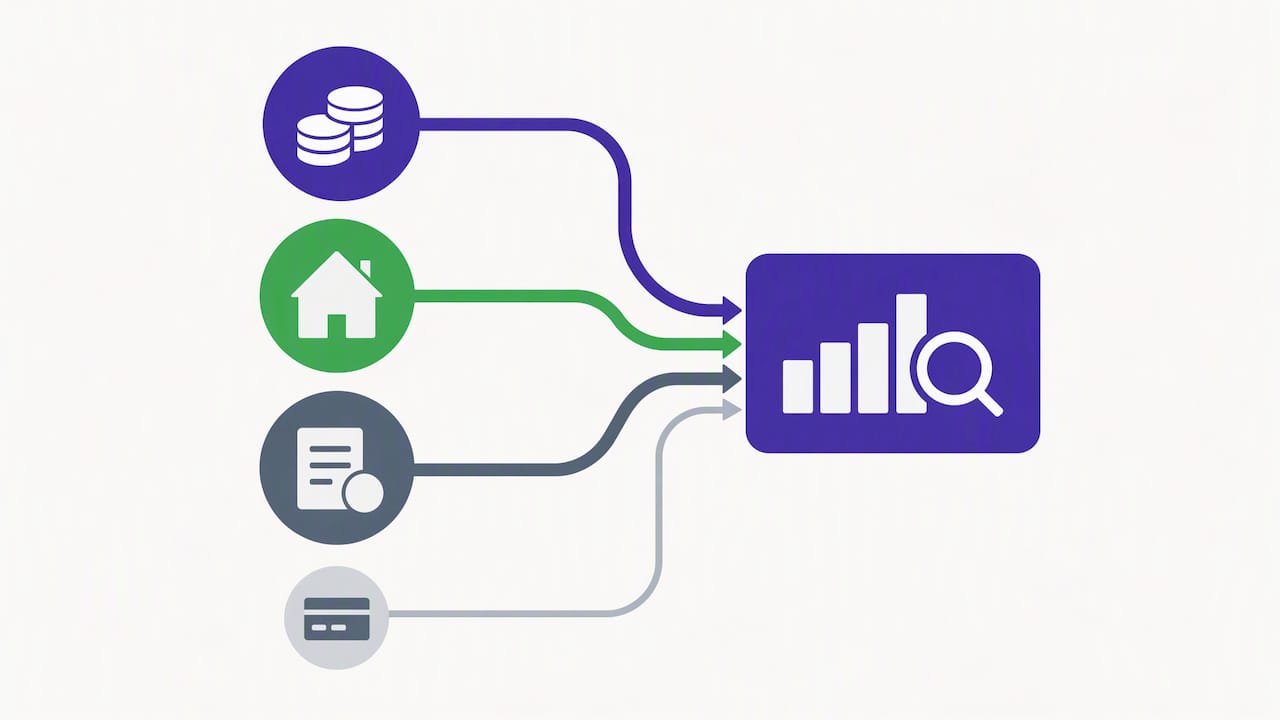
Each lender then applies its own internal criteria on top of this baseline. Some are genuinely comfortable with thin files; others are far more cautious. That is why the same applicant can be declined by one lender and approved by another within the same week.
Before applying formally, it is worth using eligibility checkers that rely on soft searches rather than hard credit applications.
- Soft searches do not appear on your credit file and will not affect your score.
- Hard searches, by contrast, stay on your record and multiple applications in a short period can make you look like a higher risk.
- A broker can run these checks on your behalf to shortlist realistic lenders before you commit to one.

Documents and evidence lenders accept when your credit file is thin
When your credit history is sparse, documentary evidence becomes the backbone of your application. Lenders want to see a consistent, verifiable pattern of income and responsible money management, even without a long credit trail.
- Bank statements covering three to six months, showing regular income, manageable spending and no unexplained shortfalls.
- Payslips, your P60, and SA302 tax calculations or tax year overviews if you are employed or recently self-employed.
- CIS vouchers and contractor day-rate evidence, which demonstrate consistent earnings even when your income varies week to week.
- Proof of deposit, whether that is a savings history or a signed gifted deposit letter from a family member.
- Tenancy references, utility bills and electoral roll registration, which all help build a picture of stability and residency.
Pro Tip: Keep digital copies of every document as soon as you receive it. Lenders often ask for the same evidence twice during underwriting, and having it ready saves weeks.
Practical steps to improve your chances without harming your credit file
There is plenty you can do before you submit a formal application, and most of it costs nothing. The goal is to build a stronger picture of reliability without triggering searches that could count against you later.
- Run soft-search eligibility checks to identify lenders likely to accept your profile before applying properly.
- Check your reports with Experian, Equifax and TransUnion, and correct any errors you find, since each agency holds separate records and lenders may check any of them.
- Register to vote at your current address, as this is one of the simplest ways to confirm your identity and residency to a lender.
- Add rent or utility payments to your credit record where your provider offers this, since on-time payments build a visible, positive history.
- Avoid expensive credit-builder loans unless you are certain you can repay in full each month, as missed payments will damage the very history you are trying to build.
Realistic product routes in the UK for applicants with little credit history
Several mainstream and specialist routes exist for buyers without a long credit history, each with its own trade-offs worth weighing carefully.
- The Mortgage Guarantee Scheme supports 91 to 95% loan-to-value mortgages with a minimum 5% deposit, helping first-time buyers and home movers who have the income to repay but not a large deposit or long credit record. Rates on these high loan-to-value products tend to be higher than on deals with bigger deposits.
- Guarantor mortgages allow a family member to underpin your application, which can offset a thin credit file, though they usually come with their own eligibility conditions and legal costs.
- Specialist lenders increasingly accept CIS vouchers and contractor day-rate evidence as proof of income, which opens the door to applicants who would otherwise struggle with standard affordability criteria.
Each route suits a different circumstance, and the right one depends on your deposit size, your income type and how established your work history is.
When and how a broker makes a difference for ‘no credit history’ cases
An independent, whole-of-market broker earns their fee precisely in cases like this. Rather than you approaching lender after lender and collecting declines, a broker matches your specific profile, whether that is a CIS subcontractor, a newly self-employed tradesperson or a recent arrival to the UK, against lenders known to accept your type of evidence.
MoneyHelper recommends using an independent adviser for exactly this kind of non-standard case, noting that qualified advisers can search a wide market rather than being tied to one lender’s criteria.
- A specialist broker knows which lenders will look favourably on CIS vouchers, day-rate contracts or a short but clean bank statement history.
- You should expect an initial suitability discussion, a possible broker fee, and hands-on help gathering and presenting your documents.
- A broker can also flag when a lender’s criteria will clearly exclude you, saving you from a hard search that would not have succeeded anyway.
Pro Tip: Bring your last 12 months of contracts or invoices to your first broker conversation. It speeds up the lender-matching process considerably.
What to avoid: mistakes that reduce your chances
A handful of avoidable mistakes trip up applicants with thin credit files more than anything else.
- Do not submit multiple hard applications in a short space of time. Each one shows up on your file and repeated attempts can lower your odds rather than improve them.
- Steer clear of costly credit-builder products that charge high interest if you are not confident you can repay the balance in full each month.
- Never submit false or misleading documents. This risks a fraud flag and a definitive refusal that follows you into future applications.
Local cases we help across East Sussex
We regularly support CIS subcontractors, contractors and self-employed clients across Hastings, Eastbourne, Hailsham and Bexhill-on-Sea who assume a thin credit file rules them out. Often it simply means the right documentary route and the right lender. Reaching out early, before you have made any formal application, gives us the most room to build your case properly.
— Paul
How Prosper Home Loans can help you move forward
We provide mortgage advice that looks across the market, helping when your file does not fit a standard template. Our experience includes mortgages for self-employed applicants, CIS voucher mortgages for enhanced income for the self-employed contractor, and debt consolidation mortgages for clients looking to simplify multiple repayments into one manageable plan. We also support first-time buyers considering the Mortgage Guarantee Scheme route, and clients remortgaging or looking at secured and second charge loans.

Before your first conversation with us, it helps to have your recent bank statements, proof of income and any CIS vouchers or contracts to hand. From there, we will talk through your situation, identify which lenders are likely to work for you, and guide you through the paperwork from application to offer. Get in touch through our mortgage advice services page to arrange your first conversation with us.
FAQ
Can I get a mortgage with no deposit in the UK?
Standard mortgages in the UK almost always require a deposit, typically a minimum of 5%. The Mortgage Guarantee Scheme supports 91 to 95% loan-to-value mortgages, so a 5% deposit is usually the lowest realistic starting point for most buyers.
How do I build a credit score in the UK?
You can build a visible credit history by registering to vote, paying bills on time, and keeping existing credit commitments, such as a phone contract, well managed. Checking your Experian report regularly and correcting errors also helps lenders see an accurate, positive picture.
Can I get a £200,000 mortgage on a £40,000 salary?
This depends on the lender’s affordability assessment under FCA rules, which considers your income, outgoings and other commitments rather than a simple income multiple. A broker can run the specific affordability calculations with lenders to see what is realistic for your circumstances.
Do mortgage lenders use Equifax or Experian?
UK lenders may check any of the three main credit reference agencies: Experian, Equifax or TransUnion, and each holds separate records. It is sensible to check all three before applying, since a thin file with one agency does not necessarily mean the same with another.
When should I speak to a mortgage broker about a thin credit file?
It is worth speaking to a broker as early as possible, ideally before making any formal mortgage application. MoneyHelper notes that independent advisers can search a wide market, which is particularly valuable when your income or credit history does not fit a standard lender’s template.
Sources
- Gov
- FCA handbook: mortgage conduct of business (MCOB)
- Mortgage advice: should you use a mortgage adviser? (MoneyHelper)
- What is a soft credit check? (MoneySuperMarket)
- Who can see your credit report (Experian)
Recommended
