UK JBSP Mortgages: Who Owns the Home, Who Owes the Debt?

A Joint Borrower Sole Proprietor (JBSP) mortgage lets family members add their income to a mortgage application to boost how much you can borrow, while only one person goes on the property deeds. It can unlock affordability that a single income cannot reach, but every named borrower becomes legally liable for the full debt. Before you commit, it is worth understanding the tax and legal strings attached.
TL;DR:
- Every named borrower owes the full mortgage debt jointly and severally, even without ownership, and lenders assess each person’s income and credit.
- A supporting borrower who owns a home may trigger the 3% surcharge, and any borrower’s prior ownership can remove first time buyer relief.
- Lender criteria differ on supporter numbers and variable or CIS income, so contractors may need both CIS vouchers and SA302 calculations when applying.
- JBSP increases borrowing capacity, not upfront cash; if the buyer already qualifies alone or only needs a larger deposit, a gifted deposit may be simpler.
- Agree a written exit plan before completion, because removing a supporter usually requires remortgaging, and their mortgage liability can limit future borrowing while they remain named.
Table of Contents
- What a JBSP mortgage is: the legal outline
- How JBSP works in practice: application and affordability checks
- Who benefits most from a JBSP mortgage
- SDLT and other costs to budget for
- Legal safeguards, exit plans and credit impact
- How a mortgage adviser helps with JBSP applications
- Why families turn to JBSP, and where advice earns its keep
- Get tailored JBSP support from Prosper Home Loans
- FAQ
- Sources
What a JBSP mortgage is: the legal outline
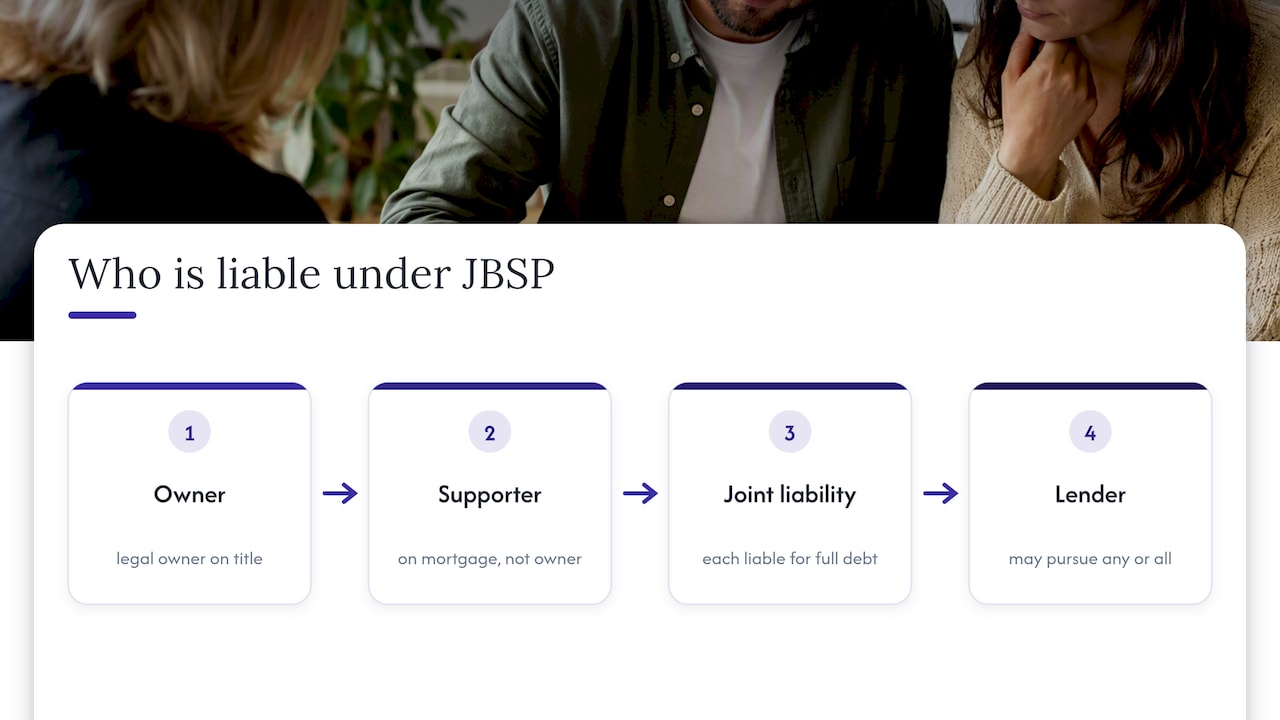
A JBSP mortgage separates two things that most buyers assume travel together: who owes the lender money, and who owns the property. With a standard joint mortgage, everyone named on the loan also appears on the title deeds. With JBSP, one or more supporters join the mortgage to add their income into the affordability calculation, but only the person who will live in the property, usually the sole proprietor, is registered as the legal owner.
That split has a direct consequence. All named borrowers, including supporters who own no share of the property, are jointly and severally liable for the mortgage. In plain terms, the lender can pursue any one of them, or all of them together, for the full outstanding balance if repayments stop, regardless of who actually lives there or whose name is on the title.
A JBSP arrangement is still a regulated mortgage contract, which matters because it brings the protections and obligations set out in the Financial Conduct Authority’s MCOB rules. Those rules require lenders to assess the affordability of every borrower named on the mortgage, not just the person who will own the home, which is the regulatory basis for why combining incomes works the way it does in practice.
How JBSP works in practice: application and affordability checks
Lenders assess a JBSP application by combining the incomes of everyone named on the mortgage and applying standard affordability stress tests under MCOB. That means a parent’s salary, a sibling’s self-employed income, or a contractor’s day-rate earnings can all be weighed together, provided each person can evidence their income and pass individual credit checks.
The paperwork tends to be heavier than a standard application because every named borrower is assessed in full. Expect to provide:
- Payslips or SA302 tax calculations for employed and self-employed applicants.
- CIS vouchers or SA302 evidence for contractors working under the Construction Industry Scheme.
- Proof of identity and address for each borrower.
- Bank statements showing existing commitments and spending patterns.
Lenders differ noticeably in how many supporters they accept, whether they allow non-parent relatives, and how comfortable they are with fluctuating or CIS income. Some treat contractor earnings cautiously unless the evidence is presented clearly, which is where voucher-based proof often needs supplementing with SA302s. Product choice and rates can also vary between lenders offering JBSP, so it rarely pays to approach just one.
Who benefits most from a JBSP mortgage
JBSP tends to suit specific situations rather than being a general-purpose fix. The most common scenario is a parent supporting a first-time buyer whose income alone would not meet a lender’s affordability threshold, allowing the younger buyer to purchase sooner rather than saving for several more years. It also helps when a self-employed or contractor applicant has strong but variable income that one lender undervalues, and a second income on the application smooths that picture.
A few points are worth holding in mind before assuming JBSP is the answer:
- You still need a deposit and must cover transaction costs; JBSP boosts borrowing power, not the cash needed upfront.
- If your income alone already meets the lender’s affordability bar, adding a supporter adds liability without adding benefit.
- Where the real goal is simply a larger deposit, a straightforward gifted deposit may be simpler than JBSP.
SDLT and other costs to budget for
Stamp Duty Land Tax is one of the areas where JBSP catches people out. HMRC guidance treats the purchasers in a transaction as a group when deciding whether higher rates for additional properties apply. If a supporting borrower already owns a home elsewhere, the purchase can be treated as an additional property, triggering the 3% surcharge even though the supporter will never hold a share of the title.
This also affects first-time buyer relief. HMRC’s rules state that relief is unavailable if any party on the mortgage has previously owned a major interest in a dwelling anywhere in the world, which means a parent’s previous purchase can remove a first-time buyer’s relief entirely, even though only the child’s name goes on the deeds. Where transactions are linked, HMRC’s guidance on linked purchases sets out how that can change the SDLT calculation further.
Beyond SDLT, budget for conveyancing fees, a valuation fee, and the lender’s arrangement fee, all of which apply to a JBSP purchase in the same way they would to any mortgage.
Legal safeguards, exit plans and credit impact
Because supporters take on full liability without gaining any ownership, independent legal advice is widely recommended before signing anything. A solicitor acting for the supporter should cover what happens if the relationship with the sole proprietor breaks down, how the mortgage debt is treated on a sale, and what rights, if any, the supporter has if things go wrong. Guidance for supporters stresses this imbalance between liability and ownership as the key reason advice matters here.
In practice, that advice often results in a declaration of trust or a side letter setting out each party’s intentions, alongside a written exit plan describing how and when a supporter might be removed from the mortgage once the sole proprietor’s income supports it alone.
It is also worth remembering that joint and several liability shows up on credit files for every named borrower. According to MoneyHelper’s guidance on credit reports, that liability can affect a supporter’s own ability to borrow for a mortgage, car finance or other credit while they remain named on the JBSP mortgage.
Pro Tip: Ask your solicitor to put the exit plan in writing before completion, not after, so every party knows exactly what triggers the supporter’s removal from the mortgage.

How a mortgage adviser helps with JBSP applications
We search the whole market rather than a single lender’s criteria, which matters because acceptance of JBSP, supporter numbers, and treatment of self-employed or CIS income varies so widely between providers. We help contractors present voucher and SA302 evidence in the format each lender actually wants, model affordability properly, and arrange written confirmation, solicitor referrals and a staged plan for removing a supporter once it makes sense.
Why families turn to JBSP, and where advice earns its keep
Families come to us because JBSP looks simple on paper and rarely is in practice, as explained in our Family-Backed Guide. The arrangements that work best are planned properly from the outset: income evidence gathered early, an exit plan agreed before completion, and the SDLT position checked rather than assumed. Treat it as a structured decision between relatives, not an informal favour, and it tends to serve everyone well.
— Paul
Get tailored JBSP support from Prosper Home Loans
We provide independent, whole of market mortgage advice to buyers in the local area, with experience supporting self-employed and CIS subcontractor applicants who need their income presented correctly to lenders. For JBSP cases, we search across the market for lenders that accept family-backed arrangements, help structure the affordability case for contractors, and arrange solicitor referrals and a written exit plan for supporters.

If you are weighing up a JBSP mortgage or need support as a self-employed buyer, get in touch for a written affordability assessment tailored to your situation.
This article is general information, not a substitute for advice from a qualified financial advisor. Consult a qualified financial professional about your own circumstances before acting on anything here.
FAQ
What are the downsides of a JBSP mortgage?
The main downside is that supporters carry full legal liability for the debt without owning any share of the property, and if a supporter already owns a home, the purchase may trigger the 3% SDLT surcharge and remove first-time buyer relief. Joint liability also appears on each supporter’s credit file, which can affect their own future borrowing.
How does a JBSP mortgage work?
A JBSP mortgage combines the incomes of several named borrowers so the lender can assess affordability under FCA MCOB rules, while only one person is registered as the legal owner on the title deeds. All named borrowers remain jointly and severally liable for the full mortgage debt.
Which lenders offer JBSP mortgages in the UK?
Lender appetite for JBSP varies considerably, including how many supporters they allow and how they treat self-employed or CIS income, so it is worth comparing options with an independent adviser rather than approaching one lender directly. We check the whole market to match your circumstances, including contractor and CIS income, to lenders likely to accept the case.
Are JBSP mortgages more expensive?
Rates and product availability can differ between lenders offering JBSP compared with standard mortgages, so costs depend on which lender fits your circumstances best. The bigger cost consideration is usually Stamp Duty Land Tax, since a supporter who already owns property can trigger the additional property surcharge on the whole purchase.
How can I remove a supporting borrower from a JBSP mortgage later?
Removing a supporter usually means remortgaging once the sole proprietor’s income alone meets the lender’s affordability requirements, which is why a written exit plan agreed at the outset matters. An adviser can map out the staged steps and timing needed to make that transition straightforward when the time comes.
Sources
Check FCA MCOB rules, HMRC SDLT guidance and MoneyHelper for impartial, primary guidance before applying.
- FCA Handbook - MCOB 11.6 Responsible lending and financing
- Stamp duty land tax: buying an additional residential property
Recommended
