First time buyer subcontractor mortgage: UK guide

A first time buyer subcontractor mortgage is a home loan product assessed on subcontract income rather than standard employment payslips. Subcontractors in the UK can absolutely secure a mortgage as first-time buyers. The key is understanding how lenders evaluate your income, which documents they require, and which schemes can reduce your deposit burden. The Construction Industry Scheme (CIS) plays a central role here, as CIS vouchers and gross income statements serve as primary evidence for many lenders. At Prosperhomeloans, we work with subcontractors every day to cut through the complexity and find the right deal.
What lender criteria do subcontractors need for mortgage approval?
Lenders assess subcontractor income differently from standard employment. Rather than relying on payslips alone, they look at a combination of CIS tax deduction statements, self-assessment tax returns, bank statements, and active contracts. The goal is to establish that your income is consistent and likely to continue.
Contract stability matters almost as much as income level. A lender who sees a rolling 12-month contract with a reputable principal contractor will feel far more confident than one looking at a series of short, disconnected engagements. If your contract has a clear end date within the next few months, some lenders will treat that as a risk flag.

Your employment status also shapes how lenders treat your income. PAYG subcontractors who receive payslips from a labour agency are often assessed more like employed workers. Self-employed subcontractors operating through a limited company or sole trader arrangement face more scrutiny and typically need two years of accounts or tax returns. Knowing which category you fall into before you apply saves time and prevents unnecessary rejections.
Lenders in certain sectors, such as IT or skilled construction trades, may be more receptive because those industries carry lower unemployment risk. This is worth bearing in mind when you approach lenders directly or through a broker.
The documents most lenders request include:
- CIS deduction statements (typically 12 months minimum)
- Self-assessment tax returns (SA302 forms) for the past one to two years
- Three to six months of personal bank statements
- Current contract or letter of engagement from your principal contractor
- Proof of identity and address
Pro Tip: Keep a dedicated folder, digital or physical, updated monthly with your CIS vouchers, bank statements, and contract renewals. Lenders respond well to applicants who can produce clean, organised paperwork quickly.
Which mortgage products are available for first-time buyer subcontractors?
Several mortgage products and government-backed schemes are accessible to subcontractors buying their first home. Understanding the differences helps you choose the right structure for your situation.
Fixed rate versus variable rate mortgages
A fixed rate mortgage locks your monthly payment for an agreed period, typically two to five years. This gives you budgeting certainty, which is especially useful when your contract income can fluctuate. A variable rate mortgage, by contrast, tracks the Bank of England base rate or a lender’s standard variable rate. It can fall, but it can also rise, which adds uncertainty to your monthly outgoings.
For most first-time subcontractors, a fixed rate product offers the clearest financial picture during the early years of homeownership.
Deposit schemes and government incentives
Government incentives and schemes can significantly reduce the deposit barrier for first-time buyers. In the UK, the Mortgage Guarantee Scheme allows buyers to purchase with a 5% deposit, with the government backing a portion of the lender’s risk. Stamp duty relief for first-time buyers on properties up to £500,000 also reduces upfront costs.
A comparable model operates in other markets: the First Home Guarantee scheme permits eligible buyers to purchase with a 5% deposit while avoiding Lenders Mortgage Insurance. The underlying principle is the same: government backing reduces the lender’s exposure and makes low-deposit lending viable.
| Scheme | Minimum deposit | Key benefit |
|---|---|---|
| Mortgage Guarantee Scheme (UK) | 5% | Government backs lender risk |
| Lifetime ISA | 5% (boosted by 25% bonus) | Government adds £1 for every £4 saved |
| Shared Ownership | 5% of share purchased | Buy a portion, pay rent on the rest |
| Help to Build | Varies | Supports self-build routes |
Low-documentation mortgage options
Low-doc loans exist for borrowers who cannot provide the full suite of standard documents. These products still require strong bank statements and evidence of income, but they allow alternative forms of proof. They typically carry higher interest rates, so they work best as a short-term solution while you build a stronger paper trail.
Pro Tip: If you are a high-income subcontractor in a profession such as IT or healthcare, ask your broker whether an LMI waiver applies. Certain professions may qualify to avoid Lenders Mortgage Insurance entirely, saving thousands of pounds upfront.
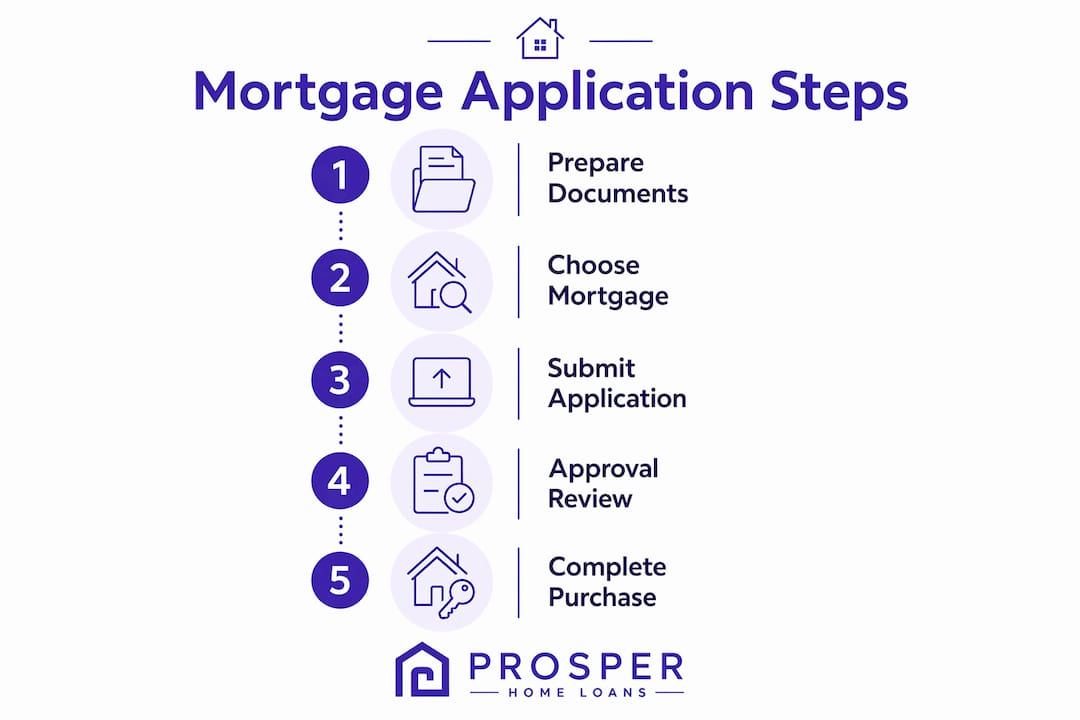
How to apply for a subcontractor mortgage step by step
The application process for a contractor home loan follows a clear sequence. Knowing each stage reduces surprises and keeps your application moving forward.
-
Assess your affordability. Calculate your average monthly income over the past 12 months using your CIS statements or tax returns. Most lenders will lend between four and four and a half times your annual income. Factor in your existing debts, credit card balances, and any financial commitments.
-
Check and improve your credit file. Request your credit report from Experian, Equifax, or TransUnion before applying. Correct any errors, pay down outstanding balances, and avoid applying for new credit in the three months before your mortgage application.
-
Engage a specialist mortgage adviser. Specialist mortgage brokers who understand contractor income can identify lenders most likely to approve your application and present your income in the strongest possible way. This step alone can be the difference between approval and rejection.
-
Gather your documentation. Compile your CIS deduction statements, SA302 tax returns, bank statements, current contract, and proof of identity. Having these ready before submission speeds up the process considerably.
-
Submit your application. Your broker or adviser will submit to the most suitable lender. The lender will conduct a credit check, verify your income documents, and instruct a property valuation.
-
Underwriting and offer. The underwriter reviews your full file. This stage typically takes one to four weeks. Common queries at this stage include requests for additional bank statements or clarification on contract gaps.
Common pitfalls to avoid:
- Applying with a contract that has less than three months remaining
- Gaps in CIS records that suggest periods without work
- Inconsistent income that drops sharply in the most recent tax year
- Multiple credit applications in the months before submission
- Failing to declare all income sources accurately
Short contract history and variable income are the two factors lenders cite most often when declining contractor applications. Addressing both before you apply is the single most effective preparation step.
How to improve your chances of mortgage approval as a subcontractor
Strengthening your application before you submit it is far more effective than trying to fix problems after a rejection. These steps apply whether you are applying now or planning ahead for the next 12 months.
- Maintain contract continuity. Avoid gaps between contracts where possible. If a gap is unavoidable, keep a written explanation ready, such as a period of training or a planned break, and back it up with bank statements showing savings rather than financial stress.
- Keep financial records current. Update your CIS folder monthly. File your self-assessment tax return as early as possible each year so your most recent figures are available to lenders.
- Save for a larger deposit. A deposit above 10% opens significantly more lender options and reduces your interest rate. A deposit of 15% or more places you in the most competitive tier of mortgage products.
- Use a specialist broker. A broker who works regularly with subcontractor clients knows which lenders use gross contract income rather than net profit, and which will accept one year of accounts rather than two.
- Be transparent about your income pattern. Lenders appreciate applicants who can clearly explain seasonal variation or project-based income. A brief written summary from your accountant or principal contractor adds credibility.
If standard mortgage products prove difficult to access, non-conforming or specialist lender products remain an option. These carry higher rates but can provide a route to ownership while you build a stronger track record.
Pro Tip: Ask your accountant to prepare a short income summary letter alongside your SA302. Many lenders accept this as supporting evidence, and it can clarify income figures that look inconsistent on paper.
Key takeaways
A first time buyer subcontractor mortgage is fully achievable in the UK when you prepare the right documentation, choose a specialist adviser, and understand how lenders assess contract income.
| Point | Details |
|---|---|
| Contract stability is critical | Lenders assess contract length and continuity alongside income level when underwriting. |
| Documentation drives approval | CIS statements, SA302 returns, and bank statements are the core evidence lenders require. |
| Government schemes reduce deposit barriers | The Mortgage Guarantee Scheme and Lifetime ISA both support 5% deposit purchases. |
| Specialist brokers improve outcomes | Brokers experienced in contractor income navigate lender criteria more effectively. |
| Larger deposits open more options | Saving above 10% significantly widens the range of available mortgage products. |
What I have learned advising subcontractor clients
After years of working with subcontractors on mortgage applications, the pattern I see most often is this: the application fails not because the income is too low, but because the paperwork tells a confusing story. A client earning well through CIS can be declined while a lower-earning employed applicant sails through, simply because the documentation is unclear or incomplete.
The misconception I hear most from subcontractors is that banks will not lend to them at all. That is not true. What is true is that standard high-street lenders often apply criteria designed for employed borrowers, which can make the process feel harder than it needs to be. The solution is not to give up. It is to find the right lender through the right channel.
I also see clients underestimate the value of contract length. Securing a longer contract before applying, even at the same daily rate, can genuinely shift a lender’s decision. One client I worked with extended a three-month rolling contract to a twelve-month fixed term before reapplying. The same income, the same lender criteria, but a completely different outcome.
My honest advice: do not apply speculatively to multiple lenders. Each hard credit search leaves a mark on your file. Work with a specialist adviser first, get a clear picture of where you stand, and then apply to the lender most likely to say yes.
— Paul
Prosperhomeloans: specialist support for subcontractor buyers
Securing a mortgage as a first-time subcontractor buyer is straightforward when you have the right adviser in your corner. Prosperhomeloans specialises in exactly this situation, working with subcontractors across the UK to find lenders who understand CIS income, contract-based earnings, and the realities of self-employed work.

We take the time to understand your specific contract arrangement, income history, and deposit position before recommending a lender. That means fewer rejections, less wasted time, and a mortgage that genuinely fits your circumstances. Whether you are ready to apply now or still planning ahead, speak to our team at Prosperhomeloans and get clear, honest advice from advisers who know subcontractor mortgages inside out.
FAQ
Can subcontractors get a mortgage as first-time buyers?
Yes. Subcontractors can obtain a first-time buyer mortgage in the UK by providing CIS statements, tax returns, and evidence of contract stability. Specialist lenders and brokers make this process significantly more straightforward.
How many years of accounts do I need as a subcontractor?
Most lenders ask for one to two years of self-assessment tax returns or CIS records. Some specialist lenders will consider applications with as little as twelve months of trading history.
Does contract length affect my mortgage application?
Contract length matters significantly to lenders. A contract with at least six months remaining, or a history of consistent renewals, gives lenders confidence that your income will continue through the mortgage term.
What deposit do I need as a first-time subcontractor buyer?
A 5% deposit is possible through government-backed schemes such as the Mortgage Guarantee Scheme. A deposit of 10% or more widens your lender options and typically secures a lower interest rate.
Should I use a mortgage broker as a subcontractor?
Using a specialist mortgage broker is strongly advisable. Brokers who work regularly with contractor income know which lenders assess gross contract earnings and which require full accounts, saving you time and protecting your credit file.
