Equity Release With a Mortgage: How It Works and What to Check

Yes, you can usually take equity release while you still have a mortgage, but the existing mortgage normally has to be repaid out of the money you release. What is left is paid to you as a lump sum, in stages, or both. Whether it makes sense depends on your age, your property, your health and what else you could do instead.
As a local mortgage broker serving Hastings, Eastbourne, Hailsham, Bexhill-on-Sea and across East Sussex, we explain the process in plain English below, including the costs and the risks.
TL;DR
- Equity release is aimed at homeowners usually aged 55 or over. The most common type is a lifetime mortgage, a loan secured against your home.
- An existing mortgage is normally cleared with the new borrowing, so the new lender can hold the first legal charge on the property.
- Interest on most plans compounds, so the debt can grow quickly. It can also reduce your estate and may affect means-tested benefits.
- Using it to clear other debts needs particular care. Get free debt advice first.
- Alternatives such as a remortgage, a product transfer or downsizing may suit you better, and an adviser can compare them with you.
Table of Contents
- What equity release is
- Can you have equity release and a mortgage at the same time?
- Who can qualify, and how much might you release?
- The risks to weigh up first
- Using equity release to pay off debts
- Alternatives to consider
- Our perspective
- How Prosper Home Loans can help
- Frequently asked questions
- Sources
What equity release is
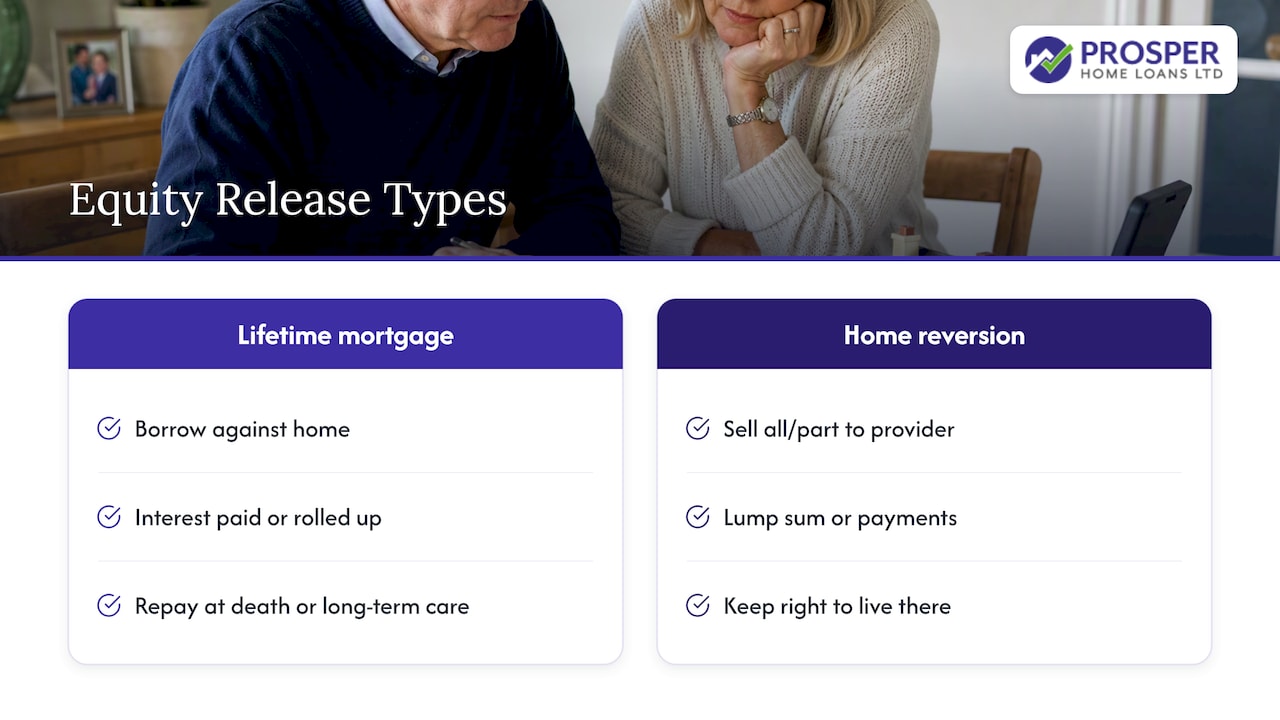
Equity release lets you take money from the value of your home without moving out. National Debtline describes two main types: a lifetime mortgage, and home reversion.
With a lifetime mortgage, you borrow against your home. Age UK explains that interest can be paid regularly or rolled up, and the loan is normally repaid when the last borrower dies or moves permanently into long-term care.
With home reversion, you sell all or part of your home to a provider for a lump sum or payments. You keep the right to live there, and the provider takes its share of the sale proceeds later.
If you are new to the idea of equity itself, this guide on what equity means in property is a useful starting point. In short, it is the part of your home’s value that you own outright, after the mortgage is taken off.
Can you have equity release and a mortgage at the same time?
In practice, not as two separate loans. A lifetime mortgage lender will normally want to be first in line against your property. So the usual route is to use part of the new loan to pay off your existing mortgage in full, then release whatever remains.
Here is how that typically works:
- You apply for a lifetime mortgage and the lender values your home.
- Your solicitor arranges for the old mortgage to be repaid from the new loan.
- Any remaining money is paid to you as a lump sum, a drawdown facility or a mix.
- You stop making the old monthly payments. Depending on the plan, you may choose to pay the interest or let it roll up.
The attraction is obvious: no more monthly mortgage bill. The cost is also obvious once you look at the interest. Replacing a mortgage you were paying off month by month with a loan that can roll up interest changes the picture considerably. MoneyHelper notes that lifetime mortgages may carry higher interest rates than ordinary mortgages, so the debt can increase quickly.
If a lender will not take on your plan because you still owe a large sum, that does not close every door. We can look at other routes with you, covered below.
Who can qualify, and how much might you release?
Age UK says lifetime mortgage applicants generally need to be at least 55, although some products start from 50. Home reversion applicants generally need to be at least 60. The home must be owned by you, be in the UK, be your main residence, be in reasonable condition and be above a certain value (Age UK).
National Debtline gives a general guide: a lifetime mortgage may release between 20% and 60% of your home’s value, and home reversion between 25% and 100%. The actual amount depends on your age, health, property value and plan type.
Those are guides, not offers. Each provider sets its own criteria, and the figure you are offered may be lower.
The risks to weigh up first
Equity release can let you stay in the home you love. It also carries real trade-offs:
- Compound interest. With most plans the amount owed can grow substantially over the years.
- Smaller estate. There is less left to pass on. MoneyHelper describes it as a lifetime commitment that can affect future plans and inheritance.
- Benefits. Money released may affect means-tested benefits. If you already claim, tell the DWP or your council.
- Moving and care. Plans are designed to be repaid if you move permanently into care, so they may not suit you if you may need residential care soon. Age UK also says a younger family member or friend moving in to care for you must sign an occupancy waiver and should take legal advice.
- Early repayment charges. Optional repayments may be possible, but charges can apply under the product terms.
MoneyHelper says you must speak to an equity release specialist about the risks, or discuss other options with a mortgage adviser. It also recommends reading your personal recommendation and Key Facts Illustration carefully before you proceed.
Using equity release to pay off debts
Clearing credit cards or loans with released equity can reduce monthly outgoings. But you would be turning unsecured debts into debt secured on your home, possibly for the rest of your life.
National Debtline advises checking your essential living costs first and getting free debt advice before you decide how to use the money. StepChange also says securing other debts against your home has implications, and recommends free, impartial debt advice. Its older consolidation guide goes further, saying it would never recommend a secured loan to repay unsecured debts, because the lender can sell your property if you cannot repay.
Lower monthly payments usually mean a longer term and a higher total cost. That applies to equity release, a secured loan and a debt consolidation remortgage alike.
If you are weighing this up, these pages may help:
- Consolidating card debt into your mortgage
- What a debt management plan is
- Secured loan versus remortgage
Alternatives to consider
Equity release is one tool, not the only one. Depending on your circumstances you might look at:
- A remortgage or product transfer. If your main aim is to lower payments or release some capital, a standard mortgage may be cheaper over time. See our guide to remortgaging to release equity.
- A debt management plan or Debt Relief Order. StepChange lists these as alternatives to debt consolidation, and recommends expert debt help to find the right fit.
- A second charge mortgage. This sits behind your existing mortgage, so you keep the current deal. Whether it suits depends on your rate, your lender’s terms and the total cost.
- Downsizing. Moving to a smaller property can free up capital without borrowing against your home.
We have also written about equity release for care costs and for home improvements.
Our perspective
Most people who ask us about equity release with a mortgage are really asking one of two things: “Can I stop paying my mortgage?” or “Can I get hold of some cash?” Both are fair questions, and the answer to each is not always equity release.
We start by looking at the whole picture: your age, your income, any pension or self-employed earnings, your debts and what you want to happen to the property. Some clients, including self-employed people and former CIS subcontractors with lumpy incomes, find that a remortgage or product transfer meets their need at a lower long-term cost. Others find that a lifetime mortgage is the right fit. We never assume the answer in advance, and we never promise approval or savings.
What we do promise is that we will explain the costs and risks clearly, and that you will not be rushed.
— Paul McMath CeMAP CeRER
How Prosper Home Loans can help
We are an independent mortgage and protection advice firm based in St. Leonards-on-Sea, helping homeowners in Hastings, Eastbourne, Hailsham, Bexhill-on-Sea and across East Sussex and the UK. We can talk through lifetime mortgages, remortgages, product transfers, second charge loans and debt consolidation options, and explain how each would work with your existing mortgage.
See our remortgaging and equity release services for more detail.

Because equity release can affect benefits, inheritance and care funding, we will also point you to free debt advice or legal advice where it is relevant to your situation.
Frequently asked questions
Can I get equity release if I still owe money on my mortgage?
Usually yes, if you meet the age and property criteria. The existing mortgage is normally repaid from the equity release loan, and anything left over is paid to you. Your adviser can tell you whether your remaining balance leaves enough to be worthwhile.
How much equity can I release?
National Debtline suggests a lifetime mortgage may release around 20% to 60% of your home’s value, depending on your age, health and property. The younger you are, the lower the percentage tends to be. Your own figure will come from a provider’s assessment.
Will equity release affect my benefits?
It can. Money released may affect means-tested benefits, and you may still be treated as having the money even after you use it to clear debts. Tell the DWP or your council if you claim, and take advice before you proceed.
Can I use equity release to pay off debts?
It is possible, but it turns unsecured debts into borrowing secured on your home. Get free debt advice first, and compare alternatives such as a debt management plan before you decide.
Could my family inherit the home if I take equity release?
They may inherit what is left after the loan and interest are repaid, so the estate is usually smaller. Many lifetime mortgages include a No Negative Equity Guarantee, but check the terms of your plan and discuss your wishes with your family and adviser.
If you would like to talk it over, get in touch with Prosper Home Loans for friendly, local advice on your options.
Sources
- National Debtline: What equity release is and how it works
- Age UK: Equity release factsheet
- Age UK: Equity release and care, factsheet
- Age UK: What is equity release and how does it work?
- MoneyHelper: What is equity release?
- StepChange: Equity release
- StepChange: Debt consolidation guide
- WealthStacker: What does equity mean in property
Recommended
- UK 55+ Homeowners: Equity Release for Home Care with Adviser Checklist
- 80% LTV: How Remortgaging to Release Equity Works in the UK
- £62,057 Average: Equity Release Costs for UK 55+ Home Improvements
- Secured Loan vs Remortgage: A UK Homeowner Guide
This article provides general information and is not a personal mortgage recommendation. Mortgage availability and eligibility depend on your circumstances and lender criteria. Rates and criteria can change. We will explain any applicable fees before you commit. Think carefully before securing other debts against your home. Consolidating debts over a longer term may reduce your monthly payments but increase the total amount you repay. Your home may be repossessed if you do not keep up repayments
