Commercial Mortgage Eligibility in the UK: What Lenders Check

Most UK commercial lenders accept limited companies, LLPs, partnerships and sole traders. Many also accept individuals, trusts and pension schemes. They expect a trading history, a deposit and evidence that the business or the rent can cover the repayments. Criteria differ from lender to lender, so whether you qualify depends on your own circumstances.
We are a local mortgage broker serving Hastings, Eastbourne, Hailsham, Bexhill-on-Sea and the wider East Sussex area. Below is what lenders typically look at, with figures taken from published lender criteria.
TL;DR
- Lenders judge the borrower, the property and the purpose of the loan together. A strength in one area can sometimes balance a weakness in another.
- Many lenders ask for two or more years of accounts. Some ask for three.
- Deposits are typically higher than for residential mortgages. One lender’s maximum is 80% loan-to-value for owner-occupied property and 75% for investment property.
- Credit history matters, but some lenders underwrite cases manually and look at the detail.
- No lender can be guaranteed to accept you. A broker can help you match your case to criteria before you apply.
Table of Contents
- Who can apply for a commercial mortgage?
- The three things lenders look at
- Deposit and affordability
- Accounts and documents
- Credit history and short trading records
- Owner-occupied, investment and semi-commercial
- How to prepare before you apply
- Our perspective
- Talk to a local broker
- FAQ
- Sources
Who can apply for a commercial mortgage?
The applicant list is wider than many people expect. Published lender criteria show these variations:
- One bank accepts limited companies, LLPs, partnerships and sole traders with two full years of accounts, operating in England, Scotland or Wales.
- Another lists sole traders, limited companies, LLPs, partnerships, PLCs, trusts and SIPPs, with the property in England, Wales or Scotland and at least two years of trading.
- A third accepts individuals, registered sole traders and partnerships, private limited companies, LLPs, trusts and SIPP or SSAS pensions.
- A fourth also takes charities and nominee structures, plus overseas subsidiaries of UK parent companies if the parent fully guarantees them.
If you are a contractor or CIS subcontractor who trades as a sole trader or through a limited company, you may fit these structures. The same goes for a director buying a unit through the company. Which route suits you depends on tax and lender criteria, so ask for advice before you choose.
The three things lenders look at
Lenders look at the borrower, the property and the purpose of the loan together. It is not one pass-or-fail test. A strong property or business can sometimes offset a weaker credit history.
The borrower
This covers trading history, profit, accounts, existing debts and credit record. It also covers the experience of the people behind the business.
The property
The lender values it and considers how marketable it is. It also considers how it is used. An owner-occupied unit, an investment let to tenants and a mixed-use building are all treated differently.
The purpose
Buying premises, refinancing, releasing capital and investing for rent each have their own criteria. Be clear about your purpose from the start.
Deposit and affordability
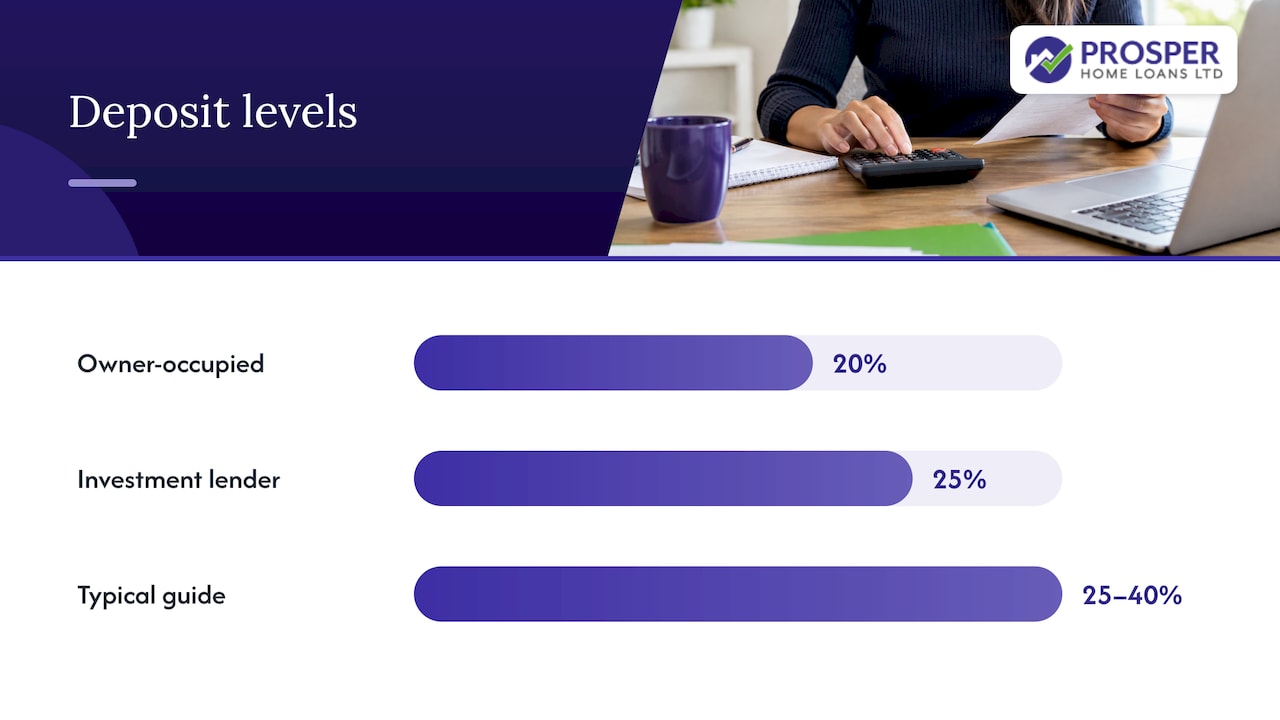
Commercial deposits are usually larger than residential ones. One lender sets a maximum 80% LTV for owner-occupied mortgages (a 20% deposit) and 75% for investment mortgages (a 25% deposit). Affordability for owner-occupiers is typically based on the business’s earnings, often EBITDA. For investment property it is based on rental income, after void and cost assumptions.
That lender’s investment criteria require 130% debt service cover on gross rent. Interest-only loans must show affordability over a 25-year amortising term. Other lenders use different tests.
A sector guide says borrowers are commonly expected to put down 25% to 40% in the typical case. That figure comes from a general guide rather than a lender, so treat it as a range. Our guide to the commercial mortgage deposit covers where the money can come from.
Some owners fund the deposit by selling an existing unit. A cash sale of commercial property is one way to release that capital quickly. Lenders will still want to see where the deposit came from.
Accounts and documents
Expect to evidence your trading. Examples from published criteria:
- One lender asks for the last two years’ accounts and six months’ business bank statements. If you self-certify income, it also asks for three years of HMRC SA302s.
- The same lender asks companies to have traded profitably for at least three years for some commercial lending.
- Another asks for three years of accounts, three months of bank statements, a property portfolio schedule, source of wealth and an assets and liabilities statement. It also asks for evidence of the deposit on purchases.
If you are self-employed, our guide on proving your deposit shows how to present the funds clearly. Our page on documents subcontractors need is a useful checklist for tax-related paperwork.
Credit history and short trading records
Credit rules vary a lot. One bank’s top tier requires no CCJs or defaults in 24 months, no recent secured or unsecured arrears and a bankruptcy discharged for at least 36 months. Another does not credit score and underwrites each case manually. It accepts some minor credit issues, or older ones over 36 months, subject to its own conditions.
So a past problem does not automatically close the door, and a clean record does not guarantee approval. Where trading history is short, lenders may look at the property, the deposit and your experience more closely. The route and the terms depend on the lender.

Owner-occupied, investment and semi-commercial
Eligibility changes with how the property is used:
| Type | What the lender usually focuses on |
|---|---|
| Owner-occupied | Your business’s earnings and accounts |
| Investment | Rental income, tenant quality and void assumptions |
| Semi-commercial | The split between commercial and residential space |
One lender’s guide says the residential element must not exceed 99% and be capable of being let separately. It classes properties with less than 50% residential space as commercial. Other lenders set their own splits.
Read more in our guides to owner-occupied commercial mortgages, commercial investment mortgages and semi-commercial mortgages. For costs, see our commercial mortgage rates guide.
How to prepare before you apply
- Gather your accounts, bank statements and tax records.
- Check your personal and business credit files.
- Work out your deposit and where it comes from.
- Decide whether the property is for your own use, for rent or mixed.
- Speak to a broker before applying, so a decline does not sit on your record unnecessarily.
Timescales depend on valuation, legal work and how complete your paperwork is, so ask your adviser for an estimate on your case.
Our perspective
Many of the people who come to us have income that does not fit a simple box. They may be CIS subcontractors, contractors, company directors or other self-employed people.
Commercial lending works the same way. Lenders weigh the whole picture, and the right lender for one case can be the wrong one for another. Our job is to explain the options, costs and risks clearly, and to match your circumstances to lender criteria before you apply.
We do not promise approval or the lowest rate. We do promise to be straightforward with you from the first enquiry to completion and beyond.
Paul McMath CeMAP CeRER
Talk to a local broker
We are a local firm in St. Leonards-on-Sea, helping clients across Hastings, Eastbourne, Hailsham, Bexhill-on-Sea and East Sussex. If you are considering premises or an investment property, we can talk through your options under our bridging and commercial finance service. If you are self-employed, our self-employed and company director mortgages page explains how we help with personal borrowing.

Contact Prosper Home Loans on our website and tell us what you are planning. Your circumstances and lender criteria decide what is available.
FAQ
Can a sole trader get a commercial mortgage?
Yes, with some lenders. Published criteria from several lenders list sole traders as eligible applicants, usually with two years of accounts. Each lender sets its own terms, so check your case before applying.
How much deposit do I need?
It depends on the lender and the property type. One lender’s published maximums are 80% LTV for owner-occupied and 75% for investment, so 20% to 25% deposits. Other sources suggest 25% to 40% is common.
Can I get a commercial mortgage with bad credit?
Some lenders consider adverse credit, often with conditions around how recent it is. Others have strict tiers. A broker can help you identify which criteria your history fits.
What documents will I need?
Expect two to three years of accounts, recent business bank statements and ID. You may also need tax records, a property schedule and evidence of your deposit.
Sources
- Allica Bank: Property Finance
- Allica Bank: Commercial mortgage eligibility
- Allica Bank: Commercial Mortgages product guide
- Recognise Bank: Commercial Mortgage
- Redwood Bank: Lending criteria guide
- Redwood Bank: Credit criteria guide
- LHV: Commercial Loans
- SBI UK: Commercial Criteria
- YBS: Documents for a commercial mortgage application
- West One: Commercial Mortgages
- Commercial property cash sales
Recommended
- Owner-Occupied Commercial Mortgages: How They Work in the UK
- Commercial Investment Mortgages in the UK: How They Work
- Save on fees: UK semi commercial mortgage costs, 65–75% LTV
- What documents do foreign nationals need for a mortgage?
This article provides general information and is not a personal mortgage recommendation. Mortgage availability and eligibility depend on your circumstances and lender criteria. Rates and criteria can change. We will explain any applicable fees before you commit. Think carefully before securing other debts against your home. Consolidating debts over a longer term may reduce your monthly payments but increase the total amount you repay. Your home may be repossessed if you do not keep up repayments
