Bridging Loan Against Land: How It Works in the UK
A bridging loan against land is short-term finance secured on a plot, either to buy it or to refinance it, with or without planning permission. It suits buyers who have a clear plan to repay within months, not years. Lenders cap borrowing well below the land’s value, so you need a deposit and a defined exit. We are a local East Sussex broker and can look at your plot, your plan and your timing with you.
TL;DR
- Land bridging is short-term finance secured on land, used to buy or refinance a plot, with or without planning permission.
- Lenders lend a share of the land’s value only. One lender’s October 2026 land guide sets a 50% cap, whether or not planning exists.
- Total cost is interest plus fees, so compare the full repayment figure, not the headline monthly rate.
- A realistic exit, such as a sale or refinance, matters more than anything else. Build in time for delays.
- Terms depend on the land, your circumstances and lender criteria. Nothing here is a promise of approval.
Table of Contents
- What a bridging loan against land is
- How lenders assess land
- What it costs
- Exit strategies and what goes wrong
- Is it regulated?
- Other ways to fund a land purchase
- How we help
- Our view
- FAQ
- Sources
What a bridging loan against land is
A bridging loan is a short-term loan secured on property or land. You borrow for a few months to bridge a gap until a sale, a refinance or another planned event repays it.
With land, the loan is secured by a first legal charge over the plot. That means the lender has first claim on the land if the loan is not repaid. West One’s product guide describes land bridging as finance to purchase or refinance land, with or without planning permission, over terms from 1 to 24 months.
Typical uses include:
- buying a plot at auction or by private sale when you cannot wait for a longer-term lender
- refinancing land you already own to release funds
- holding land while you apply for planning permission, then selling or refinancing
If you are a builder or CIS subcontractor, you may be buying a plot to build on yourself. Funding the build itself is usually a different product, so plan the land purchase and the build as separate steps.
How lenders assess land
Lenders look at the land, the plan to repay and you.
Planning status
Planning permission can change both how much you can borrow and the maximum loan size. Recognise Bank’s September 2025 broker guide allows up to 65% loan-to-value (LTV) with planning and 60% without, across England, Wales and Scotland. LTV is the loan as a percentage of the land’s value.
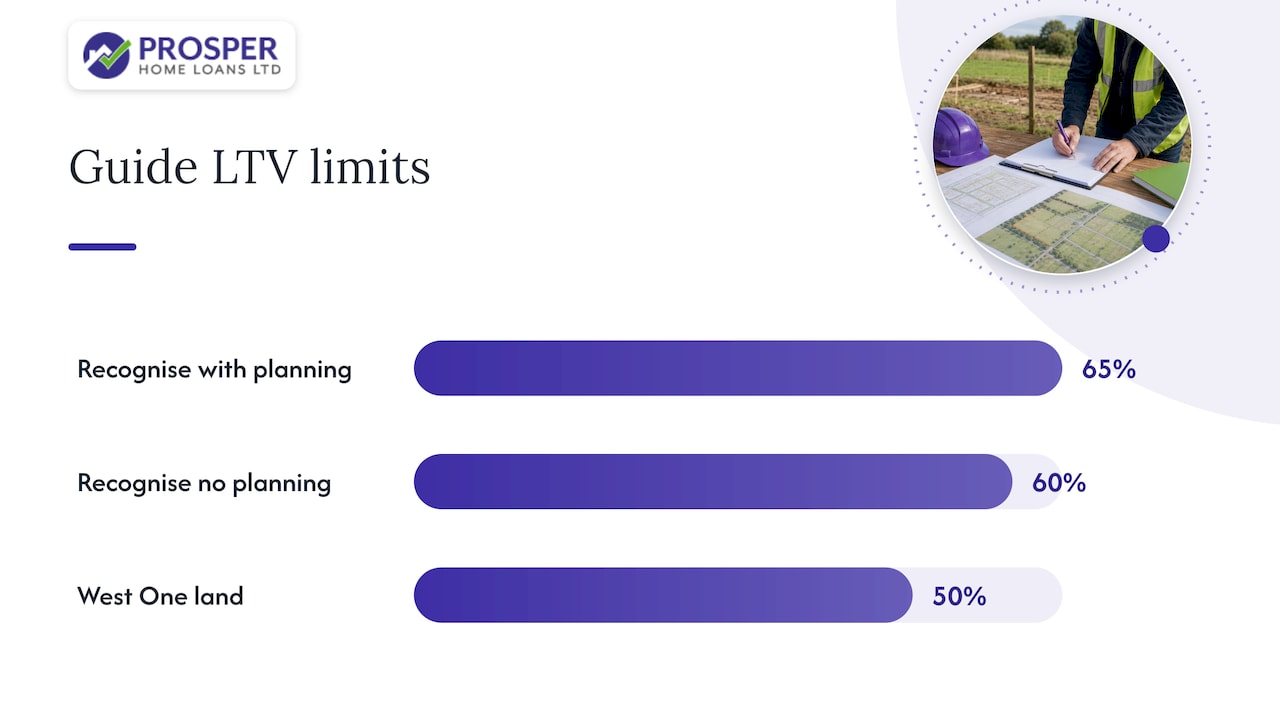
West One’s guide caps land at 50% LTV, and asks for evidence of your deposit and a planning reference where permission has been granted. Different lenders set different limits, which is one reason to have the whole market checked.
Security and repayment
Lenders want a clear exit, adequate security value and, where relevant, recourse to your other assets. Recognise Bank’s bridging guide lists a first legal charge as security and, for limited-company borrowers, a personal guarantee. If you borrow through your limited company, expect to be personally on the hook.
Minimum loan sizes
Land bridging is aimed at larger sums. West One’s land guide lists a minimum loan of £75,000, and Recognise Bank’s land loans start at £250,000. Smaller plots may need a different route.
What it costs
Bridging is priced monthly, not annually, so figures can look small and add up fast.
- Interest: West One’s land guide lists a fixed rate from 1.10% a month, as guidance only. Rates depend on the asset, your profile, market conditions and LTV.
- Arrangement fee: Recognise Bank’s guide allows up to 2% of the gross loan.
- How interest is paid: Recognise Bank’s guide says interest is usually deducted from the loan at drawdown, which reduces the cash you receive, though monthly payments may be allowed in some cases.
- Other costs: valuation, legal fees and exit fees vary by lender.
Why total cost matters
UTB’s Q3 2026 information sheet gives a representative example, not land-specific: £582,800 repaid after 12 months at 0.72% a month comes to £637,488.41 with fees and accrued interest, at 10.52% APRC. APRC is the annual cost of the loan including fees. The point for you: ask for the full repayment figure for your term, and for the cost if the term runs over.
For wider context on pricing, see our guide to bridging loan rates.
Exit strategies and what goes wrong
The exit is how the loan gets repaid. Common exits for land are:
- selling the land, with or without planning permission
- refinancing onto a longer-term loan once planning is granted
- selling plots or units in phases
- repaying from another asset sale
Delays are the main risk. Planning decisions, sales and refinancing can all take longer than hoped. Research from Matchpoint Partners on UK real estate credit notes that options narrow as decisions are put off, and that relying on one refinance until weeks before maturity can leave too little time for an orderly alternative.
In practice, that means:
- Choose a term with room beyond your expected timeline.
- Have a second exit in mind before you borrow.
- Start the exit work early, not at the end of the term.
The land is the security, so if the loan cannot be repaid, you risk losing it. Think carefully before borrowing against land you cannot afford to lose.
Is it regulated?
Most land bridging is not regulated, but some is. Under the FCA’s PERG 4.4 guidance, a regulated mortgage contract involves credit to an individual or trustees, secured on UK land where at least 40% is used, or intended for use, as or in connection with a home. The guidance also describes a limited exclusion for some short second-charge bridging loans that fund a temporary land purchase and need no more than four payments.
Whether your loan is regulated changes your protections and the terms available. If you want to see how regulated lending works, read our page on regulated bridging loans. If your plot sits alongside a home you own, a second charge bridging loan may also come up.
Other ways to fund a land purchase
Bridging is not the only route. Depending on your situation, you might compare:
- a longer-term loan secured on the land or on another property you own
- a second charge loan against your home, which lets you keep your existing mortgage
- development finance, if you are also funding the build
- using your own savings or sale proceeds for part of the price
Compare the total cost, the term, what is put up as security and how soon you need the money. Lower monthly cost often means a longer term and more interest overall.
How we help
We are Prosper Home Loans, a mortgage and protection advice firm based in Hastings, East Sussex, serving Hastings, Eastbourne, Hailsham, Bexhill-on-Sea and the wider UK. Our services include bridging and commercial finance, and we work with self-employed clients, CIS subcontractors, company directors and landlords.
We explain the options, costs and risks clearly and support you from enquiry to completion. Start with our bridging and commercial finance page.

If your income is self-employed or CIS-based, you can see how we approach it on our CIS subcontractor mortgage page. Some lenders may use gross CIS earnings when assessing affordability, subject to their own criteria. That does not change your actual income or guarantee higher borrowing.
Our view
Land is one of the harder things to borrow against. Lenders lend less of its value, want a clear exit and look closely at the plan.
We would rather talk through the exit before talking about the rate. A cheap headline rate means little if the sale or planning decision slips and the term runs out.
For self-employed clients and subcontractors, we look at how your income is evidenced as well as the land. Our aim is to make the options, costs and risks clear, so you decide with the full picture. Lender criteria and your circumstances shape what is possible.
Paul McMath CeMAP CeRER
FAQ
Can I get a bridging loan on land without planning permission?
Some lenders will consider it. Lenders typically lend less against land without planning. For example, one lender’s 2025 guide allows up to 60% LTV without planning and 65% with it. Each case is assessed individually.
How much can I borrow against land?
It depends on the lender, the land’s value and planning status. Lender guides we have seen cap borrowing at 50% to 65% of value. Minimum loan sizes can start at £75,000 or higher.
How long can a land bridging loan last?
Terms generally run from 1 to 24 months, according to the lender guides cited above. Choose a term that leaves room for delays to your sale, refinance or planning decision.
Is a land bridging loan regulated?
Often not, but it can be. It depends on whether the borrower is an individual and whether at least 40% of the land is used or intended for use with a home. Check this early, as it affects your protections.
Sources
- West One Bridging Loans Product Guide
- Recognise Bank Broker Product Guide, September 2025
- Recognise Bank Bridging Product Guide
- UTB Bridging Loan Information Sheet, Q3 2026
- Matchpoint Partners, Private Credit for UK Real Estate
- FCA Handbook, PERG 4.4
Recommended
- Second Charge Bridging Loans: How They Work and Their Risks
- Bridge to Let: How It Works and When It Suits Investors
- Approved in 3–6 Weeks: Brokered UK Regulated Bridging Loans
- UK bridging loan rates in 2026: what a good deal looks like
This article provides general information and is not a personal mortgage recommendation. Mortgage availability and eligibility depend on your circumstances and lender criteria. Rates and criteria can change. We will explain any applicable fees before you commit. Think carefully before securing other debts against your home. Consolidating debts over a longer term may reduce your monthly payments but increase the total amount you repay. Your home may be repossessed if you do not keep up repayments
