Bridge to Let: How It Works and When It Suits Investors

Bridge to let is a short-term bridging loan used to buy a property you plan to rent out, with a plan to move onto a standard buy-to-let mortgage once the property is ready to let. It suits investors who need to move quickly or who are buying something that a high street buy-to-let lender would not lend on yet. It can work well, but it depends on the exit being properly planned before you start.
We are a local mortgage broker in Hastings, serving Eastbourne, Hailsham, Bexhill-on-Sea and the wider East Sussex area, and we arrange finance for landlords across the UK. Below is how the process works in practice, what to check, and what can go wrong.
TL;DR
- Bridge to let means a short-term loan to buy, then a buy-to-let mortgage to repay it once the property is let.
- It is most useful when speed or the condition of the property rules out a standard mortgage at the start.
- The exit is the key risk: valuation, rental income and lender criteria at the end decide whether you can refinance.
- Costs and criteria vary by lender and by your circumstances, so get advice before you commit.
- We can talk through your plan, whether you are in East Sussex or elsewhere in the UK.
Table of Contents
- What bridge to let means
- How the process runs, step by step
- When investors choose bridge to let
- What lenders look at
- Costs to expect
- Paying back the bridge
- Risks to plan for
- Our view on bridge to let
- Speak to a local broker about bridge to let
- FAQ
- Sources
What bridge to let means
A bridging loan is a short-term, secured loan. A bridge-to-let version is aimed at the buy-to-let market: you borrow to secure the property, deal with anything that needs doing, let it out, and then replace the bridge with a longer-term buy-to-let mortgage.

Some lenders offer both stages as a package. UT Bank’s bridge to let guide describes a decision in principle covering both the bridging loan and the buy-to-let term mortgage, with the buy-to-let offer valid for six months and issued alongside the bridging offer. Not every lender works this way, and some investors arrange the bridge and the later mortgage separately.
How the process runs, step by step
- Agree the purchase and the plan. You decide what the property will be let for, and what work, if any, is needed.
- Arrange the bridging loan. The loan is secured on the property, usually with interest and fees that you should understand in full before you proceed.
- Complete any works. This might be a tidy-up, a kitchen and bathroom, or a larger project. Our guides on light refurbishment bridging and heavy refurbishment bridging cover how the scale of work affects the loan.
- Let the property. A tenant in place and a signed tenancy usually matter to the buy-to-let lender.
- Refinance and repay. The buy-to-let mortgage pays off the bridge. In the package described by UT Bank, the exit is subject to a valuer’s reinspection, so the value at that point counts.
When investors choose bridge to let
A standard buy-to-let mortgage is usually the simplest route when the property is ready to let and you have the time. Bridge to let comes into the picture when something gets in the way:
- Speed. An auction purchase or a motivated seller may need completion faster than a standard mortgage allows.
- Condition. A property that is not yet lettable, or is in need of refurbishment, may not meet a mainstream lender’s requirements at the start.
- Timing of funds. You may be waiting on a sale or another source of cash that is not available at the point you need to buy.
If none of these apply, a direct buy-to-let mortgage may be the more straightforward option. We would look at both with you.
What lenders look at
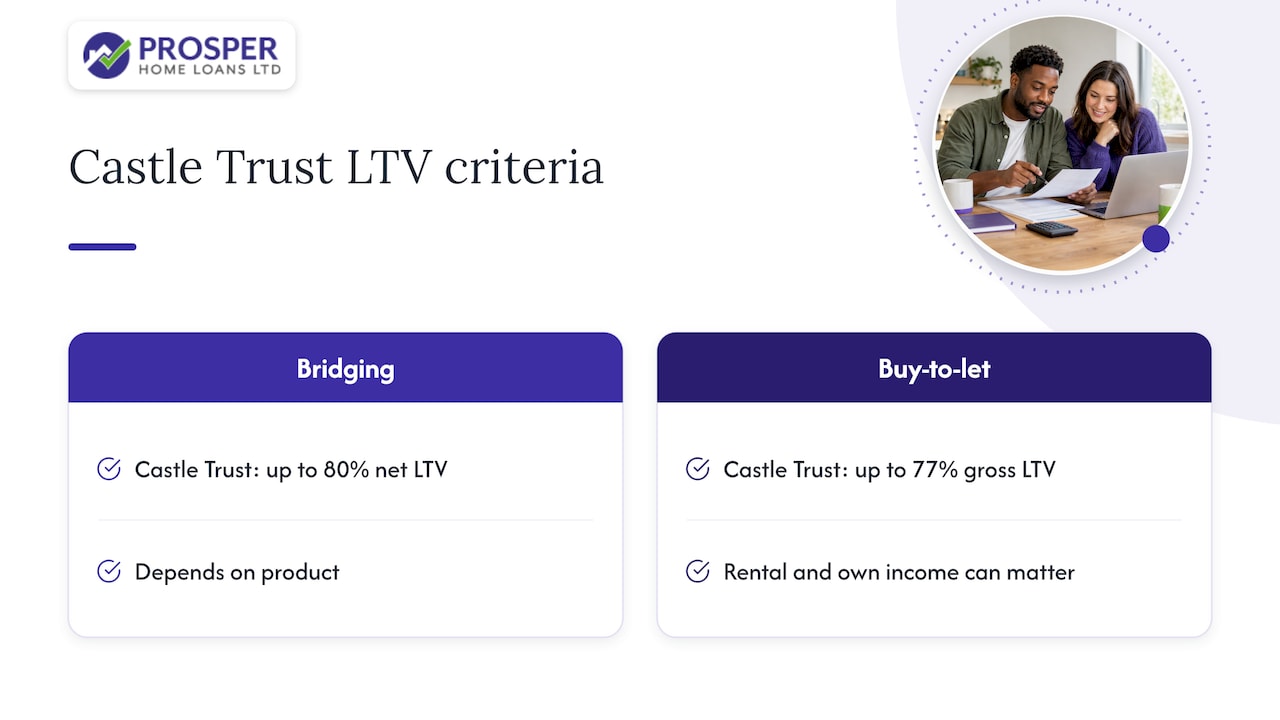
Lenders assess the property, the rent it can achieve, your experience and the loan-to-value (LTV). As an illustration of how criteria are set out, Castle Trust Bank’s property lending criteria, dated 26 February 2026, list bridging at up to 80% LTV (net), dependent on product, and its buy-to-let range at up to 77% LTV gross. These figures belong to that lender only. Other lenders differ, and what you are offered depends on your circumstances.
For the buy-to-let end, rental income and your own income can both matter. Our guide to minimum income for buy to let explains why some lenders set an income threshold. If you are an expat landlord, see our page on expat buy to let mortgage options.
Costs to expect
Bridging is priced differently from a standard mortgage. Interest is usually quoted monthly rather than annually, and there are typically arrangement fees, valuation fees and legal costs on top. Some interest may be rolled up or deducted rather than paid monthly, which affects the amount you owe at the end.
We do not publish rates, because they change and depend on the property, the LTV and your exit. Our guide to bridging loan rates explains what to compare. Always ask for the total cost across both stages, not just the headline rate.
Paying back the bridge
There are three usual ways to repay a bridging loan used for a rental property:
- Refinance onto a buy-to-let mortgage. This is the bridge-to-let route, and the one the whole structure is built around.
- Sell the property. Some investors plan to sell, but a sale in a flat market may not cover what they hoped.
- Use other funds. Savings, a sale of another asset or capital released elsewhere.
The refinance depends on the property being valued as expected and the rent meeting the new lender’s affordability tests. Some lenders also want you to have owned the property for a minimum period before they will lend. If you are planning around a deadline, our six month plan for buy to let remortgage delays is worth reading.
Risks to plan for
Bridge to let is secured against property, so if you cannot repay, the lender can take action on that security. Think through these before you borrow:
- Valuation falls short. If the property values lower than planned, the buy-to-let loan may be smaller than you need.
- Rent is weaker than expected. Lenders test rent against the mortgage payment, which can limit how much they lend.
- Works overrun. Delays cost more interest and push back the letting date.
- Timescales slip. The bridge term is fixed, so a delayed refinance can mean extending on less favourable terms.
One safeguard is to run the exit numbers with a cautious value and a cautious rent, and to have a fallback if neither comes in as planned. If the property will be your own home or part of it, regulated bridging rules may apply, covered in our guide to regulated bridging loans.
Our view on bridge to let
Most of the bridging conversations we have start with the purchase and skip the end. We turn that round. Before we look at a lender, we ask how the loan will be repaid, what the property needs to be worth and what rent it needs to achieve.
As a whole-of-market, independent broker, we can look beyond one lender’s package and compare structures that fit your plan. For some clients that is a combined bridge-to-let product. For others it is a bridge followed by a separate buy-to-let mortgage, or no bridge at all.
We also explain the costs and risks clearly, because a good decision depends on both. Outcomes always depend on your circumstances and lender criteria, and we never promise approval or savings.
Paul McMath CeMAP CeRER
Speak to a local broker about bridge to let
We arrange bridging and commercial finance, buy-to-let and limited company mortgages, and second charge loans. We are based in St. Leonards-on-Sea and available to investors in Hastings, Eastbourne, Hailsham, Bexhill-on-Sea and across the UK. Start with our bridging and commercial finance page or our buy-to-let and limited company mortgage advice.

We can help you test the exit before you commit, and explain the options in plain English.
FAQ
Is bridge to let the same as a buy-to-let mortgage?
No. A buy-to-let mortgage is a long-term loan on a rental property. Bridge to let starts with a short-term bridging loan and aims to move you onto a buy-to-let mortgage once the property is ready to let.
Who offers bridge-to-let finance?
Specialist lenders offer it, and some banks have bridging products as well. Criteria and pricing vary, so a broker with access to the whole market can compare what suits your property and plans.
Can I get bridge to let for a property that needs work?
Often that is the reason people use it, but it depends on the scale of work and the lender. Our guides on light and heavy refurbishment bridging explain how this is assessed.
What if I cannot refinance when the bridge ends?
You may need to extend on a different product, put in more cash or sell. This is why we plan the exit before you borrow, using cautious figures for value and rent.
Sources
Recommended
- Light Refurbishment Bridging for UK Investors: AVM or Survey?
- Heavy Refurb Bridging for UK Investors: Budget a 10–15% Works Buffer
- UK bridging loan rates in 2026: what a good deal looks like
- Approved in 3–6 Weeks: Brokered UK Regulated Bridging Loans
This article provides general information and is not a personal mortgage recommendation. Mortgage availability and eligibility depend on your circumstances and lender criteria. Rates and criteria can change. We will explain any applicable fees before you commit. Think carefully before securing other debts against your home. Consolidating debts over a longer term may reduce your monthly payments but increase the total amount you repay. Your home may be repossessed if you do not keep up repayments
